Tunisian energy expert Adnan Haddad has emphasized that the project to link green hydrogen production sources in North Africa to European markets requires a thorough study of Tunisia's available resources, particularly water resources. In a statement on Diwan FM's "Hna Touns" program, Haddad highlighted the importance of considering the water dimension in planning hydrogen projects. He noted that producing one kilogram of hydrogen requires approximately 9 liters of water, which poses additional challenges for Tunisia given its scarce water resources.
Haddad stressed that relying on groundwater for hydrogen production in Tunisia is not feasible, suggesting that desalination of seawater could be an alternative. He called for balancing the development of renewable energies, hydrogen export, and protection of water resources. The expert acknowledged that the project has several benefits, including the development of infrastructure, contribution to industrial growth, and creation of job opportunities. He also noted that the project could promote the concentration of renewable energy projects in southern Tunisia.
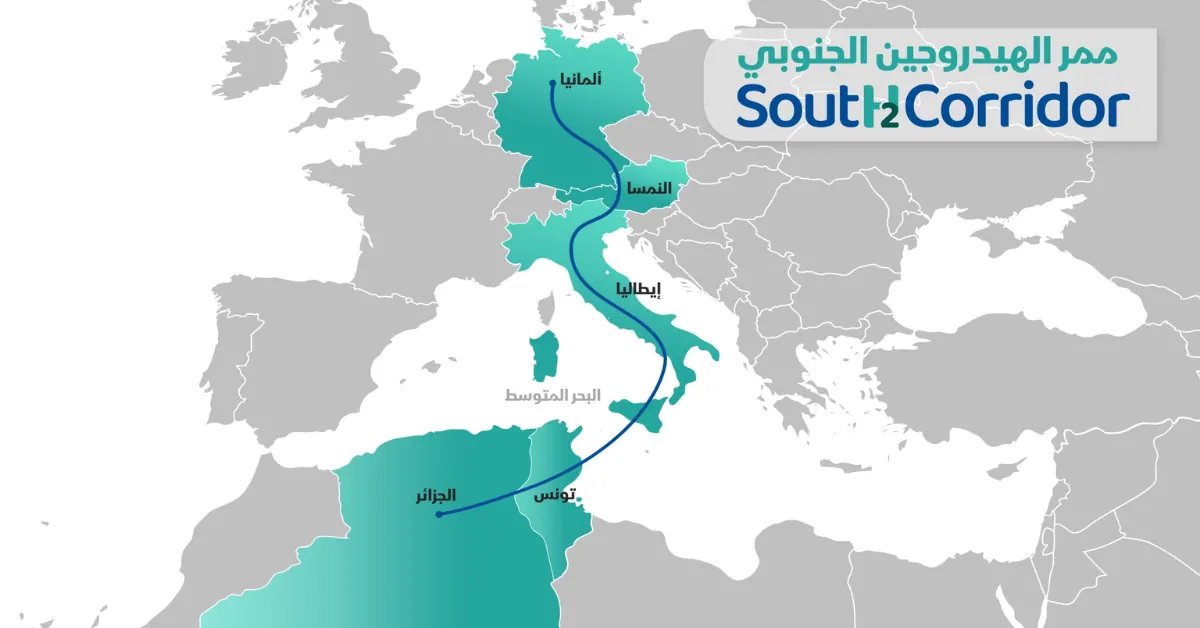
The green hydrogen project, also known as the SouthH2 Corridor, aims to transport hydrogen through pipelines over 3,300 kilometers, connecting North Africa to Italy, Austria, and Germany. Tunisia, along with Algeria, Italy, Austria, and Germany, signed the "Algiers Ministerial Declaration" to support the project, which includes the establishment of a dedicated secretariat to provide technical assistance. The United Nations Industrial Development Organization (UNIDO) is also involved in the project.
Haddad's comments come as Tunisia seeks to develop its renewable energy sector and capitalize on its potential for green hydrogen production. The country's participation in the SouthH2 Corridor project is expected to boost its economy and create new opportunities for growth. However, the project's success depends on addressing the challenges associated with water resources, which are essential for hydrogen production.
The SouthH2 Corridor project is seen as a strategic initiative to promote the development of renewable energies in North Africa and Europe. The project's proponents argue that it will contribute to reducing greenhouse gas emissions and promoting sustainable energy systems. However, concerns have been raised about the project's potential environmental impacts, including the effects of large-scale hydrogen production on water resources.
Tunisia's water resources are under pressure due to climate change, population growth, and agricultural demands. The country's authorities have implemented measures to conserve water and promote efficient use of this resource. The government's efforts to develop renewable energies, including green hydrogen, are part of a broader strategy to reduce dependence on fossil fuels and mitigate the impacts of climate change.
The green hydrogen project is expected to have a positive impact on Tunisia's economy and environment. The project's success will depend on careful planning, coordination, and management of the challenges associated with water resources. As the project moves forward, stakeholders will need to balance the benefits of green hydrogen production with the need to protect Tunisia's scarce water resources.
Key points
- The green hydrogen project requires an in-depth study of Tunisia's water resources to ensure sustainable production.
- Producing one kilogram of hydrogen requires approximately 9 liters of water, posing challenges for Tunisia's scarce water resources.
- The SouthH2 Corridor project aims to transport hydrogen through pipelines over 3,300 kilometers, connecting North Africa to Europe.