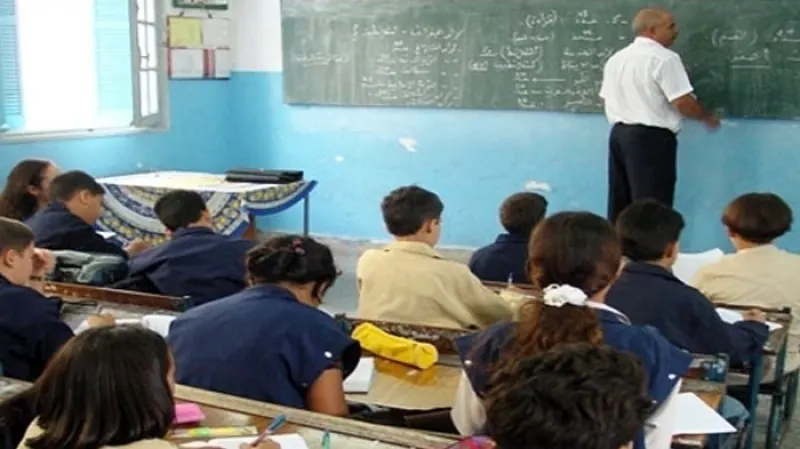
Tunisian education specialist Hedi Dahmen has called for a deep revision of the country's education system, stating that it no longer meets international standards or the needs of society and the job market. In a recent television appearance, Dahmen emphasized that the problem lies not only in the curriculum but also in teaching methods, school infrastructure, and evaluation mechanisms. He noted that the current system relies heavily on rote learning and traditional teaching methods.
Dahmen criticized the emphasis on quantitative aspects of education, which has failed to address the issue of school dropout rates. He stated that nearly 100,000 students drop out of school every year, highlighting the need for alternative vocational training pathways and modern educational approaches. To combat this phenomenon, Dahmen suggested evaluating the performance of training centers and their ability to meet new demands.
The specialist in social sciences argued that the role of teachers needs to be redefined, shifting from mere knowledge transmitters to supportive mentors and motivators for students. He emphasized that the challenge is no longer to transmit information, as students now have access to multiple sources of knowledge, but to teach them how to search, analyze, and exploit information while developing critical thinking skills.
Dahmen also criticized the current evaluation system, which relies heavily on grades and exams. He questioned the compatibility of these mechanisms with modern educational objectives and proposed implementing continuous evaluation throughout the academic term or semester. This approach would allow for a combination of quantitative and qualitative assessments.
Dahmen's comments highlight the need for a comprehensive overhaul of the Tunisian education system. He emphasized that the current system is outdated and fails to meet the needs of students, society, and the job market. The specialist's proposals aim to modernize teaching methods, improve student outcomes, and reduce dropout rates.
The issue of school dropouts is a pressing concern in Tunisia, with significant implications for the country's social and economic development. Dahmen's suggestion to create alternative vocational training pathways and modern educational approaches could help address this issue. However, implementing these proposals will require significant investment and a coordinated effort from policymakers, educators, and stakeholders.
The Tunisian government and education stakeholders will need to consider Dahmen's proposals and work towards implementing reforms that address the shortcomings of the current education system. This will require a collaborative effort to modernize teaching methods, improve infrastructure, and develop more effective evaluation mechanisms. Key to this process will be ensuring that the needs of students, society, and the job market are taken into account.
Key points
- The Tunisian education system needs a deep revision of its methods and approaches to address issues such as school dropout rates and outdated teaching methods.
- The current system relies heavily on rote learning and traditional teaching methods, which are no longer effective in meeting the needs of students and society.
- The role of teachers needs to be redefined to focus on supporting and mentoring students rather than simply transmitting knowledge.