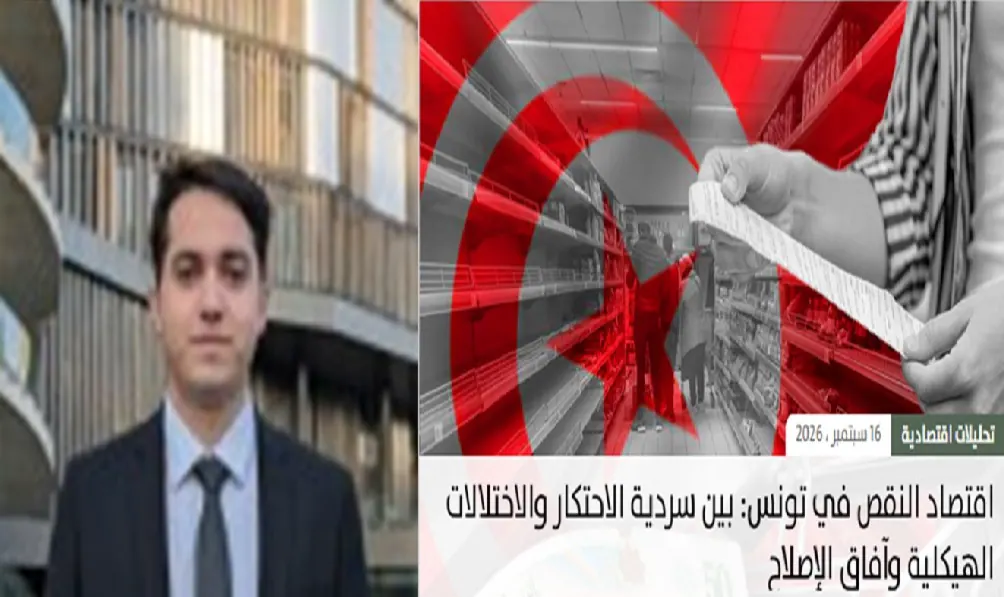
A recent study published by the Arab Research and Studies Center has shed light on the recurring shortages of various goods and services in Tunisia. The study, conducted by Tunisian economist Mohamed Baraa Al-Lafi, aims to analyze the economic and structural causes of these shortages. According to Al-Lafi, the study seeks to understand the role of monopolies and speculation in these crises, while also examining the structural issues that contribute to these shortages.
The study reveals that the Tunisian economy is characterized by a monopolistic and rentier economy, with a strong concentration of supply and production in the hands of a limited number of public and private enterprises. This concentration restricts competition and diversification of supply sources, making the economy vulnerable to shocks and disruptions in supply chains. Furthermore, the study notes that the state's dominance in the economy has led to a lack of investment and innovation, exacerbating the shortages.
Another significant factor contributing to the shortages is Tunisia's heavy reliance on imports for basic goods. The OECD reported in 2019 that 144 products are subject to prior authorization for importation, while 102 products are restricted from exportation. This dependence on imports makes the country vulnerable to fluctuations in foreign financing and availability of foreign exchange, which can quickly translate into shortages on the local market.
The study also highlights the issues with the pricing and subsidy system in Tunisia. When administered prices remain below production or supply costs, the incentives for producers and investors decrease. For instance, in the electricity sector, the tariff only covers around 60% of the cost of providing electricity. This imbalance worsens when the state fails to pay its dues to public enterprises on time, limiting their ability to finance production, supply, and investment.
The financial situation of public enterprises is another major concern. The study reports that public enterprises' claims on the state reached approximately 11.96 billion dinars at the end of 2023, with 6.96 billion dinars related to unpaid subsidies. The Tunisian Electricity and Gas Company (STEG) and the Grain Office are among the enterprises with significant claims on the state. The regulatory framework also forces public enterprises to deposit their treasury with the Treasury, limiting their ability to conserve the necessary liquidity for financing their operations and constituting sufficient stocks.
The study identifies the dysfunctional storage and distribution system as another factor contributing to the shortages. Restrictions on distribution circuits, the complexity of wholesale market organization, and the limited capacity of operators to constitute adequate stocks restrict the market's ability to reorient goods when a supply chain link is disrupted. The legal framework for combating speculation also poses risks for storing goods, which may weaken legitimate preventive storage incentives.
The study concludes that addressing the phenomenon of shortages requires tackling the underlying structural imbalances rather than just controlling monopolies and speculation. The study proposes a set of reforms, including reforming the pricing and subsidy system, reconstructing the financial situation of public enterprises, expanding supply channels to the private sector, and reforming the storage and distribution system.
Key points
- The Tunisian economy faces recurring shortages due to structural issues, including a monopolistic and rentier economy, heavy reliance on imports, and a flawed pricing and subsidy system.