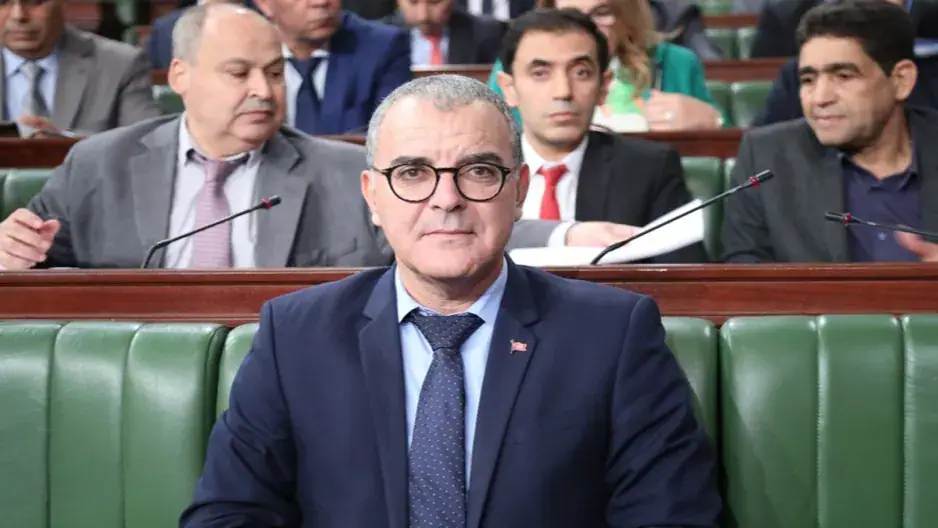
Tunisian Minister of Economy and Planning Samir Abdel Hafiz stated that despite global economic shocks and increasing uncertainty, the Tunisian economy has demonstrated relative resilience. He emphasized the need to continue implementing the development plan, supporting public institutions, and enhancing the state's social role. Abdel Hafiz made these remarks during a joint session of the Finance Committees of the House of Representatives and the National Council of Regions and Districts.
Abdel Hafiz highlighted that the ongoing war in the Middle East and its impact on international trade, along with energy market pressures and tightening monetary policies, make it challenging to forecast economic prospects and affect the investment climate. He noted that the initial growth assumption of 3.3% in 2026, as stated in the state's budget estimates, needs to be reassessed in light of international, regional, and national developments.
According to Abdel Hafiz, the economy grew by 2.6% during the first quarter of 2026 and 2.3% during the second quarter, resulting in a 2.4% growth rate for the first half of the year. These figures indicate a difference between the initial growth assumption and the actual growth rate, necessitating an update of expectations based on economic indicators and the impact of external shocks on production, investment, and demand.
The Minister of Economy and Planning also mentioned that the country's trade exchanges are supported by external demand, particularly from the European Union, which is Tunisia's primary trading partner. He cited statistics from the Tunisian Institute of Competitiveness and Quantitative Studies, which predict growth in trade exchanges. This external demand can support export activities, industrial production, and related services.
Abdel Hafiz stressed the importance of diversifying the production base to distribute risks and create new sources of growth. He emphasized the need to improve productivity, enhance sector interconnectivity, and increase their contribution to added value, employment, and exports. However, he also acknowledged that the economy faces vulnerabilities due to external crises, fluctuations in international demand, and energy costs.
The Minister called for the implementation of the development plan and its conversion into concrete actions and projects that support economic activity and improve investment returns. He emphasized the importance of adopting realistic and updatable economic estimates to determine priorities and assess available potential while maintaining a balance between growth requirements and the state's social role.
Abdel Hafiz concluded by highlighting the need for Tunisia to enhance its institutions' ability to adapt to market fluctuations, reduce production disruptions, and ensure a stable supply of energy and water. He also emphasized the importance of supporting public institutions to restore their productivity and improve their performance, which will contribute to economic activity and the state's social role.
Key points
- The Tunisian economy has shown relative resilience in the face of global economic shocks.
- The country's growth rate for the first half of 2026 was 2.4%, which is lower than the initial assumption of 3.3%.
- The Minister of Economy and Planning emphasized the need to implement the development plan and support public institutions to enhance economic activity and stability.