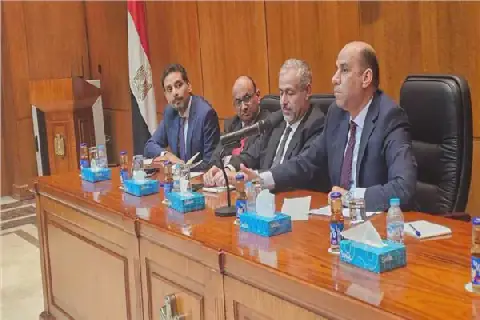
On September 25, 2026, the specialized criminal chamber in financial corruption at the Tunis Court convicted Mohamed Khelil, the former Minister of Religious Affairs, and Zouheir Latif, the founder of Telvza TV, to four years in prison each, along with a fine. The verdict was delivered in the presence of both defendants and pertains to a media contract linked to the national campaign "Ghodwa Khir". This campaign aimed to raise awareness against terrorism and extremism.
The case revolves around a contract worth approximately 650,000 dinars, signed between the Ministry of Religious Affairs and Zouheir Latif's company. The agreement included the production of programs, documentaries, and audiovisual spots, as well as the mobilization of a journalistic team and technical means. The contract allocated 118,000 dinars for audiovisual equipment and 36,000 dinars for the journalistic team. The prosecution argued that the use of direct negotiation to award the contract, rather than a traditional tender, was irregular.
The defense of the former minister, Mohamed Khelil, argued that the use of direct negotiation did not inherently imply corruption. They also pointed out that a commission from the presidency of the government had reviewed the file. Both defendants were heard before their lawyers presented their pleas. The verdict can be appealed.
The case highlights the ongoing efforts of Tunisian authorities to combat corruption. In recent years, several high-profile cases have resulted in significant prison sentences for individuals found guilty of corrupt practices. The judiciary has been working to reinforce its independence and effectiveness in addressing such cases.
Mohamed Khelil and Zouheir Latif were tried while free and their lawyers had the opportunity to present their defense. The court's decision reflects the seriousness with which the judiciary is addressing corruption, particularly in cases involving public funds and contracts.
Corruption remains a significant challenge in Tunisia, affecting various sectors and undermining public trust in institutions. The authorities have been taking steps to strengthen anti-corruption measures and enhance transparency in public procurement.
The sentencing of Mohamed Khelil and Zouheir Latif demonstrates the judiciary's commitment to holding individuals accountable for corrupt practices. The case serves as a reminder of the importance of adhering to legal procedures in public contracts and the consequences of failing to do so.
Key points
- A Tunisian court sentenced two men, including a former minister, to four years in prison for corruption related to a media contract.
- The case involves a contract worth 650,000 dinars for a national awareness campaign against terrorism and extremism.
- The verdict reflects ongoing efforts to combat corruption and reinforce the rule of law in Tunisia.