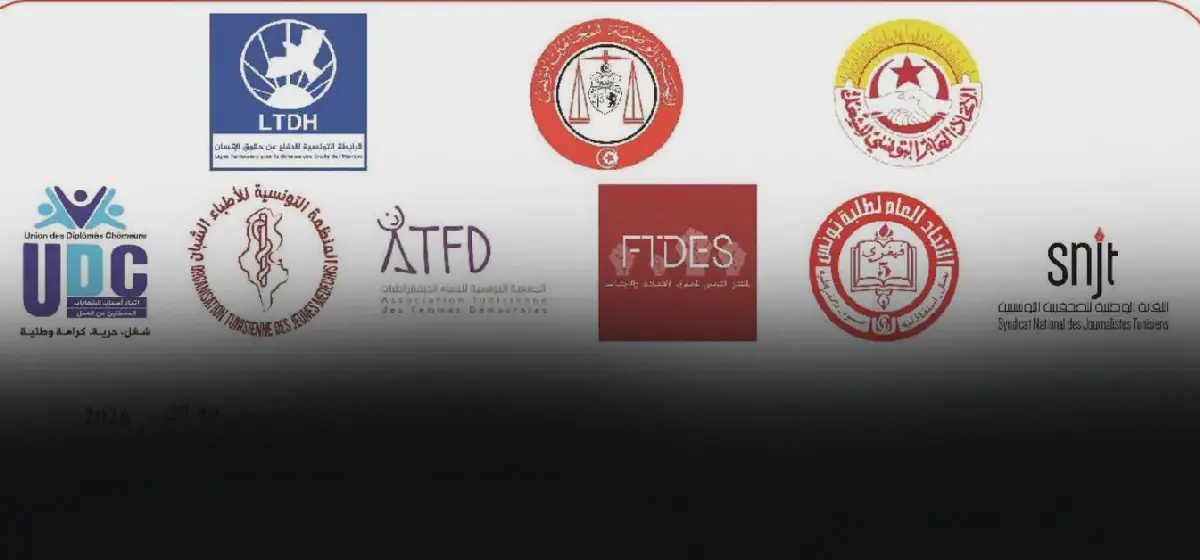
The Tunisian Coordination Framework, comprising the National Order of Lawyers (ONAT) and the General Tunisian Union of Labor (UGTT), has declared its intention to continue civil and peaceful mobilization. In a statement released on October 28, 2026, the framework announced new actions planned for the upcoming weeks at regional and national levels. These actions aim to defend rights, freedoms, and social and economic demands.
The framework describes the current situation in Tunisia as a multifaceted crisis encompassing politics, economy, society, and human rights. It highlights the decline in purchasing power, deterioration of public services, and growing concerns among Tunisians about their future. The framework's statement addresses several issues of public concern and emphasizes the need for collective action to address these challenges.
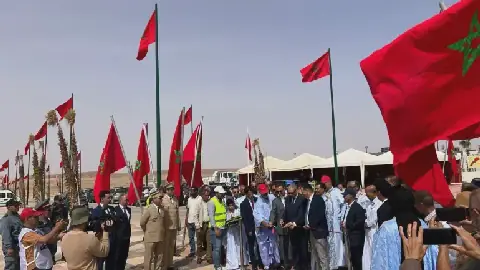
The Coordination Framework has praised participants in the October 17, 2026, civil and peaceful march. It commended their commitment to the non-violent nature of the demonstration, its organization, and its objectives. The framework views this event as a significant step in defending freedom, dignity, social rights, and democracy. It also sees it as an expression of the will of civil and social forces to work together for a Tunisia that guarantees a dignified life for all its citizens.
The framework reiterated its rejection of unilateral decisions and exclusion of civil society and its forces. It calls for respect for rights, freedoms, and equality, as well as independence of justice, the right to defense, and fair trial. The framework also advocates for real citizen participation in public affairs. According to its statement, Tunisia's crises cannot be resolved by silencing dissenting voices or marginalizing national and civil organizations.
The UGTT, ONAT, and the Tunisian League of Human Rights (LTDH) had previously announced the creation of a permanent coordination framework in a joint statement on September 3, 2026. This structure aims to promote a "societal dialogue" and is open to democratic forces that share its objectives. The framework's establishment reflects a broader effort to address Tunisia's challenges through collective action and cooperation.
The Coordination Framework's call for new mobilizations and regional coordinations reflects a growing desire for change in Tunisia. The framework's emphasis on peaceful and civil action suggests a commitment to non-violent protest and dialogue. As Tunisia continues to face significant economic and social challenges, the framework's efforts to promote collective action and cooperation may play a crucial role in shaping the country's future.
The situation in Tunisia remains complex, with ongoing concerns about human rights, economic stability, and social justice. The Coordination Framework's initiatives and the responses of the Tunisian government will likely have a significant impact on the country's trajectory. As the situation continues to evolve, the international community is watching closely, and the outcome of these developments will have implications for Tunisia and the broader region.
Key points
- The Tunisian Coordination Framework has announced new mobilizations and called for the creation of regional coordinations to address economic and social issues.
- The framework's efforts aim to promote collective action and cooperation to address Tunisia's multifaceted crisis.
- The situation in Tunisia remains complex, with ongoing concerns about human rights, economic stability, and social justice.