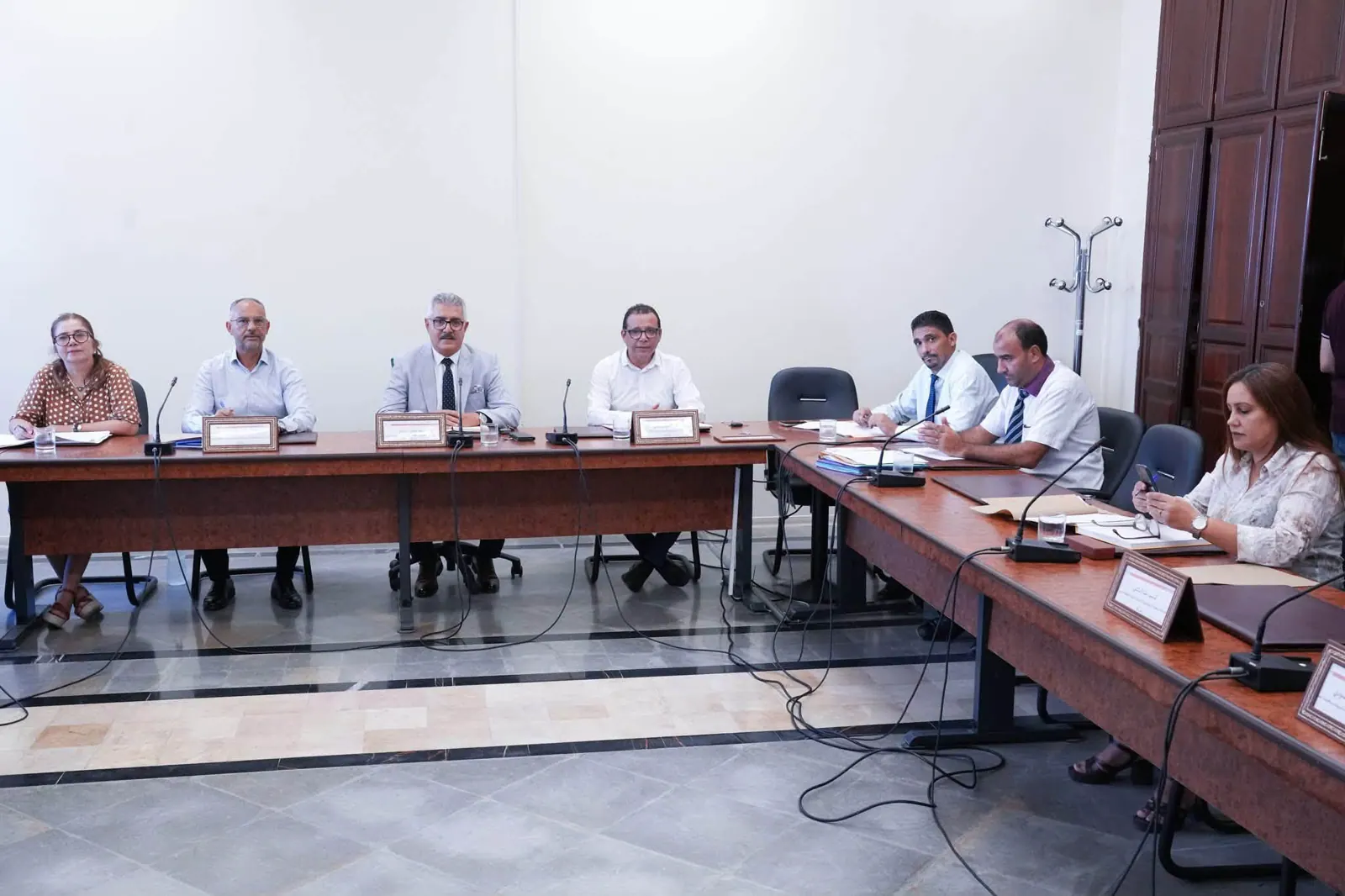
The Tunisian Committee for Administration, Development, Digitization, and Governance, and Anti-Corruption held a session on Thursday to discuss proposed laws and determine its work program for the upcoming period. The meeting addressed several proposed laws before the committee, with members exchanging views and emphasizing the importance of scheduling the committee's work to ensure efficiency in handling files related to its areas of expertise.
The committee reviewed the progress of its studies and hearings on the proposed laws, with members noting that they would continue to study all proposed laws referred to the committee. The members also discussed the provisions of Decree No. 4 of 2026, dated September 30, 2026, related to municipal councils, and its connection to several proposed laws referred to the committee regarding the establishment of new municipalities in various regions of the country.
The committee emphasized the continuation of its oversight work, particularly regarding digital transformation, which is one of the main axes of the state's economic and social program within the framework of combating corruption and ensuring transparency in administrative transactions. After listening to the Minister of Communication Technologies, the committee stressed the importance of continuing dialogue sessions with representatives of the executive branch in various sectors.
The committee also recalled a field visit to the Tunisia Smart Technology Poles institution in Ghazala, which allowed members to observe the difficulties and challenges that may hinder the development of technological poles in the country. The committee noted the importance of these poles in attracting national and foreign investment and decided to focus on issues related to digital transformation and communication technologies.
The committee plans to organize hearing sessions with various stakeholders and conduct field visits to institutions involved in digital transformation and investment stimulation in the digital economy. Based on proposals submitted by the attending members, the committee agreed to develop a work program that takes into account the various issues raised and schedules its implementation in line with the legislative schedule of the Council during the upcoming period.
The committee's work program will focus on promoting digital transformation, improving governance, and combating corruption. The committee aims to enhance transparency and accountability in administrative transactions and to stimulate investment in the digital economy. By doing so, the committee seeks to support the state's efforts to achieve economic and social development.
The committee's discussions reflect the Tunisian government's efforts to promote digital transformation and improve governance. The government's focus on digital transformation is part of its broader strategy to enhance economic and social development and to combat corruption. The committee's work program is expected to contribute to the achievement of these goals and to support the country's progress towards more transparent and accountable governance.
Key points
- The Tunisian Committee for Administration, Development, Digitization, and Governance, and Anti-Corruption is working to promote digital transformation and improve governance in the country.