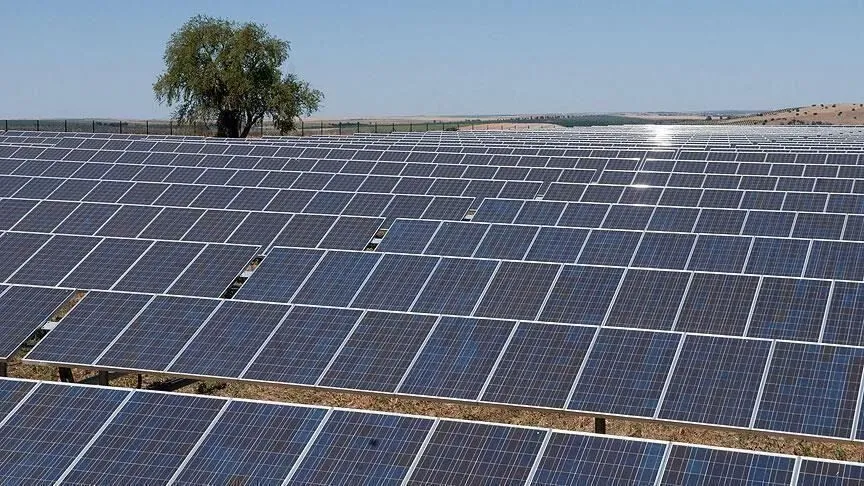
The Tunisian National Photovoltaic Chamber has proposed a program called "Energy Citizenship" to equip 1 million Tunisian households with free solar panels. These households consume less than 100 kWh of electricity per month. The program aims to implement this over five years, with a target of 200,000 households per year. According to the Chamber's president, Ali Al-Kanzari, this initiative could reduce the energy subsidy burden by approximately 2 billion dinars over the same period.
The target households represent around 1 million subscribers out of a total of 3.5 million subscribers to the Tunisian Electricity and Gas Company. The project could be financed through the Energy Transition Fund, with banks participating in financing recoverable projects. This option would help the Tunisian Electricity and Gas Company improve its financial balance gradually. Al-Kanzari made these statements on the sidelines of the fourth edition of the International Energy Transition Fair "SITE 2026".
Each household would be equipped with a solar panel and a micro-converter that converts the electricity produced by the panel from direct current to alternating current. This allows households to consume the electricity produced by their solar panel, while still using the electricity grid when production is insufficient. This technology enables households to optimize their energy consumption and reduce their dependence on the grid.
The "Energy Citizenship" program aligns with Tunisia's efforts to promote renewable energy and reduce its energy deficit. The program's implementation would require collaboration between the government, financial institutions, and the private sector. According to Al-Kanzari, the program's success would depend on the participation of banks in financing recoverable projects.
Tunisia has been actively promoting renewable energy in recent years, with a focus on solar and wind power. The country aims to increase its renewable energy capacity to 30% of its total energy production by 2030. The "Energy Citizenship" program is part of these efforts, aiming to encourage households to adopt clean energy and reduce their energy consumption.
The Tunisian government has launched several initiatives to promote renewable energy and energy efficiency. These include the creation of the Energy Transition Fund, which aims to support the development of renewable energy projects. The government has also launched programs to encourage households and businesses to adopt energy-efficient practices.
The "Energy Citizenship" program is expected to have a positive impact on Tunisia's energy sector, reducing the country's energy deficit and promoting renewable energy. The program's success will depend on its implementation and the participation of stakeholders, including households, financial institutions, and the private sector. The program's effects will be monitored and evaluated to assess its impact on Tunisia's energy sector.
Key points
- The Tunisian National Photovoltaic Chamber proposes equipping 1 million low-consumption households with free solar panels over five years.
- The program aims to reduce the energy subsidy burden by approximately 2 billion dinars over five years.
- The project could be financed through the Energy Transition Fund, with banks participating in financing recoverable projects.