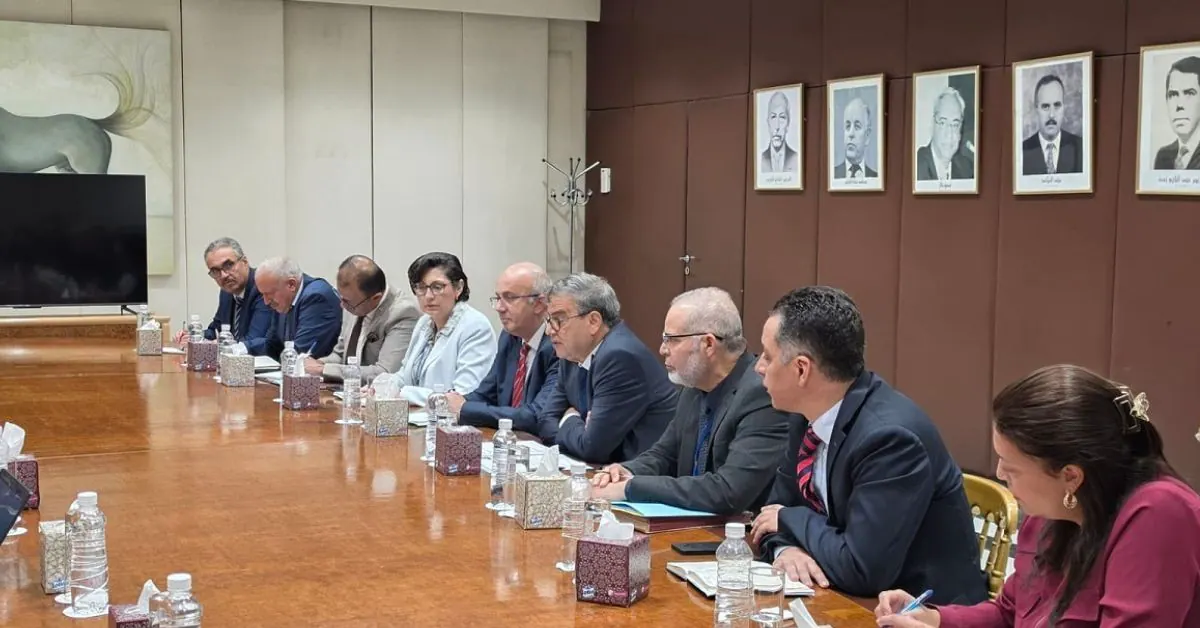
Tunisian Central Bank Governor Fathi Zouhir Nouri has urged for a shift from a "survival mindset to a wealth creation mindset" in the country. He emphasized the need to accelerate the pace of project implementation and investments, particularly in the phosphate and renewable energy sectors. This call was made during a meeting with the Regional Director of the World Bank for the Maghreb and Malta, Ahmadou Mustafa Ndaye, and the Director of the International Finance Corporation for Africa, Ary Neim.
The meeting, which took place at the Central Bank of Tunisia, was attended by several high-ranking officials from the bank and a delegation from the World Bank. Nouri highlighted Tunisia's ability to meet its commitments and demonstrate resilience in the face of climate and geopolitical shocks. However, he stressed the need for a change in approach, stating that it is time for the country to move from a survival mindset to one of wealth creation.
Nouri pointed out that two key areas that require attention are the development of the phosphate sector and renewable energy. He also emphasized the importance of promoting private investment, which is being closely monitored by the Central Bank. The governor praised the quality of cooperation with the World Bank and the ongoing support provided to Tunisia, noting that the country has significant potential and numerous ambitious projects.
The World Bank's Regional Director for the Maghreb and Malta, Ahmadou Mustafa Ndaye, stated that the bank is committed to providing comprehensive solutions to its member countries, particularly in the areas of infrastructure development and private sector promotion. He described the partnership with Tunisia as "model" and emphasized that it is based on achieving results and finding concrete solutions.
Ary Neim, Director of the International Finance Corporation for Africa, highlighted Tunisia's significant potential and expressed the corporation's goal of substantially increasing its financing for the country. He announced plans to implement major investments in infrastructure and support Tunisian companies' access to international markets through tools and mechanisms aimed at facilitating their access to financing.
The International Finance Corporation and the World Bank have reaffirmed their commitment to supporting Tunisia. The meeting between Nouri, Ndaye, and Neim reflects the ongoing cooperation between Tunisia and these international financial institutions. The Central Bank of Tunisia has been working closely with these organizations to promote economic development and stability in the country.
The Tunisian economy has faced significant challenges in recent years, including an economic crisis that has been exacerbated by a lack of bold reforms and a tendency to delay decision-making. The country's phosphate sector, a significant contributor to its economy, has been particularly affected. Efforts to revitalize this sector and promote renewable energy are seen as crucial to Tunisia's economic recovery and growth.
Key points
- The Tunisian Central Bank governor has called for accelerated investments to shift the country's focus from survival to wealth creation.
- The World Bank and International Finance Corporation have reaffirmed their commitment to supporting Tunisia's economic development.
- Tunisia aims to develop its phosphate sector and renewable energy industries to drive economic growth.