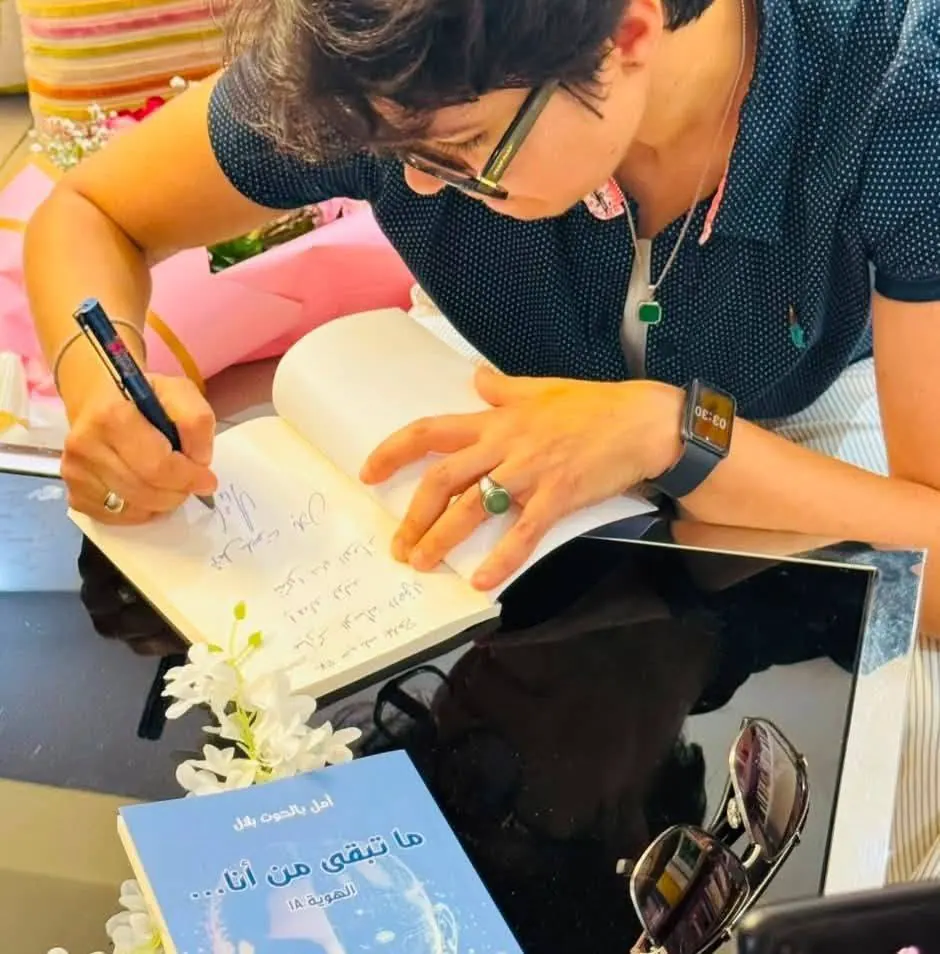
Tunisian journalist and writer Amal Belhout Blel has recently published her book "Ce qui reste de moi" ("ما تبقى من أنا"), which explores the theme of identity in the era of artificial intelligence. The book is her third work in Arabic, following "Souk Enhas" (The Copper Market) and "Siret el Baya" (Biography of Baya). Belhout Blel's work is part of a current reflection on the impact of AI on human identity. Her book is written in modern poetry style and has sparked interest in the literary community.
In an interview with L'Économiste Maghrébin, Belhout Blel shared her views on the use of AI in writing. She believes that AI is neither inherently good nor necessary, but rather a tool that writers can choose to use or not. The key, she emphasizes, is for writers to maintain control over their work and ensure that their unique voice remains recognizable. Belhout Blel's background in journalism, having studied at the Institut de presse et des sciences de l'information (IPSI) in Tunis and the École supérieure de journalisme (ESJ) in Paris, informs her perspective on the role of AI in creative writing.
Belhout Blel sees AI as a potential tool for writers, capable of serving as a research assistant, a means of organizing sources, or a catalyst for ideas. However, she also stresses the importance of vigilance, as with any innovation. The writer must remain in control and prioritize honesty and sincerity in their work. This is particularly crucial in the arts, where trust and emotional intelligence play a significant role in the reader-author relationship. Belhout Blel's views on AI and writing have sparked a nuanced discussion in the literary community.
The author's latest book, "Ce qui reste de moi," takes the form of a unique dialogue or interview, blending journalism and writing. The text is structured around an imaginary conversation with "l'Éveil" (صحوة), a central character that embodies both intimacy and algorithmic projection. This character serves as a mirror to the soul, reflecting data and inspiring introspection. Belhout Blel's approach to writing is characterized by her ability to navigate the intersection of journalism and creative writing.
Belhout Blel's professional background spans various media platforms, including radio and television production. She has worked as a scriptwriter for Nessma TV, a producer and host for Radio Jeunes Tunisie, and a correspondent for Koul Al-Arab magazine in Paris. Her diverse experience has equipped her with a unique perspective on the role of AI in creative writing. As an ambassador for the Universal Peace Federation International, Belhout Blel has also demonstrated her commitment to promoting peace and understanding.
The book "Ce qui reste de moi" poses fundamental questions about the human condition in the age of AI. Belhout Blel's work encourages readers to reflect on the impact of technology on identity and the importance of preserving human agency. Her writing style, which blends poetry and prose, adds to the book's emotional resonance. The author's use of imagery and metaphor creates a dreamlike atmosphere, drawing the reader into the world of the book.
Belhout Blel's exploration of AI and identity is both timely and thought-provoking. Her work challenges readers to consider the implications of emerging technologies on human relationships and creativity. As AI continues to evolve, Belhout Blel's book offers a nuanced perspective on the role of technology in shaping our understanding of ourselves and the world around us. Her writing serves as a testament to the enduring power of human creativity and imagination.
Key points
- Amal Belhout Blel's book "Ce qui reste de moi" explores the intersection of identity and artificial intelligence.
- The author sees AI as a tool that writers can choose to use or not, emphasizing the importance of maintaining control over one's work.
- Belhout Blel's background in journalism informs her perspective on the role of AI in creative writing.