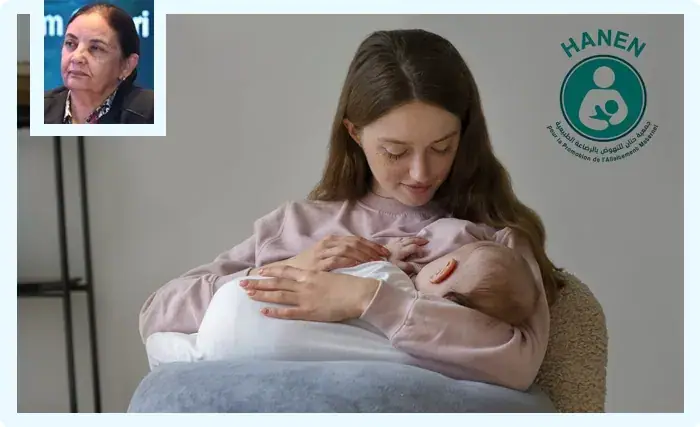
The Tunisian Association HANEN recently organized its 7th National Day to promote breastfeeding, themed "Breastfeed Today, Protect Tomorrow." The event, held at the Tunis City of Sciences on October 31, 2026, brought together representatives from the Ministry of Health, DSSB, ONFP, UNICEF, and other stakeholders. The association's president, Dr. Emna Barkaoui, emphasized that breastfeeding is a collective responsibility requiring reliable information, adapted support, and favorable conditions at every stage of motherhood.
The meeting identified six priority areas for action to promote breastfeeding. Firstly, HANEN recommends optimizing intersectoral collaboration among various ministries and stakeholders to promote a "One Health" approach. This involves mobilizing the Ministries of Health, Education, Higher Education and Research, Family, Women, Childhood, and Social Affairs, as well as the UTICA and civil society. The goal is to place breastfeeding at the heart of collective action.
HANEN also suggests intensifying public awareness and education on the benefits of breast milk for mothers and children. This includes highlighting the importance of skin-to-skin contact and early breastfeeding through simple and accessible messages. The association emphasizes the need to strengthen the application of the WHO's International Code, which regulates the marketing of breast milk substitutes. This involves integrating the Code into the training of healthcare professionals and improving control over advertising practices.
The association recommends promoting new practices that support breastfeeding, such as prenatal collection of colostrum. HANEN also stresses the importance of providing accurate, simple, and supportive information to expectant mothers and ensuring they receive adapted and secure support throughout their journey. Furthermore, the association suggests multiplying multicenter studies in maternity hospitals to assess breastfeeding practices and identify areas for improvement.
The scientific community recognizes the protective effects of breastfeeding on the health of mothers and children. Studies have shown that breastfeeding reduces the risk of hypertension, type 2 diabetes, breast cancer, and ovarian cancer in mothers. In children, breastfeeding decreases the risk of obesity by 26%. The meeting also highlighted the challenges faced by women, particularly after cesarean sections and when returning to work.
To address these challenges, HANEN recommends developing dedicated spaces for breastfeeding and milk expression in companies and public areas. The association also emphasizes the need for effective application of maternity leave policies. By implementing these measures, women can continue breastfeeding in better conditions. Dr. Barkaoui reaffirmed HANEN's commitment to making breastfeeding a shared priority.
The association encourages a supportive environment for all mothers, emphasizing that those who are unable to breastfeed should not be stigmatized. Instead, they should receive the same respect, support, and kindness as others. By working together, stakeholders can promote a culture that values and supports breastfeeding as a vital aspect of public health.
Key points
- The Tunisian Association HANEN has formulated six recommendations to promote breastfeeding and better protect mothers and children.
- The recommendations include optimizing intersectoral collaboration, intensifying public awareness, and promoting new practices that support breastfeeding.
- The association emphasizes the need for a supportive environment for all mothers, regardless of their ability to breastfeed.