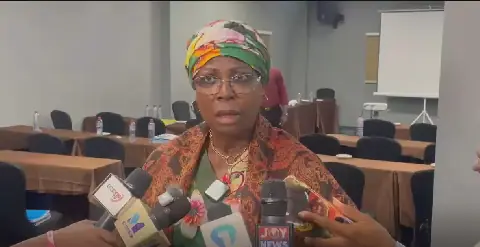
The Tunisian Association for Governance and Equal Opportunities between Men and Women in Decision-Making Positions has called for the promotion of equal pay for equal work. Association president Amal Smoudi Khamari stated that equal pay for work of equal value is a fundamental right and a component of economic and social justice, as well as sustainable development. Khamari made these remarks on the occasion of the International Equal Pay Day, which falls on September 17th.
Tunisia has been committed to equal pay for decades, having ratified International Labour Organization (ILO) Convention 100 in 1968. This convention concerns equal pay for male and female workers for work of equal value. Khamari emphasized that the challenge now lies in transitioning from theoretical equality to actual equality in pay and career progression, including recruitment, promotion, training, and access to decision-making positions.
Khamari stressed that equal pay should not be limited to "equal pay for equal work," but rather encompass equal pay for work of equal value, based on objective and transparent criteria for evaluating jobs, competencies, and responsibilities. She called for the production and dissemination of data and statistics classified by gender, sector, profession, and level of responsibility, allowing for accurate measurement of pay gaps and identification of their causes.
The association president highlighted that addressing pay gaps cannot be separated from women's career paths, particularly the impact of motherhood and family responsibilities on training, promotion, and assumption of responsibilities. Khamari proposed studying the possibility of establishing an institutional mechanism for equality within Tunisian administrations and institutions, similar to those in comparative experiences.
Khamari also called for increased transparency in wage systems and decision-making mechanisms, as well as the adoption of objective criteria for evaluating jobs and work of equal value. This would ensure equal opportunities for recruitment, promotion, training, and assumption of responsibilities. She advocated for the development of mechanisms to measure and publish pay gaps between men and women.
Furthermore, Khamari requested the establishment of an equality mechanism within institutions and administrations to monitor issues of discrimination and equality, and to support women in their career paths. This would involve creating programs for reintegration, training, and updating skills after periods of interruption related to motherhood or family responsibilities.
The Tunisian Association for Governance and Equal Opportunities between Men and Women in Decision-Making Positions emphasizes that policies supporting work-life balance are essential for promoting economic equality. By addressing pay gaps and supporting women's career advancement, Tunisia can move closer to achieving true equality and social justice.
Key points
- The Tunisian association is urging the government to promote equal pay for equal work to ensure economic and social justice.
- Tunisia ratified ILO Convention 100 in 1968, committing to equal pay for male and female workers for work of equal value.
- The association proposes establishing an institutional mechanism for equality within Tunisian administrations and institutions.