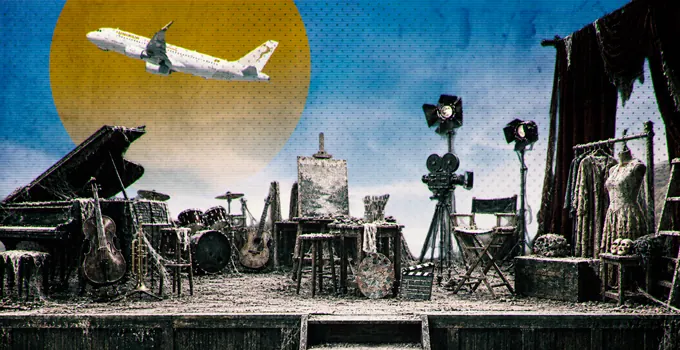
A growing exodus of Tunisian artists is underway, with many creatives leaving the country in search of better opportunities. Habib Belhadi, director of the Le Rio cultural space, has sounded the alarm, stating that the artistic community is in a state of panic. He attributes this to a lack of resources and infrastructure to support the arts, despite an increase in art education. This has led to a brain drain, with many talented artists seeking opportunities abroad.
The Tunisian Ministry of Higher Education reported that there were 42,172 students enrolled in the "Letters and Arts" sector in the public sector in 2024-2025. Music is the most widely represented discipline, with 25 public institutes of music and dance offering training to around 6,820 students. However, despite this investment in art education, many graduates struggle to find opportunities in Tunisia. The country's artistic sector has long been plagued by underfunding, outdated infrastructure, and a lack of clear legal status for artists.
Many Tunisian artists are leaving the country due to a combination of factors, including a lack of resources, a stifling bureaucratic system, and a hostile social and political climate. Ghaith Naffati, a comedian who has chosen to leave Tunisia, cites a flawed system of financing for the arts, which he believes stifles creativity and maintains state control over artistic production. He argues that artists must learn to produce and disseminate their work independently, rather than relying on government subsidies.
For some artists, the decision to leave Tunisia is not a rejection of their country, but a necessary step to advance their careers. Wissal Labidi, an author and performer, is planning to move to Canada, France, or Belgium after spending time in Istanbul. She sees this as a strategic move to strengthen her career before potentially returning to Tunisia in the future. Labidi highlights a paradoxical situation, where Tunisian cultural institutions often value artistic credentials gained abroad more than those achieved locally.
The trend of artists leaving Tunisia is not limited to specific disciplines, with dancers, actors, technicians, and musicians all seeking opportunities abroad. Oumaima Bahri, a comedian, notes that the destinations vary depending on the profession, with Europe attracting choreographers and dancers, while technicians and comedians head to the Gulf states and Egypt. The Canadian city of Montreal has also become a popular destination, particularly since the reopening of its immigration programs.
The decline of the social and economic climate in Tunisia has had a profound impact on the artistic community. Bahri notes that many artists feel a sense of hopelessness, with no clear reason to continue creating. The precarious economic situation and lack of effective support systems for freelance artists exacerbate the problem. The artist's sense of purpose and meaning appears to have eroded, particularly in the face of widespread water and electricity shortages.
While leaving Tunisia may offer new opportunities, it is not a straightforward solution for artists. Comedian Oumaima Bahri notes that departing means sacrificing professional gains, transitional jobs, and recognition of their skills or diplomas. However, for many, the benefits of a new environment and better infrastructure outweigh the costs. As the artistic community continues to flee, Tunisia risks losing its creative talent and vitality.
Key points
- Many Tunisian artists are leaving the country due to a lack of resources, infrastructure, and support for the arts.
- The destinations for these artists vary depending on their profession, with Europe, the Gulf states, Egypt, and Canada being popular choices.
- The decline of the social and economic climate in Tunisia has had a profound impact on the artistic community, leading to a sense of hopelessness and disillusionment.