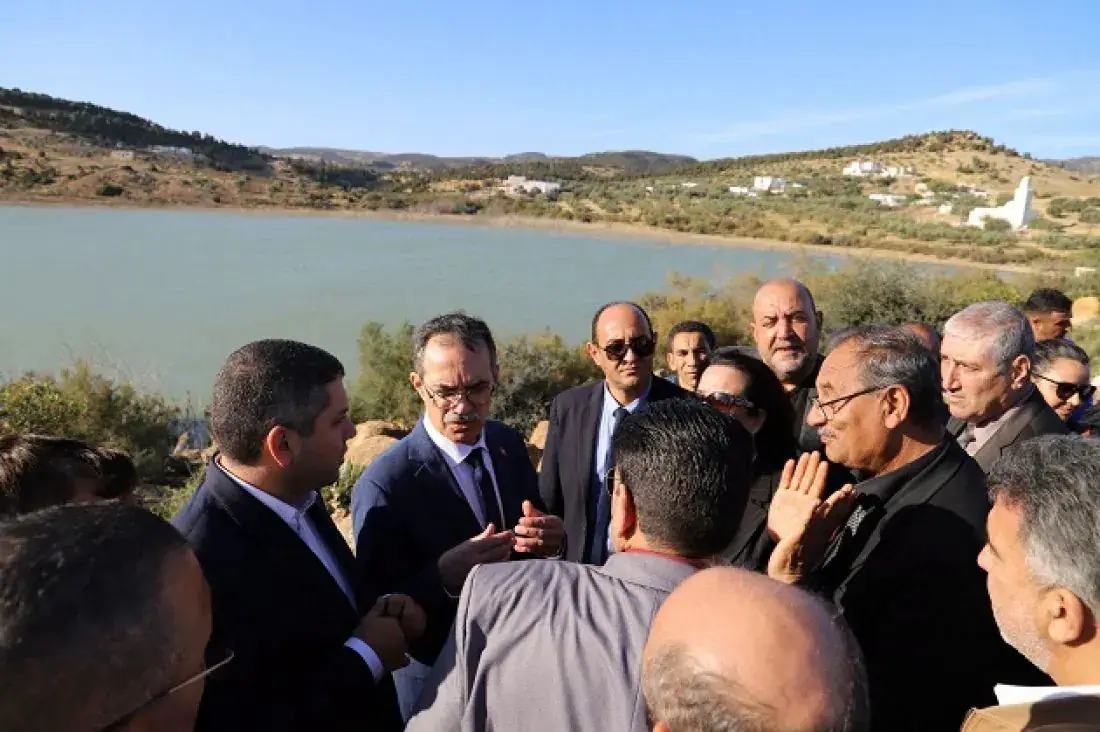
On Tuesday, Tunisian Minister of Agriculture and Water Resources, Azzedine Ben Cheikh, conducted a working visit to Nabeul, accompanied by the region's governor, Hanaa Chouchane. The visit aimed to assess the status of various water projects and facilities, review the progress of maintenance work, and discuss ways to enhance drinking water supply and irrigation. This visit is part of the ministry's efforts to optimize water resource management and promote sustainable development in the region.
The minister began his visit by inspecting the Wadi Dhawadi in Sidi Jedidi, where he was briefed on the challenges posed by the wadi's condition, particularly during rainfall periods, which can lead to floods that disrupt citizens' movement and threaten their safety. Locals expressed concerns and requested urgent intervention, including raising the level of the canal, clearing the wadi, and removing accumulated sediment. Ben Cheikh emphasized the ministry's commitment to coordinating with relevant authorities to study the issue and find suitable solutions to ensure residents' safety and protect their property.
The minister then visited the Mzireaa region, where he inspected the Wadi Qattar mountain dam and reviewed the necessary interventions to maintain its capacity and role in collecting rainwater. He instructed the acceleration of maintenance work on the spillway channel to ensure optimal use of the facility and enhance its efficiency in mobilizing water resources and protecting agricultural land. The visit also included a stop at the North Water Pumping Station in Beli, where the minister was informed about the station's operating conditions and its role in supplying irrigation water to agricultural areas in the region.
During the visit, the minister and his delegation discussed possible technical solutions to accelerate the maintenance of the pumping station's equipment and rehabilitate it to ensure continuity of service and effective interventions. Ben Cheikh stressed the need to provide additional irrigation water for potato crops to support national production and improve market supply. He also encouraged the cultivation of leafy greens and the development of large irrigated crops, particularly cereals, to expand irrigated areas and enhance agricultural production and food security.
The minister also inspected the water intake on the Medjerda - Ouest Canal, which supplies irrigation water to the Turkia irrigated area. He was briefed on the facility's role in providing water resources for agricultural activities and ensuring regular supply to support farmers in securing their crops. The visit also covered the status of several water clusters and the challenges they face in managing water systems and ensuring continuous drinking water supply.
The interventions discussed during the visit aim to improve drinking water supply conditions and secure the needs of around 4000 citizens benefiting from this service. The minister emphasized the importance of finding practical and technical solutions to overcome the challenges posed and enhance the efficiency of water systems to ensure sustainable services for residents.
Overall, the visit reflects the government's efforts to prioritize water resource management and promote sustainable agricultural development in the region. The minister's inspection of various water projects and facilities highlights the importance of optimizing water use and ensuring efficient services to support the local population and economy.
Key points
- The visit aimed to assess the status of various water projects and facilities in Nabeul and discuss ways to enhance drinking water supply and irrigation.
Reporting sources
- Jawhara FM · Jawhara FM