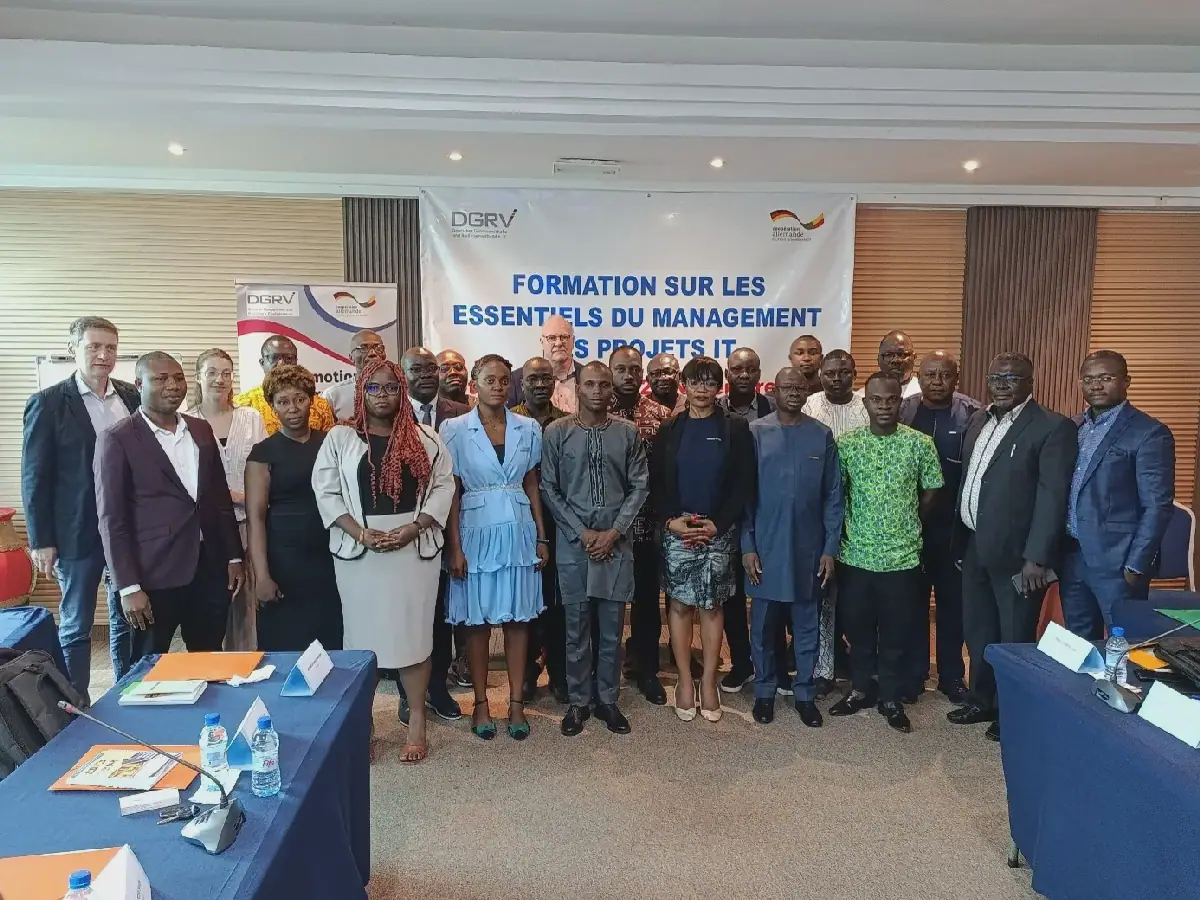
The Deutscher Genossenschafts- und Raiffeisenverband e.V (Dgrv), a German cooperative organization, has initiated a training program for microfinance institutions in Benin and Cameroon to improve their IT project management skills. The program aims to equip technical cadres and IT managers with the necessary tools and methods to effectively manage technological projects. This training is a response to the identified need within the cooperative microfinance networks supported by Dgrv. According to Holger Grimm, Dgrv director, institutions must master information technology to ensure their sustainability and profitability.
The training program combines eight weeks of online learning with three days of in-person sessions in Cotonou, from November 24 to 26. The program covers essential aspects of IT project management, including project initiation, stakeholder identification, requirement definition, planning, implementation, and monitoring. The training is based on international standards from the Project Management Institute (PMI) and takes into account the operational realities of African microfinance institutions. Participants apply the acquired knowledge to a concrete project within their institution.
The training program aims to provide IT managers and technical cadres with methodological skills and practical tools to manage technological projects from initiation to closure. This includes better planning, coordination of actors, and ensuring service continuity during technological changes. The program's pedagogical approach consists of two complementary sequences: online learning and in-person sessions. The online phase allowed participants to complete nine modules and familiarize themselves with different project management methods.
The in-person phase in Cotonou involved the presentation and evaluation of participants' projects before a jury. The projects were based on real-life experiences, and the presentations provided an opportunity for participants to share their experiences and compare methods. According to Oladé Jude Koukpaki, an information system assistant, the training highlighted the need to involve all services in IT project management, not just IT professionals. He appreciated the diversity of institutions represented, which facilitated experience sharing.
Parfait Maurice Glèlè, director of IT and technological systems at a microfinance institution, stated that the training allowed his team to reassess their work methods. The team had already implemented some activities but without systematic documentation. The training provided tools and support to establish a more solid foundation for managing projects from start to finish. The acquired skills are expected to improve project management, activity documentation, communication, and change management.
The Dgrv plans to sustain the acquired skills by having each partner institution designate four to six participants, promoting knowledge sharing within teams. The training program is part of Dgrv's efforts to support the digital transformation of microfinance institutions in Africa. According to Holger Grimm, mastering IT project management is crucial for the sustainability and profitability of these institutions.
The training program's impact is expected to be significant, with participants from various microfinance institutions in Benin and Cameroon. The program's relevance is underscored by the growing importance of digital technologies in the microfinance sector. By enhancing IT project management skills, microfinance institutions can better navigate the challenges of digital transformation and improve their services to clients.
Key points
- Microfinance institutions in Benin and Cameroon receive IT project management training to enhance their digital transformation.