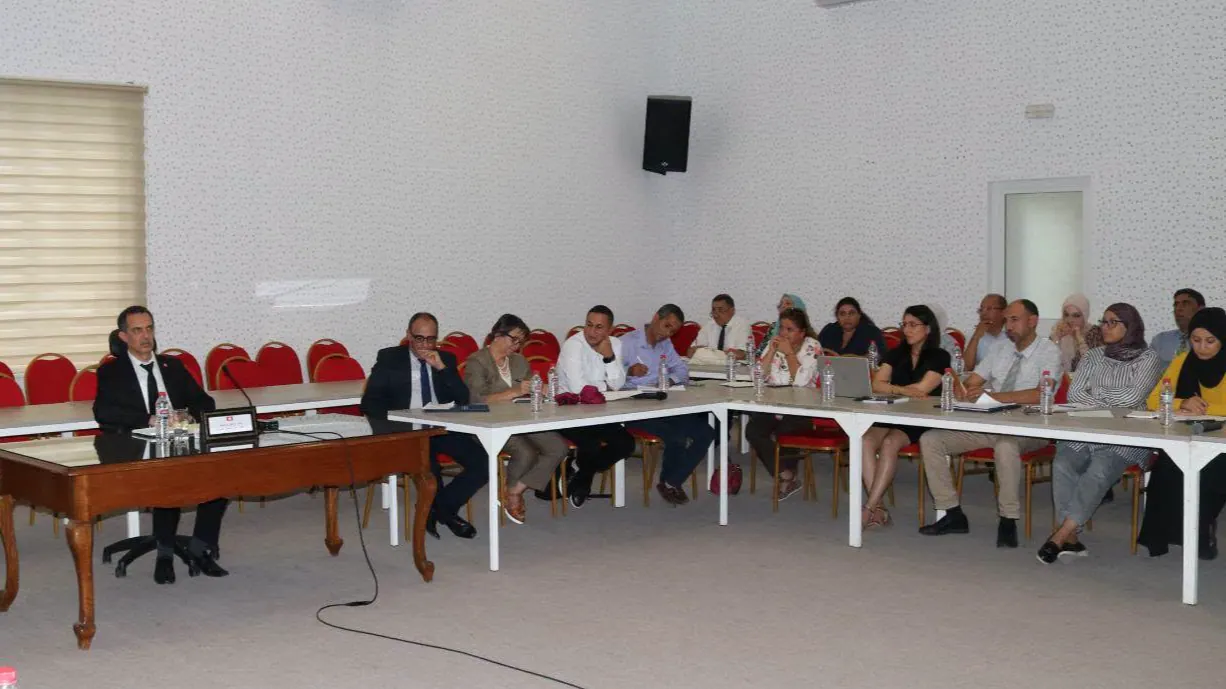
On September 23, 2026, Tunisian Agriculture Minister Azeddine Ben Sheikh led a working session focused on introducing mechanisms for climate finance provided by the Green Climate Fund (GCF) and the Loss and Damage Fund (FRLD). The goal was to explore ways to mobilize international financial resources for priority agricultural, water, and maritime projects. Discussions centered on adaptation to climate change, reducing greenhouse gas emissions, and addressing losses and damages caused by extreme weather events.
The session, attended by high-ranking officials from the Ministry of Agriculture, Water Resources, and Maritime Fishing, as well as representatives from the Ministry of Environment and other relevant structures, aimed to support the Ministry's efforts to mobilize international financial resources. The objective was to prepare a national portfolio of priority projects that can be developed and financed, aligning with national and sectoral needs, as well as international fund criteria.
The meeting included presentations on the objectives, areas of intervention, and access conditions for available financing from the GCF and FRLD. The role of the Agricultural Investment Promotion Agency as a national structure accredited by the GCF was highlighted, enabling it to contribute to mobilizing financing and accompanying national structures in preparing and developing fundable projects.
Discussions also focused on the impacts of climate change on agricultural, water, and maritime sectors, including rising temperatures, declining rainfall, and increased frequency of droughts, heatwaves, and floods. These events exert growing pressure on water resources, irrigation water, agricultural land, pastures, livestock production, and strategic crops, as well as on forests, ecosystems, marine resources, and the fishing and aquaculture sectors.
Minister Ben Sheikh emphasized the importance of enhancing coordination and integration among relevant ministries and structures to develop projects that meet national priorities and effectively utilize available climate finance opportunities. He recommended strengthening the role of scientific research in developing projects and determining priorities, in partnership with the Agricultural Investment Promotion Agency.
The Minister called for accelerating the use of available climate finance mechanisms, ensuring that proposed projects are realistic, feasible, and directly linked to actual sectoral needs. He highlighted the importance of including projects for the maritime fishing and aquaculture sectors in the portfolio of priority climate projects, given the sensitivity of marine resources and ecosystems to climate change.
The parties agreed to continue coordination and work on preparing a national portfolio of climate finance projects, developing concept notes, and prioritizing projects based on their readiness and financing potential. This aims to enhance Tunisia's capacity to mobilize international financial resources to address climate change impacts and support the resilience of agricultural, water, and maritime sectors.
Key points
- The Tunisian government is working to mobilize international climate finance to support priority projects in the agricultural, water, and maritime sectors.
- The Green Climate Fund and Loss and Damage Fund are key mechanisms for providing climate finance to developing countries like Tunisia.
- The Tunisian Agriculture Minister emphasized the need for coordination and integration among relevant ministries and structures to effectively utilize available climate finance opportunities.