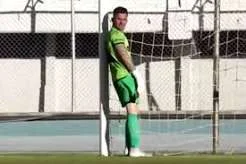
Argentine goalkeeper Gustavo Tesonotte made headlines in Bolivia after refusing to attempt a save from a penalty kick in an apparent protest against referee Arteaga. The unusual incident occurred during a match, creating a bizarre scene as Tesonotte stood aside while the penalty was taken. This act of protest was reportedly in response to a refereeing decision that had angered Tesonotte and his team. The incident has sparked discussion about refereeing decisions and the reactions they can provoke from players during highly contested matches.
The controversy began when Tesonotte, instead of taking his position and trying to stop the spot-kick, deliberately stood aside as the penalty was taken. This unusual form of protest by a player against a match official has attracted significant attention. The incident has raised questions about the impact of refereeing decisions on the game and the ways in which players may choose to express their dissent. Tesonotte's actions have been widely discussed in the football community.
The Bolivian Football Federation's National Referees Commission took action following the incident, suspending referee Arteaga. The suspension was announced after the incident, highlighting the seriousness with which the football authorities viewed Tesonotte's protest and the initial refereeing decision that led to it. The suspension of Arteaga has been seen as a measure to address concerns about refereeing standards and to emphasize the importance of fair play.
Tesonotte's decision to refuse saving the penalty has been viewed as one of the more unusual forms of protest by a player against a match official. The incident has sparked a wider debate about the relationship between players and referees, and the ways in which disputes can arise during matches. Discussions have centered on how such incidents can be managed and how referees can work to prevent similar situations in the future.
The incident has also highlighted the pressures and challenges faced by referees in making decisions during highly contested matches. Referees often have to make quick decisions in high-pressure situations, and their judgments can significantly impact the outcome of a game. The reaction of Tesonotte and his team to the refereeing decision has been seen as a reflection of the intense emotions and high stakes involved in competitive football.
The reaction to Tesonotte's actions has been varied, with some viewing his protest as a legitimate response to a perceived injustice, while others have criticized his approach. The debate has centered on the balance between allowing players to express their dissent and maintaining respect for referees and the game. The incident has raised important questions about player behavior and the conduct of matches.
The incident involving Tesonotte and referee Arteaga serves as a reminder of the complexities and controversies that can arise in football. The reactions of players, officials, and the wider football community to such incidents can provide valuable insights into the dynamics of the game and the importance of fair play. The incident will likely continue to be discussed in the context of ongoing debates about refereeing, player behavior, and the conduct of matches.
Key points
- The incident involving Gustavo Tesonotte and referee Arteaga has sparked a wider debate about refereeing decisions and player protests in football.
- The Bolivian Football Federation's National Referees Commission suspended referee Arteaga following the incident.
- Tesonotte's actions have been seen as a reflection of the intense emotions and high stakes involved in competitive football.