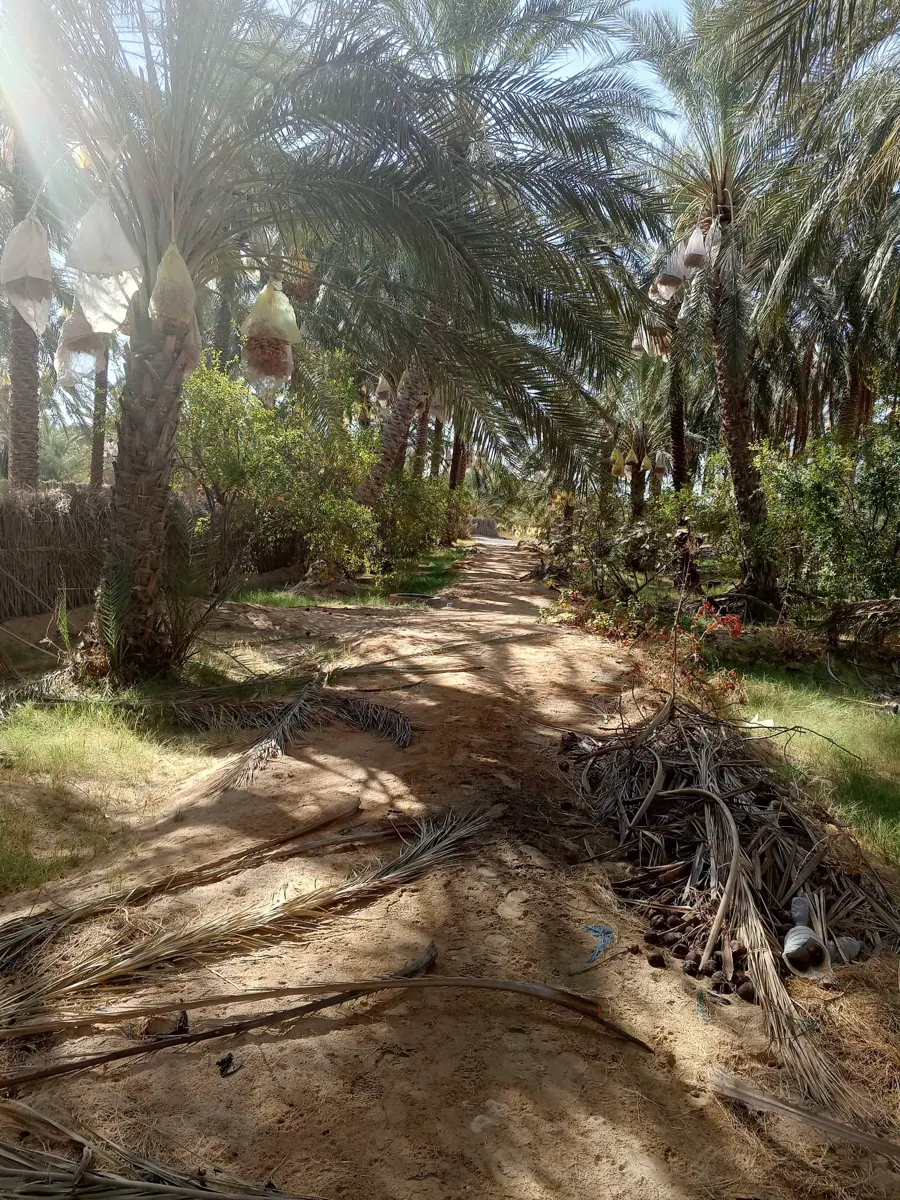
The Tunisian Ministry of Agriculture's efforts to combat the date palm pest, specifically the date moth, have led to a series of field visits in the governorate of Qebli. As part of the biological control program, the Technical Center for Dates, in collaboration with the Regional Commission for Agricultural Development in Qebli, has initiated these visits to assess the efficacy of a parasitoid in controlling the pest.
The field visits aim to monitor the health of date palm groves, evaluate the level of infestation, and collect samples for laboratory analysis. These efforts are crucial in determining the effectiveness of the biological control method and identifying areas that require further intervention. The program seeks to minimize the use of chemical pesticides and promote a more sustainable approach to pest management.
According to Dr. Rafki Al-Taieb from the Technical Center for Dates, the field visits are an essential component of the program, allowing experts to assess the situation on the ground and make informed decisions. The use of a parasitoid, a natural predator of the date moth, is being tested as a potential solution to control the pest population. The results of these visits will help determine the future direction of the program.
The date palm is a vital crop in Tunisia, particularly in the southern regions, where it is a significant source of income for many farmers. The date moth is a major pest that can cause significant damage to date palm groves, leading to economic losses for farmers. The Ministry of Agriculture's efforts to control the pest are aimed at protecting the livelihoods of farmers and ensuring the long-term sustainability of date palm production.
In addition to the field visits, the Ministry of Agriculture is also implementing other measures to control the date moth, including the distribution of biological control agents and the promotion of integrated pest management practices. These efforts are part of a broader strategy to improve the productivity and competitiveness of the agricultural sector in Tunisia.
The Regional Commission for Agricultural Development in Qebli is playing a key role in supporting the Ministry of Agriculture's efforts to control the date moth. The commission is working closely with farmers, extension agents, and other stakeholders to raise awareness about the importance of integrated pest management and promote the adoption of sustainable agricultural practices.
The biological control program is expected to have a positive impact on the environment, as it reduces the use of chemical pesticides and promotes a more sustainable approach to pest management. The program's success will depend on continued collaboration between the Ministry of Agriculture, farmers, and other stakeholders to ensure the effective implementation of the biological control method.
Key points
- The Tunisian Ministry of Agriculture is using a parasitoid to control the date moth, a major pest of date palms.
- Field visits are being conducted to monitor the health of date palm groves and assess the effectiveness of the biological control method.
- The program aims to promote sustainable agricultural practices and minimize the use of chemical pesticides.