The Tunisian government is developing an early warning system to mitigate the impact of natural disasters. The system will be tested in several pilot territories, including Manouba, which has been selected due to its diverse geographical and climatic characteristics. The project aims to combine mapping, observation, satellite technology, alert dissemination, and institutional coordination to provide effective warnings for various risks, including floods, forest fires, heatwaves, sandstorms, and snowstorms.
The early warning system is part of the Integrated Disaster Resilience Program, launched in collaboration with the World Bank and the French Development Agency. The program has a budget of $125 million, with contributions from the World Bank ($50 million), the French Development Agency ($50 million), and the Tunisian government ($25 million). The system will enable the authorities to respond quickly and effectively to natural disasters, reducing the risk of damage and loss of life.
The project involves several components, including mapping risks, identifying vulnerable areas and populations, strengthening emergency plans, and improving observation capabilities. The system will use detection equipment, satellite technology, and real-time monitoring systems to provide accurate and timely warnings. The dissemination of alerts, simulations, and clarification of institutional responsibilities are also part of the proposed system.
Manouba is not the only territory selected for the pilot project. Other areas, including parts of Greater Tunis, Ghardimaou in Jendouba governorate, and Kebili, have also been chosen due to their diverse geographical and climatic characteristics. These territories will allow the authorities to test the system against various risks and ensure that it is effective in different contexts.
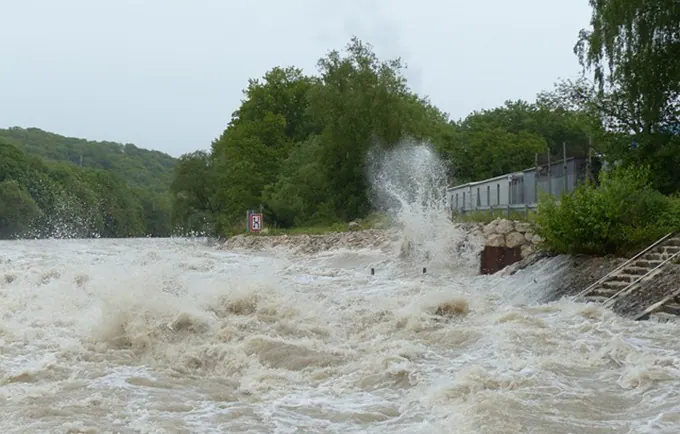
The selection of Manouba and other territories for the pilot project is based on their exposure to different types of natural disasters. The area is prone to floods, which can have devastating effects on infrastructure, agriculture, and human settlements. The early warning system will enable the authorities to respond quickly and effectively to such disasters, reducing the risk of damage and loss of life.
The implementation of the early warning system is a significant step towards enhancing Tunisia's resilience to natural disasters. The project is expected to improve the country's ability to respond to emergencies and reduce the impact of disasters on communities. The system will also provide valuable insights into the effectiveness of early warning systems in different contexts, which can be used to improve disaster risk management in other countries.
The World Bank and the French Development Agency are providing technical assistance to the Tunisian government to implement the early warning system. The project is expected to be completed in the near future, although a precise timeline has not been announced. Once operational, the system will provide a critical tool for disaster risk management in Tunisia, enabling the authorities to respond quickly and effectively to natural disasters.
Key points
- The Tunisian government has allocated $25 million to the Integrated Disaster Resilience Program.
- The early warning system will be tested in several pilot territories, including Manouba, Ghardimaou, and Kebili.
- The project aims to reduce the risk of damage and loss of life from natural disasters in Tunisia.