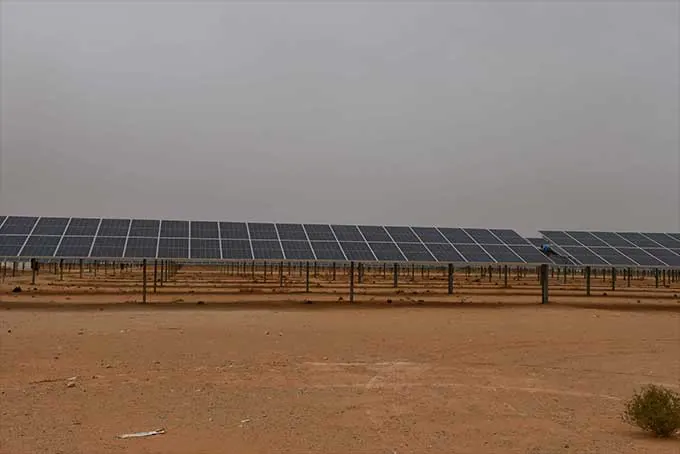
The Tunisian government has announced plans to develop a large-scale solar power plant with a capacity of 300 MW in Bazma, Kébili. The project, which is currently in the tendering phase, will be accompanied by a battery energy storage system (BESS) with a power of 150 MW and a capacity of 540 MWh. The plant will be built on approximately 440 hectares of land and is expected to play a crucial role in meeting the country's growing energy demands.
The project aims to address the intermittency of solar power by storing excess energy generated during peak production periods and releasing it during periods of low production or high demand. This will help to stabilize the grid and ensure a reliable supply of electricity. The BESS will have a theoretical duration of approximately 3.6 hours at full power, allowing for a significant amount of energy to be stored and released as needed.
The need for this project is underscored by the country's growing energy demands. The government has reported a peak consumption of 6,400 MW in July 2026, up from 5,175 MW in 2025. The demand for electricity is expected to continue growing at an annual rate of 4-5%, putting pressure on the grid. The Bazma solar power plant with battery storage is expected to help alleviate this pressure and provide a more flexible and reliable energy supply.
The tender for the project, numbered 01-2026, was issued in early October 2026, with a deadline for bid submissions set for October 14, 2026. The project will be developed under a concession regime, with the selected developer responsible for financing, constructing, and operating the plant. While the project's timeline is not yet clear, it is expected to be operational by the summer of 2027.
The Bazma project is significant not only for its size but also for its potential to demonstrate the feasibility of large-scale solar power with battery storage in Tunisia. The country's transition to a more sustainable and renewable energy-based power sector is a key priority, and this project is expected to play a major role in achieving this goal.
Key details of the project include a 300 MW solar power plant, a 150 MW/540 MWh BESS, and a project area of approximately 440 hectares. The project is expected to be completed by the summer of 2027, although a detailed timeline has not yet been released. The selected developer will be responsible for financing, constructing, and operating the plant under a concession regime.
The project has several key implications for Tunisia's energy sector. Firstly, it will help to increase the country's renewable energy capacity and reduce its reliance on fossil fuels. Secondly, it will provide a more flexible and reliable energy supply, helping to stabilize the grid and ensure a consistent supply of electricity. Finally, it will demonstrate the feasibility of large-scale solar power with battery storage in Tunisia, paving the way for future projects.
Key points
- The project aims to address the intermittency of solar power by storing excess energy generated during peak production periods and releasing it during periods of low production or high demand.
- The Bazma solar power plant with battery storage is expected to help alleviate pressure on the grid and provide a more flexible and reliable energy supply.
- The project is expected to play a major role in Tunisia's transition to a more sustainable and renewable energy-based power sector.