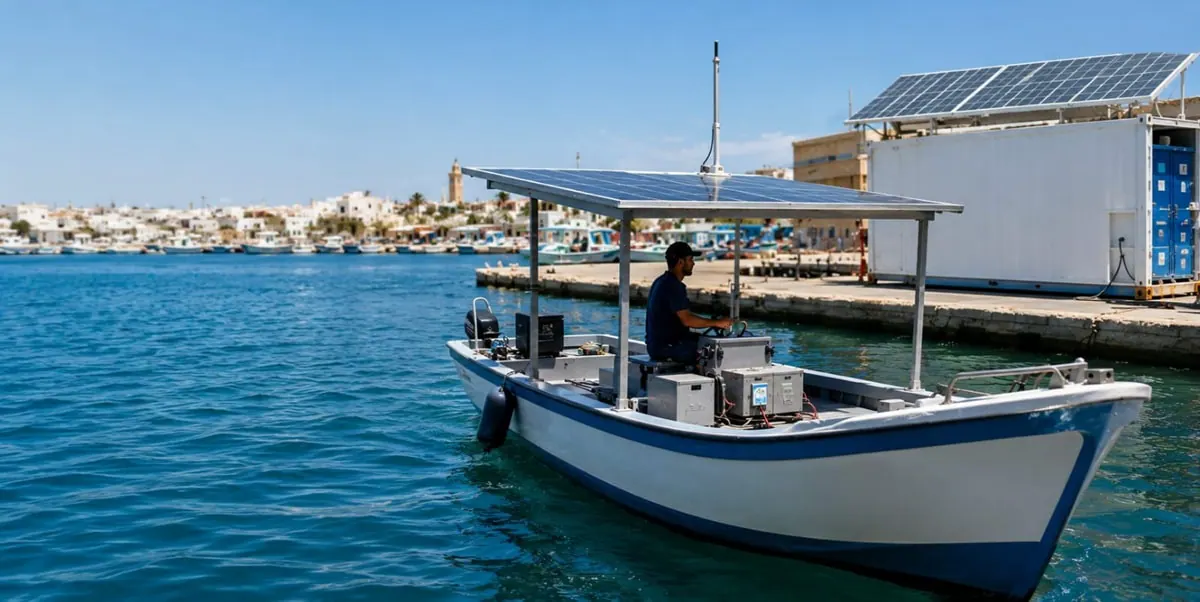
In a groundbreaking initiative, Tunisia has begun testing solar-powered electric motors for coastal fishing. The pilot project, considered a first in Africa, aims to equip coastal fishermen with electric motors powered by solar-recharged batteries. The project, funded by British cooperation and partnered with the World Wildlife Fund (WWF), focuses on fishermen in three regions: Ghannouch in Gabès, El Hachachine in Sfax, and Ajim in Djerba. This effort is part of a broader program to decarbonize the artisanal fishing sector.
The project involves installing photovoltaic panels at the Ghannouch maritime fishing development group to recharge electric batteries. Fishermen return their batteries for recharging after each use and retrieve them the next morning. According to Sassi Ali, president of the Ghannouch maritime fishing development group, the system includes two batteries, each providing about four hours of autonomy, totaling up to eight hours of operation. This setup allows fishermen to significantly reduce their fuel consumption and related expenses.
The introduction of electric propulsion is expected to minimize polluting emissions and eliminate engine noise, which is particularly beneficial for certain coastal fishing activities. By reducing reliance on fossil fuels, the project aims to contribute to a more sustainable fishing industry. The initiative also seeks to improve the livelihoods of coastal fishermen by decreasing their operational costs.
The pilot phase will undergo evaluation for approximately two months. The results will determine the feasibility of extending the project to a larger number of coastal fishermen in Tunisia. This assessment will be crucial in understanding the practicality and impact of solar-powered electric motors in the fishing sector.
The project has garnered support from various stakeholders, including the WWF and British cooperation. Such partnerships highlight the importance of international collaboration in promoting sustainable practices and addressing environmental challenges. The project's success could serve as a model for similar initiatives in other regions.
The use of solar-powered electric motors in coastal fishing aligns with global efforts to promote renewable energy and reduce carbon footprints. By adopting cleaner technologies, Tunisia's fishing industry can contribute to broader environmental conservation goals. The project's outcomes will be closely monitored to assess its potential for replication.
As the project moves forward, it will be essential to consider factors such as the scalability of the technology, the economic benefits for fishermen, and the environmental impact. The experience gained from this initiative will be valuable for future endeavors aimed at sustainable development in the fishing sector. The project's progress will be a key indicator of the viability of solar-powered electric motors in coastal fishing.
Key points
- The project aims to reduce fuel consumption and polluting emissions in coastal fishing.
- The initiative is part of a broader program to decarbonize the artisanal fishing sector.
- The pilot phase will undergo evaluation for approximately two months to assess its feasibility.