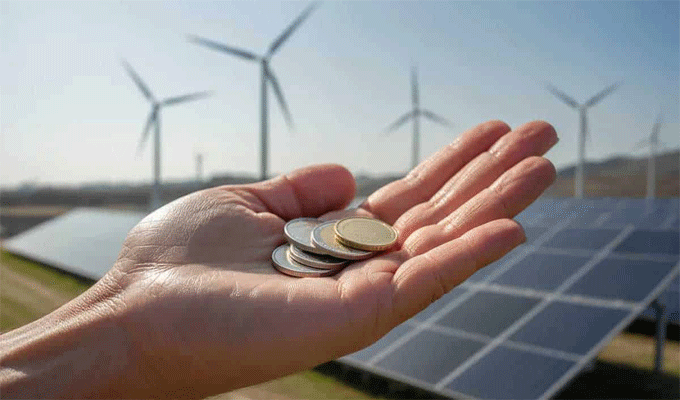
The Tunisian Chamber of Syndicate for Photovoltaic (CSPV), under the UTICA, has proposed a program called "Energy Citizenship" to provide free solar panels to one million Tunisian families consuming less than 100 kWh of electricity per month. This initiative will be implemented over five years, with 200,000 families equipped annually. The program aims to reduce energy subsidy costs by approximately two billion dinars over the same period.
According to Ali Kanzari, president of the CSPV, the program targets nearly one million subscribers out of a total of 3.5 million subscribers of the Tunisian Electricity and Gas Society (STEG). The program could be financed by the Energy Transition Fund (FTE), with the participation of banks in financing projects with recoverable profitability. This option would allow STEG to improve its financial balances progressively.
Under this project, each family will be equipped with a solar panel and a micro-inverter to convert the direct current produced by the panel into alternating current that can be consumed directly within the home. This technology will enable families to consume electricity produced by their own solar panel, while still using the electrical grid when solar production is insufficient.
The "Energy Citizenship" program is part of the fourth edition of the International Salon for Energy Transition (SITE 2026). The initiative is expected to have a positive impact on Tunisia's energy sector and contribute to the country's transition to renewable energy sources. The program's implementation will also create new opportunities for the development of the solar energy industry in Tunisia.
The Tunisian government has been actively promoting renewable energy and energy efficiency measures to reduce the country's dependence on imported fossil fuels and mitigate the impacts of climate change. The "Energy Citizenship" program is one of several initiatives aimed at increasing the share of renewable energy in the country's energy mix and promoting sustainable development.
According to the CSPV, the program will not only reduce energy costs for low-income families but also contribute to the country's economic growth and job creation. The program's success will depend on the effective implementation and management of the project, as well as the level of awareness and participation of the target families.
The "Energy Citizenship" program is a significant step towards achieving Tunisia's renewable energy goals and promoting sustainable development in the country. The program's impact will be closely monitored, and its success could serve as a model for other countries in the region to follow.
Key points
- One million Tunisian families consuming less than 100 kWh of electricity per month will be equipped with free solar panels over the next five years.
- The program aims to reduce energy subsidy costs by approximately two billion dinars over the same period.
- The initiative could be financed by the Energy Transition Fund (FTE), with the participation of banks in financing projects with recoverable profitability.