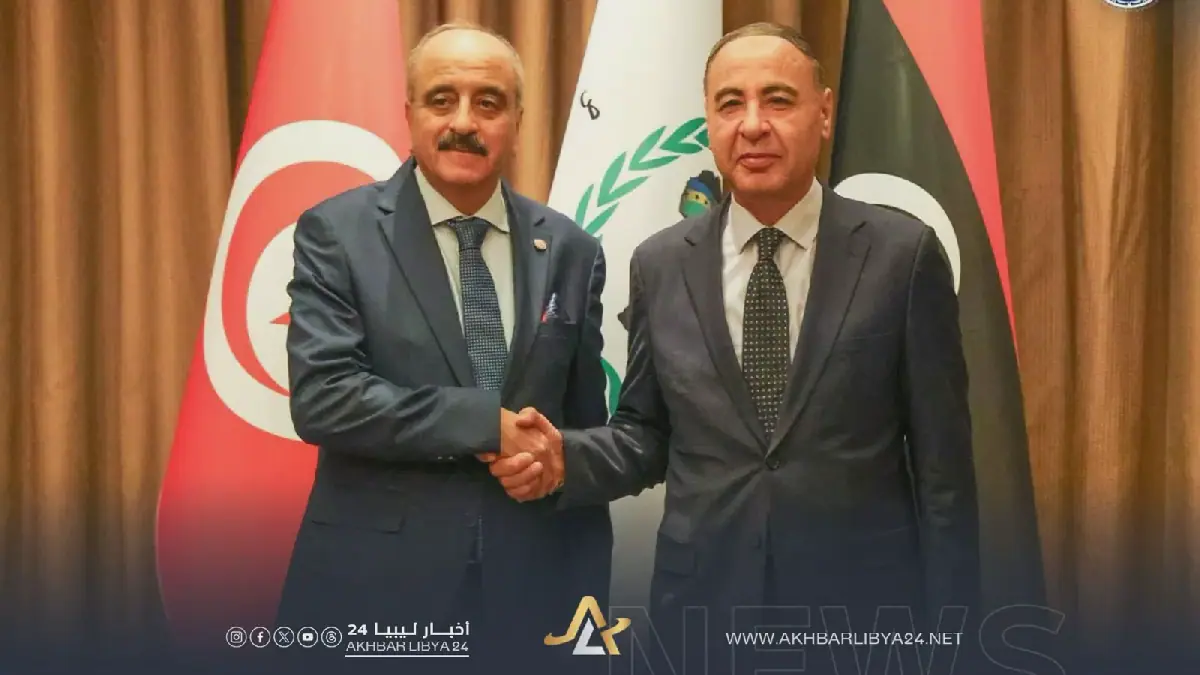
Tunisian Foreign Minister Mohamed Nafti has reaffirmed his country's support for a Libyan-led solution to the country's crisis, under UN auspices, that preserves Libya's unity and sovereignty. This stance was reiterated during a meeting with Libya's Deputy Foreign Minister Taher Ba'our on the sidelines of the 22nd Executive Council meeting of the Sahel-Saharan States' Group. The talks focused on recent developments in Libya and ways to enhance bilateral relations.
Nafi emphasized Tunisia's commitment to a Libyan-led political solution, free from external interference that could complicate the situation, and one that maintains Libya's territorial integrity and control over its resources. This position is being maintained amid ongoing regional and international efforts to push forward the political process in Libya and resolve the division that has hindered stability.
The two officials also discussed preparations for a meeting of the Tunisia-Libya High Joint Committee, scheduled for November 10-11 in Tunis. This meeting aims to boost bilateral cooperation and expand partnership areas between the two countries. It is expected to review current cooperation levels, discuss pending issues, and explore ways to develop economic and trade relations.
Key areas of discussion included cooperation in water and energy security, trade exchange, and the health sector, as well as developing border regions. These areas are crucial for both countries and directly impact security, stability, and economic and social development. Including these topics in the discussions reflects a move towards enhancing practical cooperation.
The relationship between Libya and Tunisia holds particular significance due to geographic, social, and economic ties, as well as shared interests in energy, trade, health, and border security. Developing border regions is a key area of cooperation, given the need for infrastructure development, improved services, and revitalized trade.
The meeting between Nafi and Ba'our occurred ahead of the High Joint Committee meeting, with expectations that the talks will translate political understandings into practical steps and strengthen the partnership between the two countries. This is in line with Tunisia's continued support for a political solution that preserves Libya's unity and sovereignty.
The discussions reflect a broader regional effort to stabilize Libya and support its path towards peace and stability. With the High Joint Committee meeting approaching, both countries are looking to make tangible progress in their bilateral relations and support a Libyan-led solution to the country's challenges.
Key points
- Tunisia reaffirms its support for a Libyan-led political solution that preserves Libya's unity and sovereignty.