The Tunisian government has reaffirmed its stance against becoming a permanent host for irregular migrants heading to Europe. According to Foreign Minister Mohamed Ali Nafti, the country will continue to combat criminal networks involved in migrant trafficking and human smuggling. This stance aligns with President Kaïs Saïed's position on the matter. The issue has sparked concerns among Tunisians, particularly those who are economically disadvantaged.
Despite efforts to return irregular migrants to their home countries, many more continue to enter Tunisia through its borders with Algeria and Libya. The exact number of irregular migrants in the country remains unknown, fueling concerns about the impact on Tunisia's already strained economy and social services. The government has expressed determination to defend its sovereignty and protect its borders.
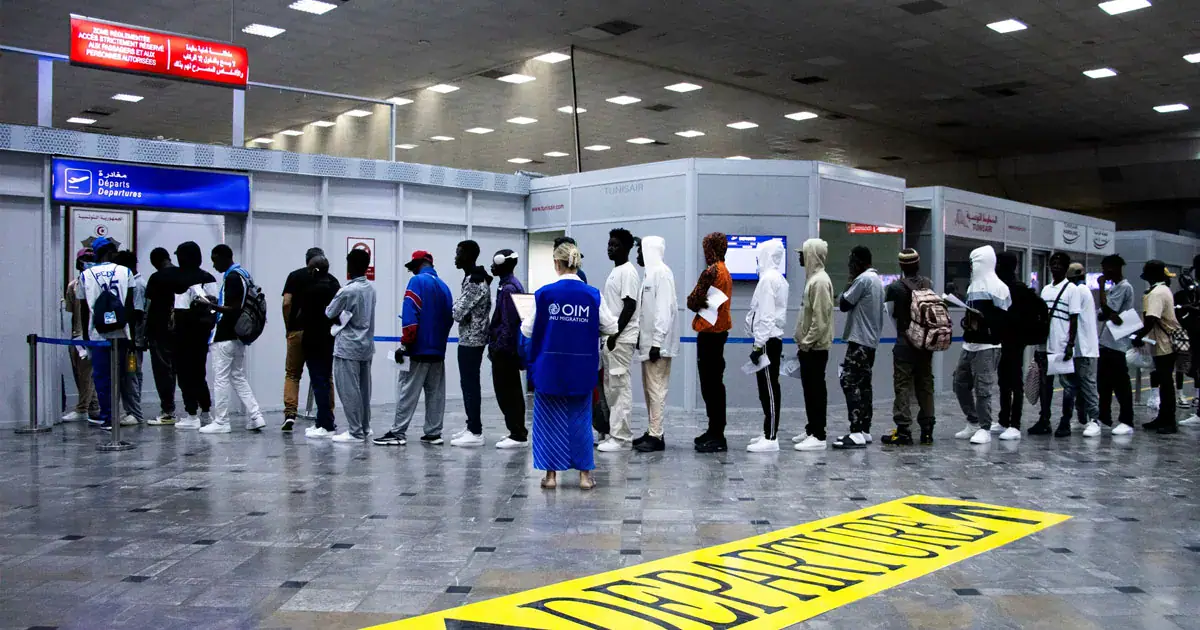
According to data shared by the Tunisian authorities, 5,077 irregular migrants have been voluntarily returned to their home countries this year, bringing the total number of beneficiaries of the return program to 25,351. However, the effectiveness of this program is questioned, as many migrants reportedly use the financial assistance provided to return to Tunisia.
The issue of irregular migration has significant implications for Tunisia's security and social services. The country's northern, southern, eastern, and western regions have seen an influx of irregular migrants, straining local resources. Many Tunisians believe that the presence of these migrants exacerbates the country's economic and social challenges.
The Tunisian government's approach to migration has been described as comprehensive, incorporating humanitarian, economic, social, and developmental aspects while respecting migrants' dignity and rights. However, critics argue that the government's efforts to prevent migrants from reaching European shores have not addressed the root causes of the issue.
The situation has sparked frustration among Tunisians, who feel that the government's measures have not effectively addressed the problem. The issue remains a pressing concern for the government, which must balance its commitment to combating irregular migration with the need to provide support to those already in the country.
The international community, including the International Organization for Migration (IOM), has been engaged in efforts to address the issue. IOM Director-General Amy Pope met with Foreign Minister Nafti in New York in September to discuss the matter. The Tunisian government has reiterated its commitment to working with international partners to find a solution to the complex issue of irregular migration.
Key points
- The Tunisian government has reaffirmed its stance against becoming a permanent host for irregular migrants heading to Europe.
- Despite efforts to return irregular migrants, many more continue to enter Tunisia through its borders with Algeria and Libya.
- The issue of irregular migration has significant implications for Tunisia's security and social services.