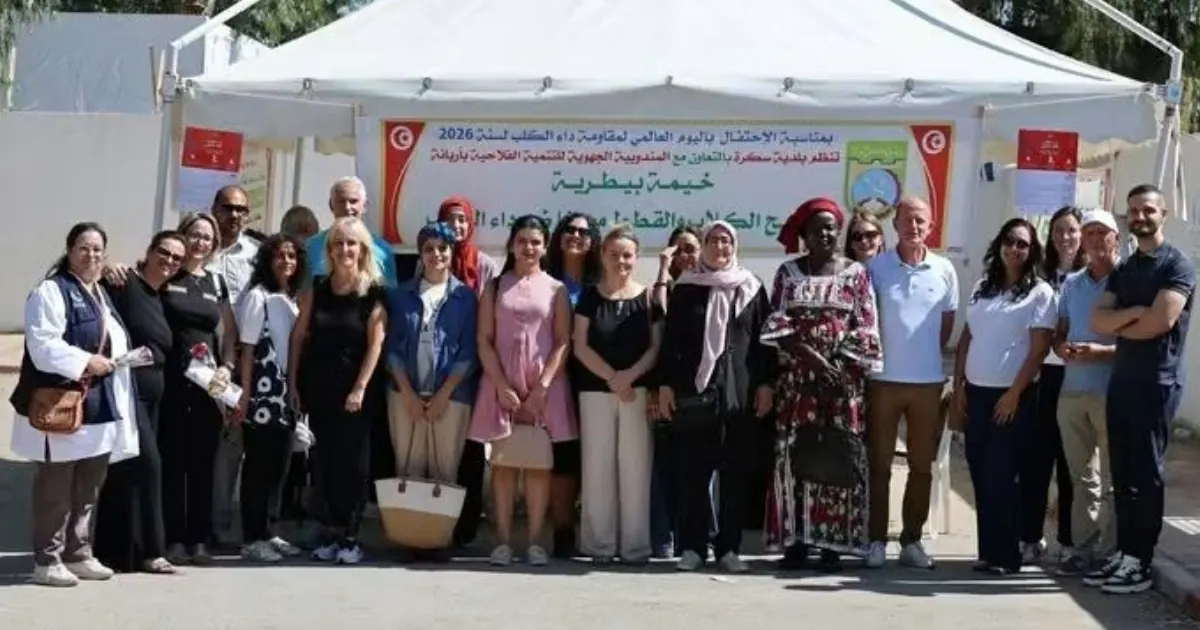
The Pasteur Institute of Tunis (IPT) recently organized a two-day event to mark World Rabies Day, with the theme "Stronger Together". The meeting brought together representatives from various Tunisian ministries, including Health, Agriculture, and Interior, as well as international organizations such as the World Health Organization (WHO) and the Food and Agriculture Organization (FAO). The goal was to highlight efforts to enhance prevention, surveillance, diagnosis, and treatment of rabies in Tunisia.
The IPT's Director-General opened the event by acknowledging the crucial role of the International Vaccination and Anti-Rabies Service and the IPT's Rabies Laboratory in combating rabies. The event emphasized the importance of a "One Health" approach, which involves coordination between human health, animal health, and environmental sectors. This approach is essential for effective rabies control, as the disease affects both humans and animals.
The meeting took on a regional dimension with the participation of the Pasteur Institute of Algeria, the Libyan National Center for Animal Health, and the Chadian Ministry of Public Health. These countries shared their experiences and strategies for controlling rabies, allowing for a comparison of challenges and best practices in the region.
The event also showcased the results of the Charles Nicolle Scientific Chair, a collaboration between the IPT's Rabies Laboratory and the IP Paris's Lyssavirus Laboratory. This initiative, supported by several French institutions, aims to strengthen scientific exchanges, develop competencies, and establish lasting collaborations in public health.
On the second day, a vaccination and awareness campaign was organized by the General Directorate of Veterinary Services (DGSV), followed by a roundtable discussion on cross-border cooperation. Participants discussed the main obstacles to eliminating rabies in Tunisia and explored ways to enhance control measures.
The two-day event highlighted the need for multisectoral mobilization and strengthened regional cooperation in a "One Health" approach to achieve the goal of "Zero by 30", i.e., eliminating rabies by 2030. The meeting demonstrated Tunisia's commitment to controlling rabies and its willingness to collaborate with neighboring countries to address this public health issue.
The IPT's efforts to combat rabies are ongoing, with a focus on strengthening prevention, surveillance, and diagnosis. By working together with national and international partners, Tunisia aims to make significant progress in controlling this disease and ultimately achieving the goal of a rabies-free country.
Key points
- The Pasteur Institute of Tunis organized a two-day event to mark World Rabies Day, bringing together national and international stakeholders to discuss rabies control measures.
- The event emphasized the importance of a "One Health" approach, which involves coordination between human health, animal health, and environmental sectors.
- The meeting highlighted the need for multisectoral mobilization and strengthened regional cooperation to achieve the goal of eliminating rabies by 2030.