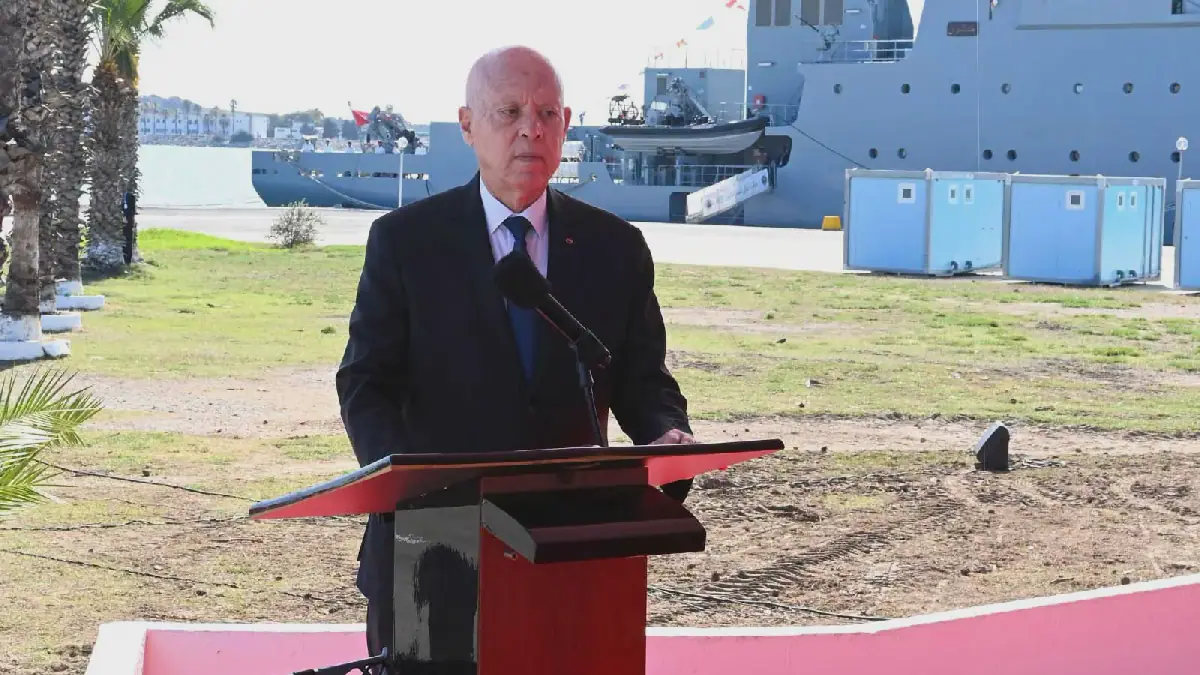
On October 15, 2026, Tunisian President Kaïs Saïed inaugurated a patrouilleur, a military vessel built entirely in Tunisia, at the Bizerte naval base. The event marked a significant milestone in the country's industrial development, with the President emphasizing the importance of self-reliance and innovation. He attributed the project's success to the skills and determination of the Tunisian people, particularly the youth and scientists. The patrouilleur is seen as a first step towards the production of more advanced equipment.
The patrouilleur project demonstrates Tunisia's ability to overcome obstacles and achieve its goals. President Saïed stated that the country has the means to achieve its ambitions and defend its sovereignty. He linked industrial capacity to national sovereignty, highlighting the importance of producing goods domestically. This message is also relevant to upcoming projects in various sectors, including the naval industry.
Tunisia's automotive sector is also experiencing growth, with the export of its first batch of electric vehicles to Germany on July 31, 2026. The vehicles were produced by a local company and met European technical and environmental standards. The export was made possible after obtaining the European conformity certification (CE). This achievement is seen as a qualitative step forward for Tunisia's industry.
The electric vehicles exported to Germany had a local integration rate of over 40%, with components such as batteries, cables, and aluminum parts produced in Tunisia. This progress reflects the country's transition from simple assembly to a more comprehensive production chain. Tunisia's automotive sector has a solid foundation, with over 280 companies producing components, employing around 120,000 people, and exporting €3.9 billion worth of goods in 2025.
The equipment manufacturing sector is a significant pillar of Tunisia's industry, with an annual growth rate of 19% since 2018. The sector accounts for around 4% of the country's GDP, with most exports going to European countries, particularly Germany. According to Fethi Sahlaoui from the Ministry of Industry, one in ten cars sold in Europe contains at least one component made in Tunisia.
The launch of new electric vehicle models by young entrepreneurs and the patrouilleur project demonstrate Tunisia's shift from assembly to design and production. This dynamic is driven by a solid equipment manufacturing sector and the President's confidence in the country's youth and national skills. While this is just the beginning, the trend suggests a promising future for Tunisia's industrial sector.
President Saïed's emphasis on the role of the Tunisian people, particularly the youth, in driving innovation and progress is noteworthy. He expressed his confidence in the country's ability to achieve its goals and overcome challenges. The recent industrial developments in Tunisia are a testament to the country's growing capabilities and its determination to assert its sovereignty.
Key points
- Tunisia's industrial sector is gaining momentum with the launch of locally built projects, including a patrouilleur and electric vehicles.
- The country's automotive sector is experiencing growth, with a significant increase in exports to European countries.
- Tunisia's shift from assembly to design and production is driven by a solid equipment manufacturing sector and confidence in national skills.