The Central Auditing Organization (CAO) of Egypt has signed a memorandum of understanding with the Russian Accounts Chamber to enhance cooperation and exchange of expertise in auditing and oversight. The agreement was signed on the sidelines of the third Russian-African Economic and Humanitarian Forum in Moscow, where CAO head, Mohamed El-Faisal Youssef, led a high-level delegation. The partnership aims to strengthen institutional cooperation, exchange professional experiences, and support joint coordination on topics related to developing oversight work.
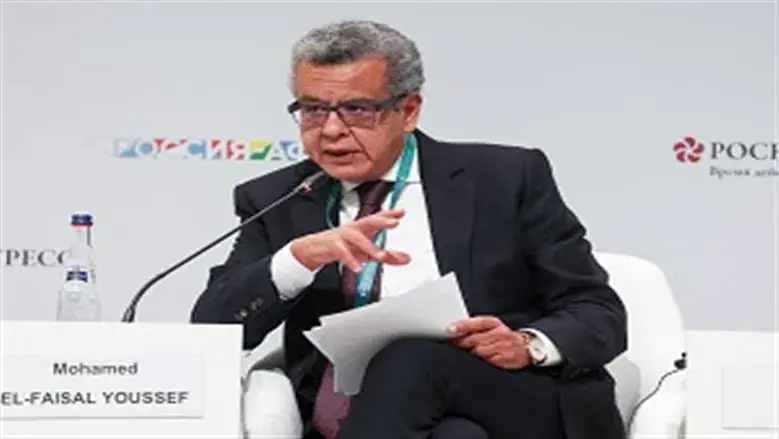
The forum, held under the auspices of the third Russian-African Summit, brought together government officials, international institution representatives, and business leaders to enhance Russian-African cooperation in economic, humanitarian, and technological fields. El-Faisal Youssef participated in a session titled "Public Oversight: A Guarantee for Achieving Sustainable Economic Growth," which discussed the role of supreme audit institutions in supporting economic growth and developing risk assessment methods.
During his intervention, El-Faisal Youssef emphasized the importance of integrating cooperation priorities within the BRICS group and the International Organization of Supreme Audit Institutions (INTOSAI). He highlighted the need to adopt "economic artificial intelligence," which involves developing practical and flexible technological solutions that align with the capabilities and needs of supreme audit institutions. This approach aims to achieve added value for their work without imposing excessive burdens.
El-Faisal Youssef also presented the "MAAT" initiative as a collaborative framework to support the application of artificial intelligence in auditing, knowledge sharing, and capacity building. He stressed the importance of responsible use of these technologies, ensuring they complement human auditors rather than replacing their expertise and professional judgment. The CAO head discussed priorities for supreme audit institutions over the next three to five years, emphasizing the need to consolidate a proactive approach to oversight.
This proactive approach involves enhancing risk assessment capabilities, monitoring early warning indicators, and utilizing data analysis and modern technologies to direct audit work towards high-risk areas. By adopting this approach, audit institutions can prevent shortcomings before they escalate and improve the evaluation of public policy and investment impacts. El-Faisal Youssef noted that achieving this goal requires investment in digital capabilities, human resources, and international cooperation while maintaining auditor independence and professional judgment.
The participation of the CAO head in the forum holds particular significance, given Egypt's assumption of the INTOSAI presidency from 2025 to 2028. This role enhances Egypt's position in supporting international dialogue on developing audit practices, exchanging experiences among supreme audit institutions, and expanding cooperation on priority issues, including risk management, digital transformation, and responsible artificial intelligence use.
The CAO's participation aligns with Egypt's efforts to improve public resource utilization, enhance government performance, and engage in international cooperation frameworks that support the development of oversight and accountability tools. These efforts aim to protect public funds, improve spending efficiency, and promote sustainable economic growth.
Key points
- The Central Auditing Organization of Egypt adopts economic artificial intelligence to enhance oversight and auditing practices.
- Egypt's CAO signs MoU with Russian Accounts Chamber to strengthen cooperation in auditing and oversight.
- CAO head emphasizes importance of proactive approach to oversight and responsible use of artificial intelligence in auditing.