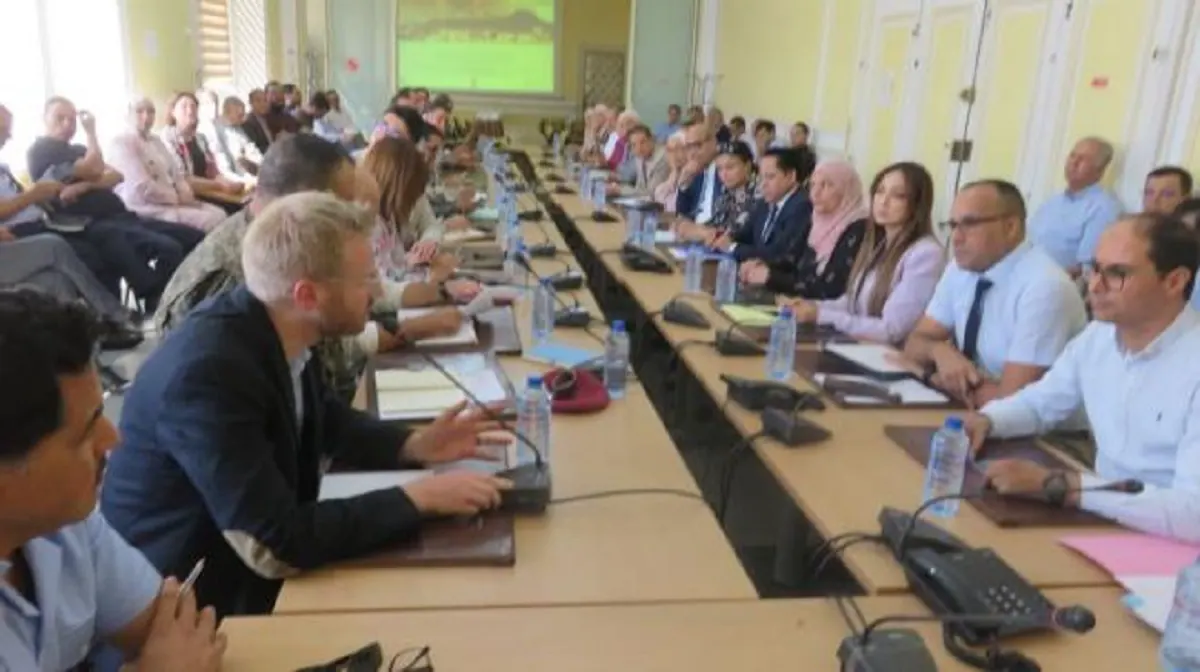
Tunisia's government has taken a significant step towards mitigating the impact of natural disasters with the establishment of an early warning system in the Tunis governorate. A national technical commission, led by Tunis Governor Imed Boukhris, recently convened to discuss the implementation of the system. The commission reviewed the strategy for improving the national early warning system and methods for analyzing risks to better prevent natural disasters. This initiative aims to enhance the country's preparedness and response to potential disasters.
The early warning system is being developed with the support of the French consulting firm Predict. The system will enable authorities to anticipate multiple potential risks and strengthen prevention and preparedness measures. According to Boukhris, having such a system in place is crucial for ensuring early and proactive preparation against various natural phenomena that can cause disasters. The system will help protect human lives, public, and private property.
The national technical commission meeting brought together representatives from relevant ministries, security forces, the army, civil protection, and local authorities. The meeting focused on analyzing risks and developing strategies to prevent natural disasters. A comprehensive study was conducted in November 2025, which laid the groundwork for the current initiative. The study highlighted the need for a proactive approach to disaster prevention and preparedness.
The Tunis governorate was chosen as a pilot site for the analysis of natural risks and disaster prevention. The early warning system will be implemented in phases, with the first phase focusing on assessing risks and developing a strategy for disaster prevention. The system will provide critical information to authorities, enabling them to respond quickly and effectively in the event of a disaster.
The development of the early warning system is a collaborative effort between various stakeholders, including government agencies, security forces, and local authorities. The system will enhance the country's capacity to respond to natural disasters, reducing the risk of damage to property and loss of life. Tunisia's government is committed to implementing the system and ensuring its effectiveness in preventing and mitigating the impact of natural disasters.
The implementation of the early warning system is expected to have a significant impact on disaster prevention and preparedness in Tunisia. The system will provide critical information to authorities, enabling them to respond quickly and effectively in the event of a disaster. The initiative is part of a broader effort to strengthen Tunisia's resilience to natural disasters and promote sustainable development.
The early warning system is a critical component of Tunisia's disaster risk reduction strategy. The system will enhance the country's capacity to respond to natural disasters, reducing the risk of damage to property and loss of life. Key stakeholders will continue to work together to ensure the effective implementation and maintenance of the system.
Key points
- The Tunis governorate has been chosen as a pilot site for the analysis of natural risks and disaster prevention.
- The French consulting firm Predict is supporting the development of the early warning system.
- The system aims to enhance Tunisia's preparedness and response to potential disasters, reducing the risk of damage to property and loss of life.