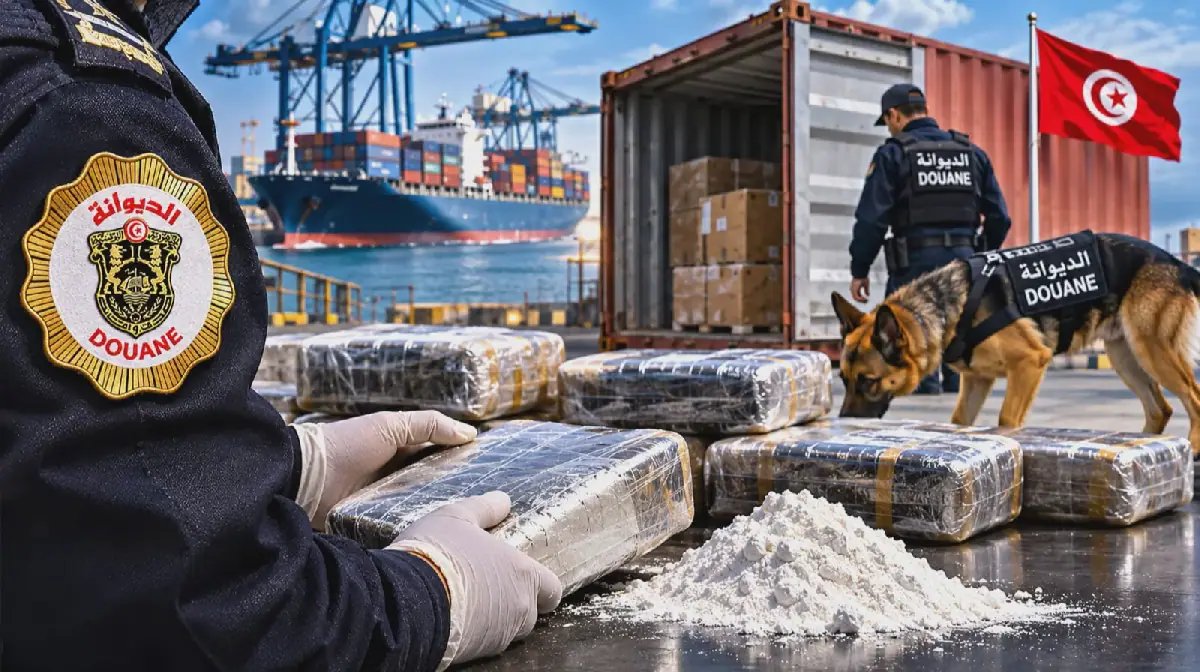
Tunisia has witnessed a significant increase in cocaine seizures over the past few years, with authorities seizing 101 kilograms of the drug in the first nine months of 2026, compared to 94 kilograms in all of 2025 and 33 kilograms in 2024. According to Mohamed Ali Chaabani, head of the narcotics unit at the Judicial Police in Tunis, the amount of cocaine seized has multiplied nearly 1,000 times in the past decade, from just 150 grams in 2013 to over 140 kilograms in 2023.
The surge in cocaine seizures is attributed to the country's porous border with Libya, which has become a major transit point for smugglers. Chaabani said that large quantities of cocaine are seeping into Tunisia through the 460-kilometer border with Libya, which has been plagued by instability since the ousting of Muammar Gaddafi in 2011. The Libyan conflict has created an environment conducive to smuggling, with various groups and networks exploiting the situation.
According to a report by the United Nations Office on Drugs and Crime, Libya has become a significant hub for cocaine smuggling, with the country providing an alternative route for smugglers to transport the drug to Europe and the Middle East. The report notes that cocaine is reaching Libya through two main routes: by sea, with large shipments arriving directly from Ecuador, Colombia, and Brazil, and by land, with smugglers transporting the drug from West Africa through the Sahel region.
The UN report also highlights the role of organized crime groups in the region, which are using Libya as a transit point to smuggle cocaine into Europe. These groups are reportedly using various tactics, including hiding the drug in containers and using small boats to transport it to Libyan ports. From there, the cocaine is transported to Tunisia, where it is often hidden in cars or trucks and smuggled into the country.
Tunisian authorities have reported several major seizures of cocaine in recent months, including a haul of 30 kilograms at the Ras Jedir border crossing in February 2026. The authorities have also reported intercepting cocaine shipments from Europe, with some shipments hidden in cars or trucks and smuggled into the country through ports such as Tunis and Radès.
The increase in cocaine seizures in Tunisia has raised concerns about the country's role in the global cocaine trade. According to Chaabani, the price of cocaine in Tunisia is significantly higher than in Europe, which may be attracting smugglers to the country. The UN report notes that the global cocaine trade is evolving, with new routes and networks emerging in response to increased law enforcement efforts in traditional transit countries.
To combat the growing threat of cocaine smuggling, Tunisian authorities are calling for increased international cooperation, including joint investigations and intelligence sharing with neighboring countries. Chaabani emphasized the importance of working together to disrupt the networks of organized crime groups and prevent the flow of cocaine into the country.
Key points
- Tunisia's cocaine seizures have surged in recent years, with authorities seizing 101 kilograms of the drug in the first nine months of 2026.
- The country's porous border with Libya has become a major transit point for smugglers, with large quantities of cocaine seeping into Tunisia through the 460-kilometer border.
- Tunisian authorities are calling for increased international cooperation to combat the growing threat of cocaine smuggling, including joint investigations and intelligence sharing with neighboring countries.