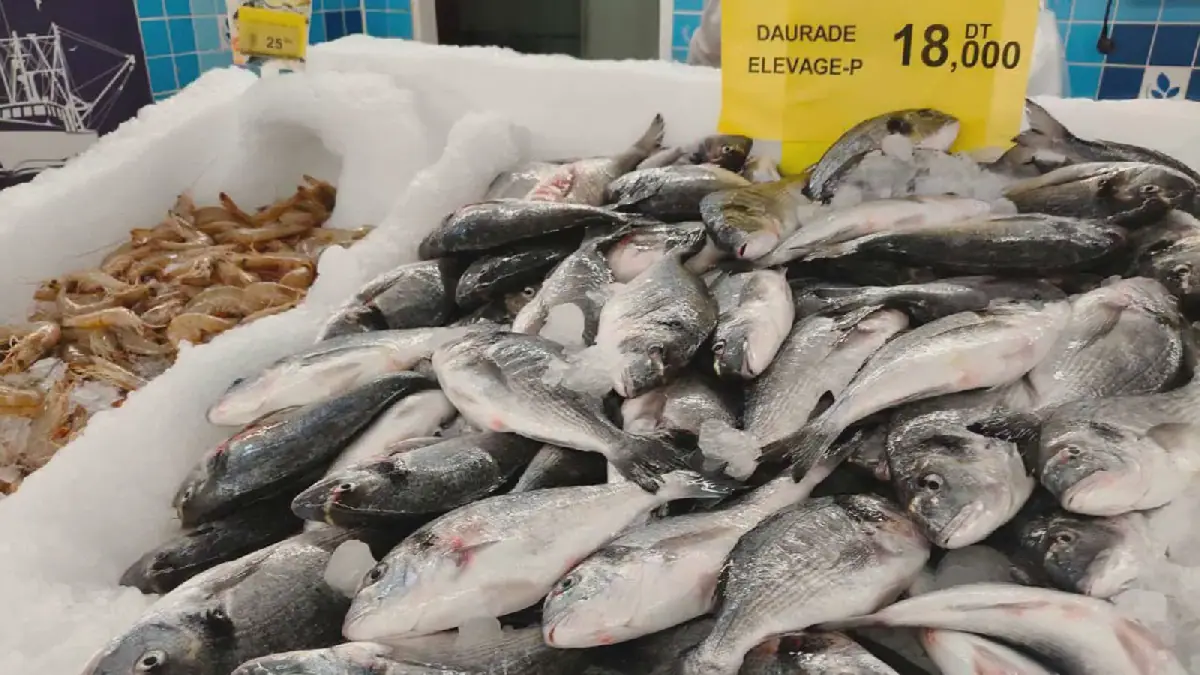
In a move aimed at supporting consumers, major retail chains in Tunisia have begun offering reduced prices on staple goods, following an agreement with the Ministry of Commerce. The price cuts, which came into effect over the weekend, have seen significant customer uptake. Shoppers flocked to purchase discounted items such as chicken, vegetables, and fish. One retail chain offered canned tomatoes at a competitive price, while another sold chicken at 8.450 millimes, and chicken breast at 16 dinars.
The price reductions have been well-received by consumers, with many taking advantage of the promotions. The discounted prices for various meat products included 11.5 dinars for chicken thighs, 18 dinars for turkey escalopes, and 19 dinars for chicken escalopes. Farmed fish, sourced from aquaculture, were priced at 18 dinars per kilogram. These initial price cuts have been seen as a positive step towards mitigating the impact of inflation on household budgets.
While the large retail chains have made a promising start, there is an expectation that this initiative will be extended to other distribution channels. Specifically, the role of municipal sales points, which have mushroomed into small municipal markets, is being questioned. These points, often set up by local authorities, have been criticized for charging higher prices than those offered by larger retailers.
One such municipal sales point, which was launched with great fanfare on the outskirts of Ariana, has been found to have prices that are significantly higher than those offered by larger retail chains. The only exceptions were dates and coffee, which maintained their premium pricing. To prevent a resurgence in prices, it is suggested that specialized offices maintain a presence in these areas.
The success of this initiative will depend on its sustainability and the extent to which it can be rolled out across different distribution channels. If successful, this could mark a significant shift in the role that large retail chains play in supporting consumer welfare. The Tunisian government has been keen to emphasize the importance of solidarity and social responsibility in economic policymaking.
Further price reductions are anticipated, with a broader range of products expected to be included in the scheme. This move is part of a broader effort to contain prices and protect the purchasing power of citizens. The authorities are keen to ensure that the benefits of this initiative are felt across the population, particularly among vulnerable households.
The outcome of this initiative will be closely watched, as it has the potential to set a precedent for future collaborations between the government and the retail sector. If successful, it could pave the way for more comprehensive measures to address the challenges facing consumers in Tunisia.
Key points
- Large retail chains in Tunisia have implemented reduced prices on essential goods, following an agreement with the Ministry of Commerce.
- The initiative has seen significant customer uptake, with shoppers taking advantage of discounted items such as chicken, vegetables, and fish.
- The sustainability and extension of this initiative to other distribution channels will be crucial to its long-term success.