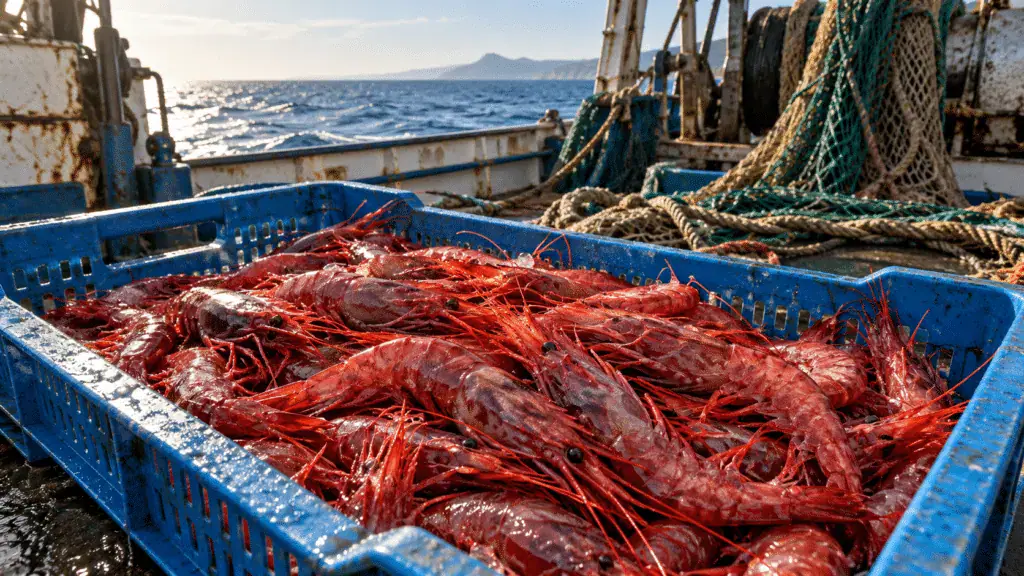
Tunisia has successfully negotiated an increase in its red shrimp fishing quota in the deep waters of the Mediterranean Sea. This development came out of talks between Tunisia and the European Union held in Rome, Italy, during the 49th session of the General Fisheries Commission for the Mediterranean (GFCM). The negotiations, which took place from October 26 to 30, 2026, resulted in an agreement that will benefit Tunisian deep-sea fishermen.
The agreement was announced by the Tunisian Embassy in Rome on October 30, 2026, highlighting the efforts of Tunisian and European representatives from various ministries and sectors. The goal was to reach a consensus on Tunisia's fishing quotas. This increase is seen as a strategic gain for Tunisia's deep-sea fishing industry, which operates under strict catch volume regulations. The new quota details, however, have not been disclosed.
The red shrimp fishing sector is crucial for Tunisian fishermen and industry operators. An increase in the quota could open up new opportunities and enhance the economic potential of this activity. The GFCM, a regional body under the Food and Agriculture Organization (FAO) of the United Nations, periodically reviews member states' fishing quotas every three years. This process aims to balance economic interests with the need to conserve marine resources and ecosystems.
The GFCM's quota revision mechanism is designed to ensure the sustainable management of Mediterranean fisheries. By adjusting quotas, the commission works to prevent overfishing and protect marine biodiversity. Tunisia's successful negotiation is a step forward in its collaboration with the EU on sustainable fisheries management. The specifics of the quota increase and the new total allowable catch for Tunisia have not been made public.
The negotiations reflect the ongoing dialogue between Tunisia and the EU on managing Mediterranean fisheries resources sustainably. This agreement underscores the importance of cooperation between regional stakeholders in addressing the challenges facing marine ecosystems. The deep-sea fishing industry in Tunisia and other Mediterranean countries faces the dual challenge of economic viability and environmental sustainability.
The increase in Tunisia's red shrimp quota is expected to have a positive impact on the country's fishing industry. It may lead to increased economic activity and potentially create jobs within the sector. However, ensuring that the increased quota does not compromise the sustainability of red shrimp populations will be crucial. The GFCM and other regional organizations will likely continue to monitor the situation closely.
Moving forward, Tunisia will need to implement measures to ensure that its fishing activities remain sustainable. This may involve enforcing regulations on fishing practices, monitoring catch volumes, and engaging in continued dialogue with international partners. The agreement with the EU is a step towards enhancing Tunisia's fishing industry while contributing to the conservation of Mediterranean marine resources.
Key points
- Tunisia negotiated an increase in its red shrimp fishing quota in the Mediterranean Sea during the 49th GFCM session in Rome.
- The agreement aims to balance economic interests with the need to preserve marine resources and ecosystems.
- The new quota details have not been disclosed, but the increase is expected to benefit Tunisian fishermen and the industry.