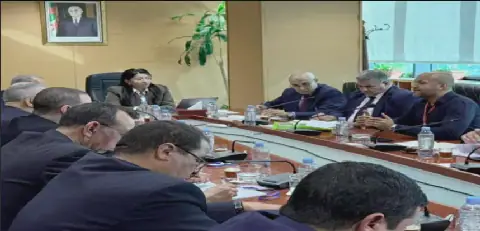
Tunisia's Minister of Economy and Planning, Samir Abdel Hafiz, stated that the country's economy has demonstrated relative resilience in the face of external and internal shocks. This is attributed to various factors, including a diversified production base. Abdel Hafiz made these remarks during a joint session of the parliamentary finance committees to discuss the 2027 economic budget. The minister highlighted that Tunisia has managed to reduce inflation and maintain stability in its sovereign rating despite economic challenges over the past six years.
Abdel Hafiz revealed that the unemployment rate in Tunisia is on a downward trend. He emphasized that the agricultural sector has been the largest contributor to economic growth during the first half of 2026. The minister stressed that the government prioritizes this sector to ensure its continued growth. According to Abdel Hafiz, the state's efforts focus on promoting the agricultural sector as a key driver of economic development.
The minister discussed the impact of global economic transformations on Tunisia's economy, particularly concerning exports, tourism revenues, and remittances from Tunisians abroad. He noted that Tunisia seeks to engage with all potential partners on a mutually beneficial basis while safeguarding national interests. Abdel Hafiz's statements underscore the government's commitment to navigating the country's economy through a challenging global landscape.
The Arab Fund for Economic and Social Development is prepared to continue supporting Tunisia. The fund's stance was expressed by its board chairman, who emphasized the organization's willingness to work closely with Tunisia to promote economic growth and development. This commitment from the Arab Fund reflects the international community's confidence in Tunisia's economic prospects.
Russia views Tunisia as one of its key African trading partners. The Russian Foreign Ministry spokesperson highlighted the significance of bilateral trade relations between the two nations. This statement underscores the growing economic ties between Tunisia and Russia, which could potentially lead to increased cooperation in various sectors.
Tunisia's economic growth is expected to be influenced by its ability to navigate global economic trends. The country's reliance on exports, tourism, and remittances from abroad makes it vulnerable to fluctuations in the global economy. However, Abdel Hafiz's statements suggest that the government is proactive in addressing these challenges and promoting sustainable economic growth.
The Tunisian government's efforts to promote economic growth and reduce unemployment are ongoing. The country's economic prospects are closely tied to its ability to implement effective policies and attract investment. As Tunisia continues to navigate the complexities of the global economy, its resilience and adaptability will be crucial in achieving sustainable economic development.
Key points
- Tunisia's economy shows resilience amid external and internal shocks
- The country's unemployment rate is on a downward trend
- The agricultural sector is a key driver of economic growth in Tunisia