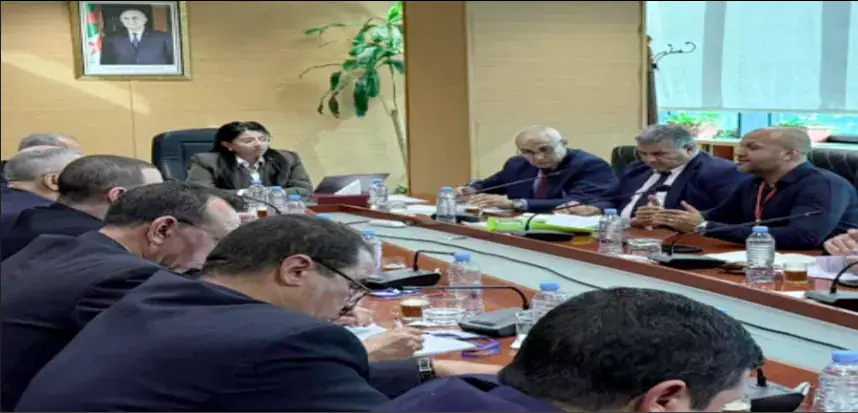
Algerian Minister of Domestic Trade and National Market Regulation, Amel Abdellatif, recently chaired a meeting with economic operators in the sugar and food oil production sector. The meeting aimed to discuss measures to ensure a regular supply of these essential products during the upcoming Ramadhan month. The minister stressed the importance of concertation and coordination among different economic stakeholders to maintain a stable national market.
The meeting, which took place in Algiers, was attended by representatives from the Ministries of Foreign Trade and Export Promotion, Industry, and senior officials from the Ministry of Domestic Trade and National Market Regulation. Various measures were examined to adjust mechanisms for regular supplies of widely consumed products and ensure their availability to meet demand during Ramadhan. This initiative is part of the government's efforts to anticipate and prepare for the increased demand and changing consumption habits during this period.
According to the minister, the sector has adopted an anticipatory approach based on early preparation of supply needs, taking into account the usual increase in demand during Ramadhan. This approach includes monitoring stock levels, evaluating production and distribution capacities, and estimating forecast needs for essential products in coordination with concerned sectors and economic operators. The minister presented these efforts during a meeting at the National People's Assembly (APN) where she discussed the sector's budget for 2027.
The minister announced plans to prepare regulations that will cap profit margins for intermediaries and mitigate their impact on retail markets. This move is in line with recent directives from President Abdelmadjid Tebboune to monitor daily prices of widely consumed products and their availability. The regulations aim to control the activity of sales intermediaries and limit profit margins, considering production and marketing chains.
The government's commitment to social welfare is reflected in its efforts to mobilize necessary financial resources to support price stability for basic products and preserve citizens' purchasing power. The 2027 Finance Bill has allocated a significant budget to the sector and includes measures to support prices of basic products. These measures are designed to mitigate the impact of increased demand during Ramadhan and ensure a stable supply of essential goods.
The minister cited a series of measures extending until December 31, 2029, which include maintaining a reduced customs duty rate of 5% on imports of live cattle and sheep for slaughter, fresh refrigerated and vacuum-packaged red meat, and frozen white meat. These measures also include exemptions from Value-Added Tax (VAT). The goal is to ensure a stable supply of essential products and support citizens' purchasing power.
The Algerian government is taking proactive steps to ensure a stable market supply during Ramadhan. The meeting between the minister and economic operators highlights the government's commitment to coordinating efforts among different stakeholders to maintain a stable national market. The measures discussed will help regulate the supply of essential products and mitigate the impact of increased demand during this period.
Key points
- Algerian Minister of Domestic Trade and National Market Regulation, Amel Abdellatif, chaired a meeting with economic operators to discuss measures to ensure a regular supply of sugar and food oil during Ramadhan.
- The government has adopted an anticipatory approach to prepare for increased demand during Ramadhan, including monitoring stock levels and evaluating production and distribution capacities.
- The 2027 Finance Bill includes measures to support prices of basic products and preserve citizens' purchasing power, reflecting the government's commitment to social welfare.