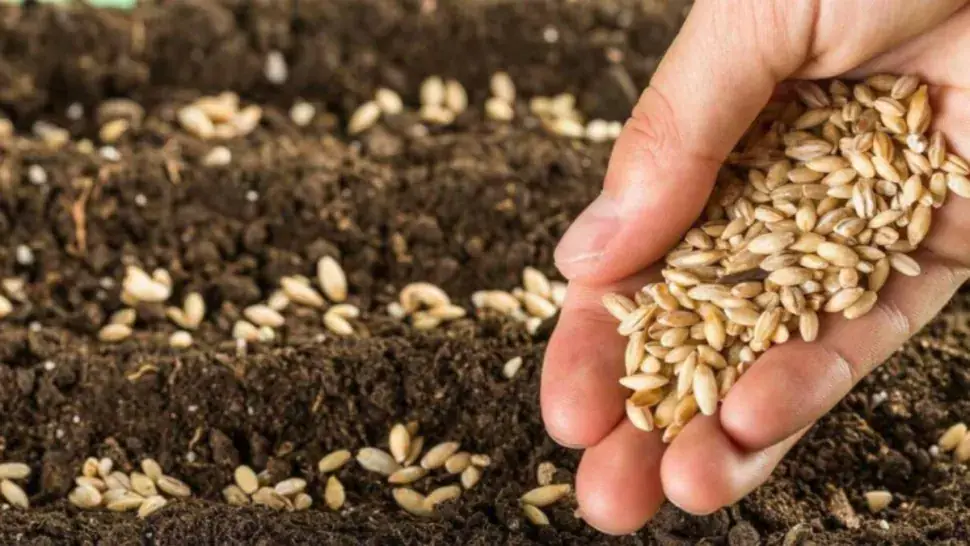
The Silianna region in Tunisia has made significant progress in planting high-quality seeds for the major crop season, with 57% of the target achieved. According to Mohamed Taher Azzouz, head of the Large-Scale Agriculture Office at the Regional Development Commission, 27,735 quintals of hard wheat seeds have been planted, along with quantities of soft wheat and 2,200 quintals of high-quality barley seeds. The planting season began in late September and has continued until the current week.
Azzouz provided further details, stating that 5,600 quintals of controlled barley seeds have been planted, although the progress in barley planting, which started early in the current week, remains low. In contrast, the planting of fodder crops has reached 76% completion. The region has also seen the distribution of 30,200 quintals of "Céber 45" and 25,000 quintals of "D.A.B," with 1,500 quintals of ammonium nitrate available at several collection centers.
The Regional Union of Agriculture in Silianna has called for the provision of necessary fertilizers and high-quality seeds to ensure the success of the major crop season. According to Hamdi Daoudi, head of the local agriculture union in North Silianna, there is a shortage of these essential supplies in the region. This appeal comes as the region seeks to optimize its agricultural production.
The progress in seed planting is a crucial aspect of Tunisia's agricultural strategy, particularly in regions like Silianna, where agriculture plays a vital role in the local economy. With the major crop season already underway, the focus is on completing the planting process and ensuring that farmers have the necessary resources to support their crops.
In related news, the city of Tajerouine is hosting a local event to promote private investment, while the region of Jendوبة has launched its own initiative under the theme "Private initiative and local investment: drivers of sustainable development." These events highlight the broader efforts to stimulate economic growth and development in various regions of Tunisia.
The emphasis on high-quality seeds and necessary agricultural inputs is part of a larger effort to enhance crop yields and improve food security in Tunisia. By supporting farmers with the resources they need, the government and agricultural organizations aim to boost production and contribute to the country's economic stability.
As the agricultural sector continues to play a critical role in Tunisia's economy, the progress in seed planting in the Silianna region and the efforts to address the challenges faced by farmers will be closely monitored. The success of the major crop season will have significant implications for the country's food security and economic development.
Key points
- The Silianna region in Tunisia has achieved 57% progress in planting high-quality seeds for major crops.
- The region has planted 27,735 quintals of hard wheat seeds and 2,200 quintals of high-quality barley seeds.
- The Regional Union of Agriculture in Silianna has called for the provision of necessary fertilizers and high-quality seeds to ensure the success of the major crop season.