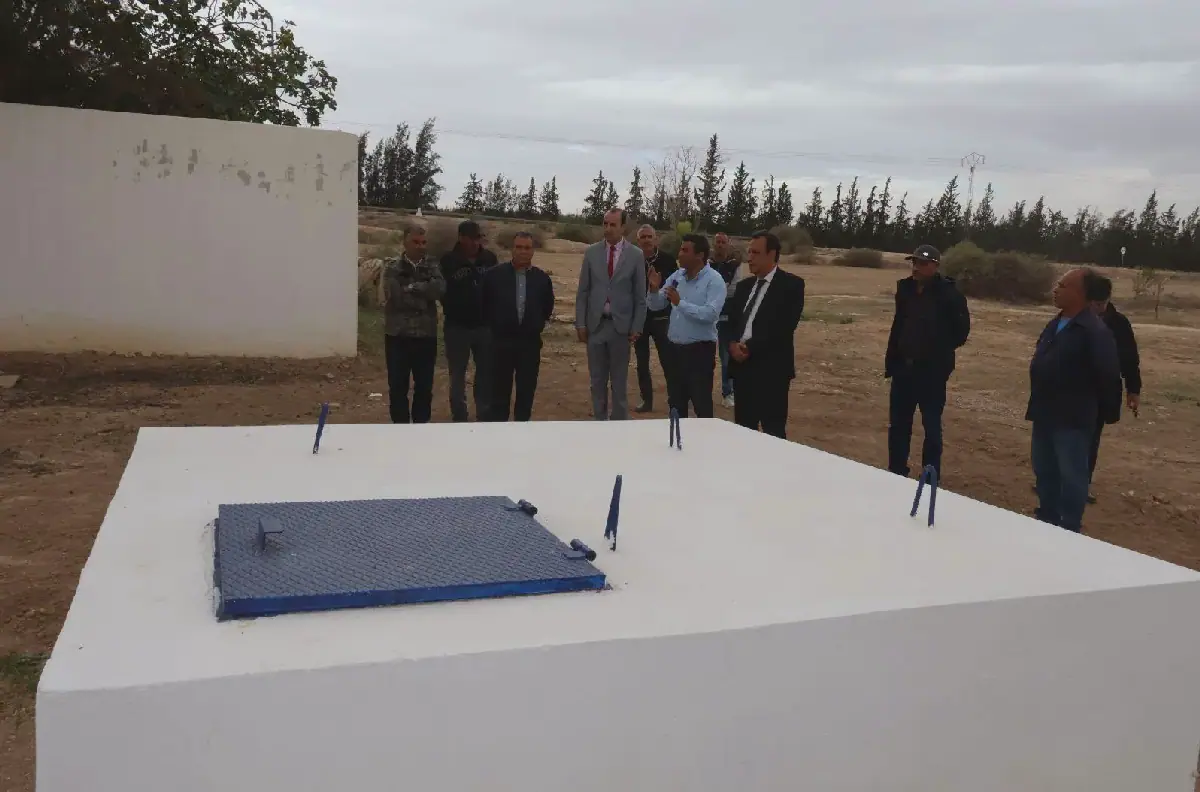
Tunisian authorities have inspected the progress of an irrigation agriculture project in the Qafur and Al-Arusa regions of Silianna Governorate. The project, valued at approximately $50 million, aims to enhance agricultural productivity in the area. Governorate official Khalid Al-Waari led the inspection, which assessed the project's current state and discussed challenges related to infrastructure and farmer debt.
The project, implemented by the Regional Agricultural Development Commission and financed by the World Bank's International Bank for Reconstruction and Development, involves the rehabilitation of 1721 hectares in Qafur and 2700 hectares in Al-Arusa. The works are 98% complete and expected to be finished by December 25. The project seeks to improve irrigation systems, increase crop yields, and boost farmers' incomes.
During the inspection, officials identified several issues affecting the region, including damaged infrastructure, unpaid debts owed by farmers, and contract disputes. To address these challenges, local authorities will hold meetings with stakeholders, including farmers, local councils, and government representatives. These discussions aim to find solutions to debt restructuring, contract renegotiation, and infrastructure rehabilitation.
The project's progress was reviewed in a recent working session held in Silianna Governorate. The session focused on monitoring the project's implementation and addressing the identified challenges. Authorities emphasized the need for swift resolution of the issues to ensure the project's successful completion and its benefits for local farmers.
The irrigation agriculture project is part of Tunisia's efforts to modernize its agricultural sector and improve food security. The project is expected to have a positive impact on the local economy, creating jobs and increasing agricultural production. Once completed, the project will enhance the livelihoods of farmers and rural communities in Silianna Governorate.
Local farmers and stakeholders have expressed their appreciation for the project's potential to transform the region's agricultural landscape. They emphasized the importance of continued government support and investment in the sector to ensure the project's long-term sustainability. The project's success is seen as a crucial step towards achieving Tunisia's agricultural development goals.
The Tunisian government has been working to boost agricultural development and improve rural livelihoods through various initiatives. The irrigation agriculture project in Silianna Governorate is a key component of these efforts, demonstrating the government's commitment to enhancing the country's agricultural productivity and competitiveness.
Key points
- The project is 98% complete and expected to be finished by December 25.
Reporting sources
- Radio Le Kef · Radio Le Kef