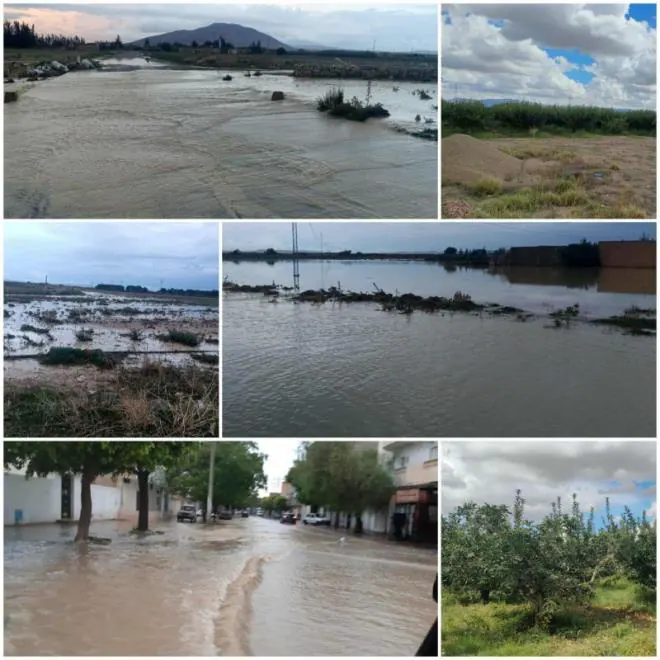
Heavy rainfall in Tunisia's Kassrine region over the past few days has brought much-needed hope for the upcoming agricultural season. The rains, which have covered most areas of the region, have helped to moisten the soil and create favorable conditions for preparing land for major crops. According to Mohamed Hassan Azhari, head of the local agricultural union in Kassrine, the rainfall has also helped to support water resources and replenish groundwater.
Azhari stated that the recent rainfall in the region ranged from 6 to 40 millimeters, with the highest amounts recorded in the city center at 40 millimeters, followed by Jedliane at 32 millimeters and Majel Bel Abbas at 29 millimeters. Other areas, including Tala, Sbeitla, and Hassi Al-Farid, received over 20 millimeters of rain, while the rest of the regions received between 6 and 14 millimeters. These rainfall amounts are seen as a positive start to the new season.
The recent rainfall has enabled farmers to begin preparing their land for crops such as wheat, barley, and fodder. Azhari expressed that this has brought joy to farmers, who are now optimistic about the upcoming season. However, the heavy rainfall also caused flooding in several areas, including the wadis of Haidra and Qarqour, which led to road closures, particularly on the regional road linking Haidra to the Tabaka region.
Azhari noted that a significant portion of the rainfall has flowed through the wadis towards the north and east, without being fully utilized. He emphasized the need for more care to be taken with water infrastructure to make the most of the rainfall and use it in the agricultural sector. Azhari called for the activation of the Boulaaba dam project, which has been planned since 2015, to help control and utilize the floodwaters.
The Boulaaba dam project, with a capacity of 40-45 million cubic meters, aims to help manage floodwaters and direct them towards agricultural use. Azhari also stressed the importance of repairing and maintaining water infrastructure in the region, particularly as some dams are currently blocked or non-functional. This, he believes, will help increase the region's ability to collect and utilize rainfall.
In preparation for the new agricultural season, Azhari expressed hope that seeds, fertilizers, and other essential supplies will be available in sufficient quantities and varieties. He emphasized the need for these supplies to be made available in a timely manner to avoid any delays that could impact the start of the major crop season.
The recent rainfall has brought much-needed relief to farmers in the Kassrine region, who are now preparing for the upcoming agricultural season. With the right infrastructure and supplies in place, the region is optimistic about the prospects for a successful season. The local agricultural union will continue to monitor the situation and work with authorities to support farmers and ensure a productive season.
Key points
- The recent rainfall in Tunisia's Kassrine region has brought positive indicators for the 2026/2027 agricultural season.
- The rainfall has enabled farmers to begin preparing their land for crops such as wheat, barley, and fodder.
- The region needs to improve its water infrastructure to make the most of the rainfall and utilize it in the agricultural sector.