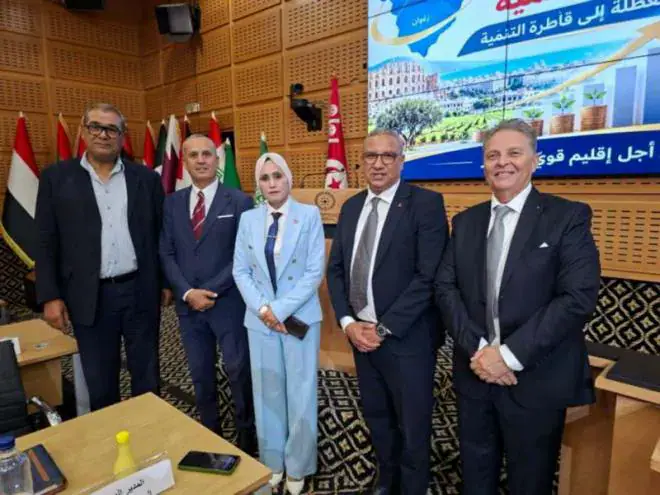
The Second Region Council in Tunisia has called for an inventory of idle public assets to reintegrate them into the economic cycle. This initiative was announced during a meeting organized by the council under the theme "From idle assets to development drivers." The goal is to convert unused public properties into productive investment projects, supporting regional development, job creation, and investment.
The meeting brought together representatives from various ministries, local council members, and council members from the Second Region. They discussed the issue of public assets that have stopped being utilized due to various reasons, including real estate, financial, legal, or confiscation issues. Examples include closed hotels, unutilized recovered international lands, heritage houses, and inactive industrial units.
Salma Mnari, a deputy in the Second Region Council, stated that the meeting aimed to utilize idle public assets as drivers for development and investment. She highlighted that these assets represent economic opportunities that can be used to create new projects, especially with the presence of competent engineers, agricultural graduates, and university graduates seeking job opportunities and investment fields.
Mnari emphasized the importance of coordination between various ministries, public institutions, and banks to find suitable solutions and overcome existing obstacles. She added that available legal frameworks, such as the public-private partnership system, can contribute to materializing this approach. Additionally, she suggested reusing these assets through leasing or partnership, according to applicable legal formulas, providing young people and investment initiative owners with opportunities to exploit and create value-added projects.
Samah Qsouma, a tax consultant and member of the National Chamber of Tax Consultants, considered idle assets a loss of investment and national wealth. She called for a comprehensive inventory of idle public assets across various ministries, classifying them according to their nature, legal, and technical status. Qsouma also stressed the need to accelerate the resolution of legal and real estate disputes hindering the reuse of these properties.
Basma Qsenntini, General Director of Territorial Planning at the Ministry of Equipment and Housing, highlighted the ministry's role in providing integrated infrastructure. She emphasized that territorial planning is a fundamental pillar for providing suitable conditions for investment, organizing the territorial space, and developing infrastructure. Qsenntini also stressed the importance of reintegrating unused industrial and tourist units into the economic cycle.
The meeting concluded with recommendations to transition from diagnosing the reality of idle assets to establishing a practical program for their reintegration into the economic cycle. The recommendations included preparing an initial inventory of unused public assets, classifying them, and determining the actual reasons for their inactivity. The participants also called for creating a unified investment map for the Second Region, outlining available opportunities, and setting a practical program for reusing idle assets.
Key points
- The Second Region Council in Tunisia urges an inventory of idle public assets to boost the economy and create job opportunities.