The Tunisian government has opted to save and relaunch its public cement factories, Oum El Kélil and Ciments de Bizerte, despite recommendations from international lenders and experts to privatize them due to their significant losses and deficits. Under the leadership of President Kaïes Saïed, who strongly advocates for the preservation of Tunisia's first public industrial assets, the government has implemented strategies to revive these cement factories.
Oum El Kélil, located in the Kef region, has reportedly overcome its financial crisis and returned to profitability. The company's CEO, Taoufik Khardani, announced on September 23, 2026, that the factory has settled its debt, which stood at 260 million dinars (MDT), and has achieved profitability. The factory currently produces 3,000 tons of cement per day and aims to expand its operations through exports to the Libyan market.
The recovery of Oum El Kélil is attributed to a three-year plan that involved settling its debt and renegotiating its liabilities with suppliers. The company has also implemented measures to improve its efficiency, including the use of a new, more economical fuel source, which has resulted in savings of 49 MDT. Additionally, the factory has resumed production of clinker, a crucial intermediate product in cement manufacturing.
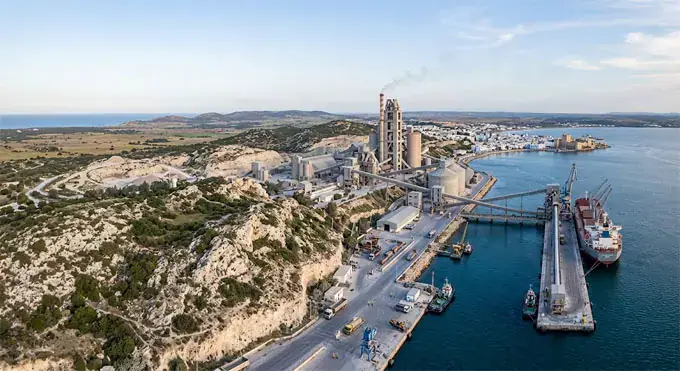
Ciments de Bizerte, another public cement factory, has adopted a three-phase restructuring plan aimed at revitalizing its operations. The plan, approved by a restricted ministerial council on March 17, 2026, focuses on leveraging the factory's strengths, including its port, land assets, infrastructure, and railway connection, to reduce logistical costs and improve its competitiveness.
The restructuring plan for Ciments de Bizerte involves a two-step financial mechanism to address its debt, which stands at 276.3 MDT. The plan includes consolidating existing bank debts and securing new credits from a pool of banks, led by the Banque de l'Habitat. The success of this plan is expected to be boosted by two major projects in the Bizerte region: the construction of a fixed bridge and the rehabilitation of the Bizerte-Tunis railway line.
The revival of these public cement factories is expected to have a positive impact on Tunisia's cement industry, which currently comprises eight factories, including three public ones. The industry produces 11.7 million tons of cement annually, with 6 million tons meeting local demand. The recovery of Oum El Kélil and Ciments de Bizerte is likely to regulate the market and strengthen the industry as a whole.
The Tunisian government's decision to save and relaunch its public cement factories marks a departure from the privatization approach advocated by international lenders. The success of this strategy will be closely watched, as it has significant implications for the country's industrial sector and economic development.
Key points
- The Tunisian government has opted to save and relaunch its public cement factories despite recommendations to privatize them.
- Oum El Kélil has returned to profitability and resumed production of clinker, with a current production capacity of 3,000 tons of cement per day.
- Ciments de Bizerte has adopted a restructuring plan aimed at revitalizing its operations and addressing its debt of 276.3 MDT.