US President Donald Trump is seeking to reduce his country's reliance on Canadian potash imports, which currently account for a significant portion of US agricultural needs. On September 21, 2026, Trump announced plans to work with Belarus on a "massive deal" to purchase potassium chloride at a lower price than what is currently being paid to Canada. However, Belarus's President Alexander Lukashenko has indicated that available volumes are limited, casting doubt on the feasibility of this plan.
The US imported approximately 22.9 million tonnes of potash from Canada in 2024, accounting for around 39% of global exports. Canada produced around 25 million tonnes of potash in 2024, representing 32.8% of global production. Trump's efforts to diversify US potash imports come as the country seeks to reduce its dependence on Canadian supplies. The US agricultural sector relies heavily on potash to maintain crop yields, making it essential to secure stable and affordable imports.
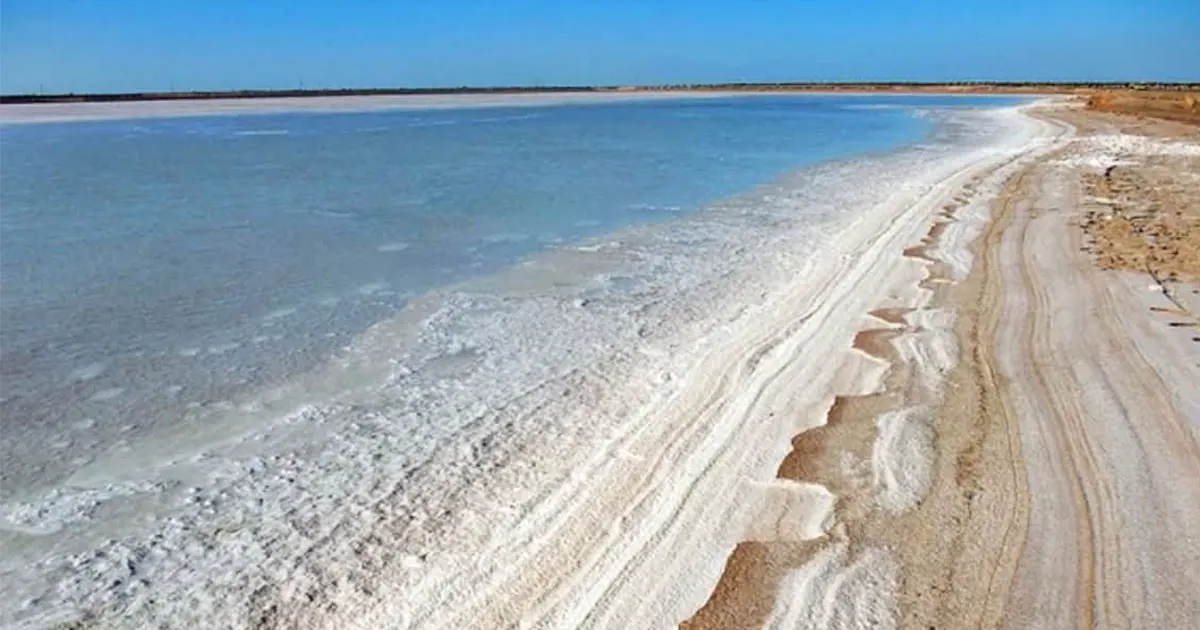
Tunisia's Zarzis region has documented potash reserves, which could potentially provide an alternative source of supply for the US. According to the Office National des Mines, the Sebkha El Melah area has saumures rich in potassium, magnesium, and bromine. A proposed industrial project in the 1980s envisioned producing 70,000 tonnes of potassium chloride per year. While this project was never implemented, the reserves remain a viable option for future development.
The chemical composition of the saumures in Sebkha El Melah has been analyzed, with a concentration of 7.2 to 7.7 grams of potassium per liter. This would theoretically require around 5.1 million cubic meters of saumure to produce 70,000 tonnes of potassium chloride. However, it is essential to conduct a feasibility study to determine the actual quantity of saumure that can be sustainably exploited and the associated environmental impact.
Estimates suggest that producing 70,000 tonnes of potassium chloride per year could generate a value of $42 to $45.5 million annually, based on a hypothetical price of $600 to $650 per tonne. Increasing production to 100,000 tonnes per year could yield a value of $60 to $65 million, while an ambitious target of 250,000 tonnes per year could result in a value of $150 to $162.5 million. However, these scenarios require significant investment and further geological, hydrological, and industrial studies.
To capitalize on its potash reserves, Tunisia would need to rapidly activate diplomatic and commercial links with the US. This would involve conducting a feasibility study, evaluating the project's environmental impact, and securing funding for the necessary infrastructure. If successful, Tunisia's potash industry could provide a specialized supply to the US market, which is seeking to diversify its sources.
The development of Tunisia's potash industry could have significant economic benefits for the country, including job creation and foreign exchange earnings. As the US seeks to reduce its reliance on Canadian potash imports, Tunisia's Zarzis region offers a potential alternative source of supply. With careful planning and investment, Tunisia could establish itself as a reliable supplier of potash to the US market.
Key points
- Tunisia has documented potash reserves in the Zarzis region, which could provide an alternative source of supply for the US.
- The US is seeking to reduce its reliance on Canadian potash imports, which currently account for a significant portion of US agricultural needs.
- Developing Tunisia's potash industry could have significant economic benefits for the country, including job creation and foreign exchange earnings.