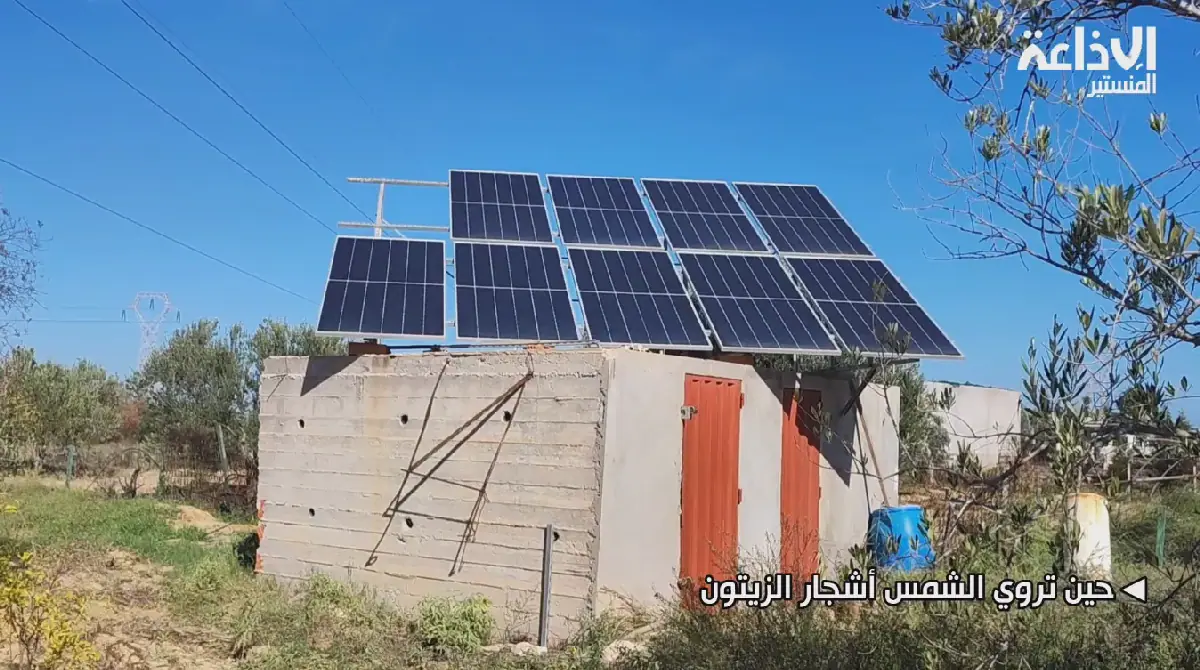
In the governorate of Mahdia, specifically in the delegation of Mectem, solar rays are being harnessed to power irrigation systems for olive farming. Local farmer, Om Salih, has adopted this innovative approach to tap into groundwater and meet the watering needs of his olive trees. This on-field experiment highlights the significance of renewable energy in decreasing production costs and alleviating the burden on farmers.
The use of solar power for irrigation has shown promising results in improving crop yields and reducing reliance on fossil fuels. According to the head of the Tunisian Olive Owners' Association, initiatives like these should be encouraged and facilitated to promote sustainable agriculture practices. The association is calling for more support and incentives to help farmers adopt renewable energy solutions.
Tunisia's olive sector has faced challenges in recent years, including issues with financing and storage. In response, the country's parliament has approved recommendations to address these problems and ensure a stable market for olive farmers. The measures aim to provide relief to farmers and help them maintain their livelihoods.
The adoption of solar-powered irrigation systems is part of a broader effort to promote sustainable agriculture in Tunisia. The country's agricultural sector is a significant contributor to its economy, and initiatives like these are crucial in ensuring its long-term viability. By reducing reliance on fossil fuels and promoting renewable energy, farmers can minimize their environmental impact while maintaining productivity.
The use of solar energy for irrigation is not limited to olive farming in Tunisia. Farmers across the country are exploring innovative approaches to reduce their environmental footprint and improve crop yields. The government and various organizations are providing support and resources to help farmers adopt sustainable practices and invest in renewable energy solutions.
According to Radio Monastir, a local news outlet, the experiment in Mectem has demonstrated the potential of solar power in supporting sustainable agriculture. The report highlights the importance of renewable energy in addressing the challenges faced by farmers and promoting environmentally friendly practices. The initiative has sparked interest among local farmers, who are eager to explore similar solutions.
As Tunisia continues to grapple with environmental and economic challenges, innovative solutions like solar-powered irrigation systems offer a promising way forward. By embracing renewable energy and sustainable agriculture practices, the country can reduce its reliance on fossil fuels, promote eco-friendly farming methods, and ensure a more sustainable future for its agricultural sector.
Key points
- Solar power is being used to irrigate olive groves in Tunisia, reducing production costs and environmental impact.
Reporting sources
- Radio Monastir · Radio Monastir