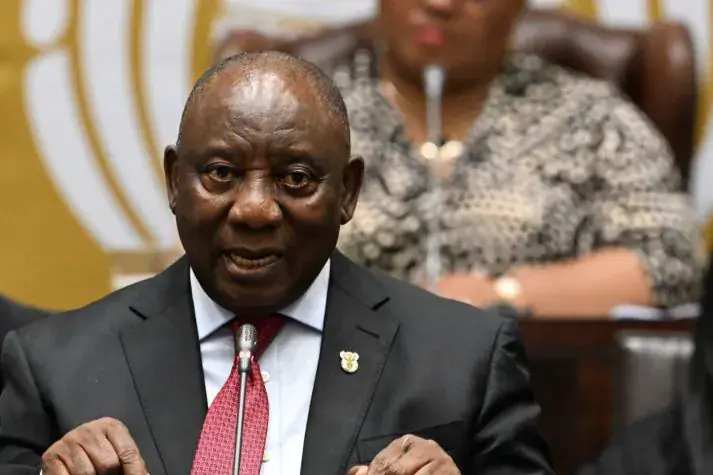
President Cyril Ramaphosa has warned that El Niño is already affecting South Africa, urging households and businesses to conserve water as the country faces a deepening water crisis. Ramaphosa acknowledged that the country is experiencing a lack of its usual seasonal rainfall, putting pressure on an already strained water supply system. He emphasized that South Africa is a water-scarce country and needs to conserve water, particularly during this period.
Ramaphosa outlined the government's National Water Action Plan, which aims to address the root causes of the country's water crisis and ensure reliable access to safe and clean drinking water. The plan focuses on five key interventions: restoring municipal water and sanitation services, reforming the water delivery system, infrastructure investment, strengthening legal and regulatory mechanisms, and combating corruption and criminality. The implementation of the plan is coordinated by the National Water Crisis Committee, chaired by Ramaphosa.
Ramaphosa identified municipalities' failure to reinvest revenue generated through water sales into maintaining and upgrading infrastructure as a fundamental shortcoming of the existing system. He said deteriorating pipes, water losses, non-payment, and damage caused by extreme weather events continue to place financial pressure on municipalities. The President emphasized that municipalities should prioritize spending on water provision to ensure ongoing services.
The President faced questions over municipal accountability following incidents of contaminated drinking water in Tshwane. Ramaphosa attributed the failures to shortcomings at local government level and limitations on national government's ability to intervene before situations escalated. He cited the Hammanskraal water crisis as an example, where national government had previously warned local authorities of a looming disaster, but necessary action had not been taken.
Under the proposed reforms, national government would be empowered to intervene more directly when municipalities fail to act. Ramaphosa argued that this was not a process of taking powers from any level of government, but rather ensuring that all levels of government work together for the interest of the people. He also advocated for reducing government's reliance on outsourcing essential services, such as employing engineers, artisans, and water technicians.
Ramaphosa acknowledged concerns surrounding emergency water provision and corruption involving water tankers, saying strengthened oversight and financial monitoring formed part of the National Water Crisis Committee's priorities. He emphasized that national government would continue mobilizing billions of rands for bulk water infrastructure, including projects supplying water from Lesotho. However, he stressed that municipalities, businesses, and residents also have a responsibility to safeguard the country's water resources.
The President's warnings and proposed reforms come amid concerns that the country is losing 47% of its clean water, valued at R14.89 billion. Ramaphosa's administration is working to address the water crisis, with a focus on ensuring reliable access to safe and clean drinking water. The government's efforts aim to mitigate the impact of El Niño and address the country's long-term water security challenges.
Key points
- President Cyril Ramaphosa urges South Africans to conserve water as El Niño hits the country.
- The government's National Water Action Plan aims to address the root causes of the country's water crisis.
- Ramaphosa proposes reforms to empower national government to intervene directly when municipalities fail to act.