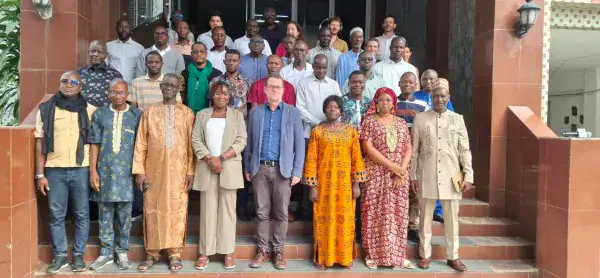
The Côte d'Ivoire, Mali, Burkina Faso, and Guinea have joined forces to strengthen their cross-border cooperation on agropastoral issues. An workshop was held in Abidjan on November 25, 2026, to analyze territorial dynamics and cross-border challenges in the sector. The project, known as PRECOCE, aims to prevent conflicts and promote concerted management of pastoral areas. The participants emphasized the need to anticipate crises, consolidate social cohesion, and promote sustainable management of natural resources.
The PRECOCE project, funded by the European Union to the tune of 3 million euros, has been coordinated by the consortium Acting For Life since November 2015. The project's main objectives are to improve knowledge of the cattle-meat sector, carry out agropastoral developments in targeted areas, and establish rapid intervention mechanisms adapted to crisis situations. The project's approach is based on a territorial analysis that takes into account the evolution of cattle movements and new economic and social dynamics in cross-border areas.
The mobility of pastoralists is a crucial aspect of the rural economy, food security, and social cohesion in West African countries. However, this mobility faces numerous challenges, including increasing pressure on natural resources, limited access to pastoral areas, climate change, and recurrent conflicts between farmers and herders. In cross-border territories, these challenges are exacerbated by the interdependence of areas and the movement of herds between countries.
Dr. N'Gotta Adjoua Aïcha, Director of Animal Nutrition and Pastoral Space Management, emphasized the importance of strengthened cooperation between states for better management of natural resources and sustainable securitization of pastoral mobility. She praised the financial support of the European Union and the commitment of the consortium Acting For Life, Altaï, and other partners in preventing conflicts and developing the agropastoral sector.
Cédric Touquet, Director of Operations at Acting For Life, highlighted the relevance of the PRECOCE project, which intervenes in strategic cross-border basins characterized by strong interdependence. He cited examples of the consequences of the opening and closing of the Guinean border to transhumant animals, mainly from Mali. The project's approach takes into account the evolution of cattle movements and new economic and social dynamics in cross-border areas.
The PRECOCE project focuses on the cattle-meat sector as a gateway to understanding territorial dynamics. According to Cédric Touquet, cattle movements are valuable indicators of economic, social, and security transformations in rural areas. He noted that the circuits of animal mobility are evolving, with a diversification of movements between coastal countries. For example, Ivoirian traders are now present in Benin's northern markets, sourcing cattle.
The project aims to provide mechanisms for anticipating and responding to crises, adapting quickly to changes in territories. The participants at the workshop were invited to engage in constructive exchanges and formulate operational recommendations. The Ministry of Animal Resources and Fisheries has reaffirmed its commitment to supporting initiatives in favor of sustainable pastoralism.
Key points
- The PRECOCE project aims to prevent conflicts and promote concerted management of pastoral areas in West Africa.