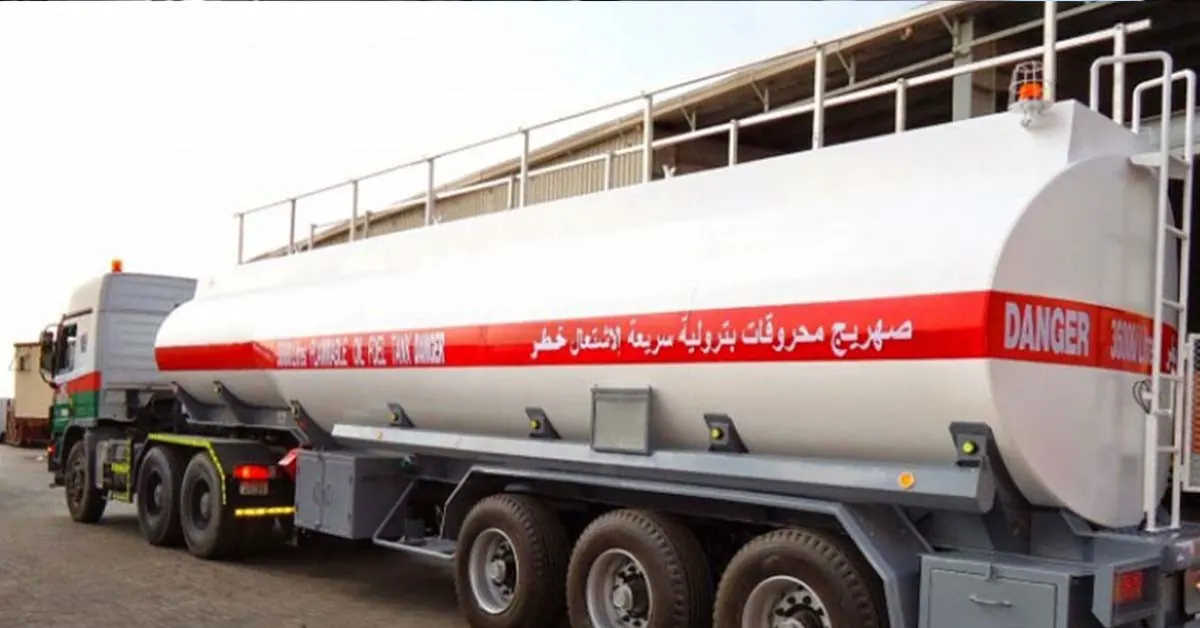
The General Union of Oil and Chemical Materials has announced that the Ministries of Finance and Industry, Mines, and Energy have provided the necessary funds to cover social contributions for fuel transport workers. This comes after an agreement was signed on September 17, 2026, to increase the profit margins of petroleum companies. The move aims to enable these companies to fulfill their financial obligations to workers and provide them with social coverage.
According to Salim Sahimi, General Secretary of the Oil and Chemical Materials Union, the increase in profit margins for petroleum companies will allow them to pay workers' dues and provide social coverage. This development may help resolve the impending strike by fuel transport workers on September 23-24, which was planned to press for social benefits and implementation of the May 2, 2019 agreement.
The May 2, 2019 agreement recognizes specific benefits, financial and social entitlements for fuel transport and hazardous materials workers. It also outlines mechanisms for adjusting profit margins and stipulated increases to enable companies to pay workers' dues. Sahimi noted that the agreement can be renegotiated on some points to satisfy both parties.
Despite being open to dialogue and negotiation, Sahimi emphasized that the union remains committed to the planned strike. He cited the lack of a conciliation session between the union and employers, as required by law, as a major issue. Sahimi attributed the current situation to the Ministry of Social Affairs' failure to oversee a conciliation session between the parties.
The union had previously announced the strike on August 27, 2026, and Sahimi stated that they had no choice but to proceed with it. Meanwhile, the National Chamber for the Transport of Hazardous Materials and the National Transport Union have stated that fuel transport companies have not received any official strike notice.
These organizations consider any work stoppage or disruption of truck traffic to be an unlawful act. The situation highlights ongoing tensions between the government, petroleum companies, and transport workers over social benefits and labor agreements.
The General Union of Oil and Chemical Materials had been pressing for the implementation of the 2019 agreement and better working conditions for fuel transport workers. The recent agreement on profit margins is seen as a step towards resolving the issue, but the strike planned for later this month may still proceed if further negotiations do not yield satisfactory results.
Key points
- The Tunisian government has increased profit margins for petroleum companies to fund social benefits for fuel transport workers.
- A strike by fuel transport workers is planned for September 23-24 over social benefits and labor agreements.
- The General Union of Oil and Chemical Materials remains committed to negotiations to resolve the issue.