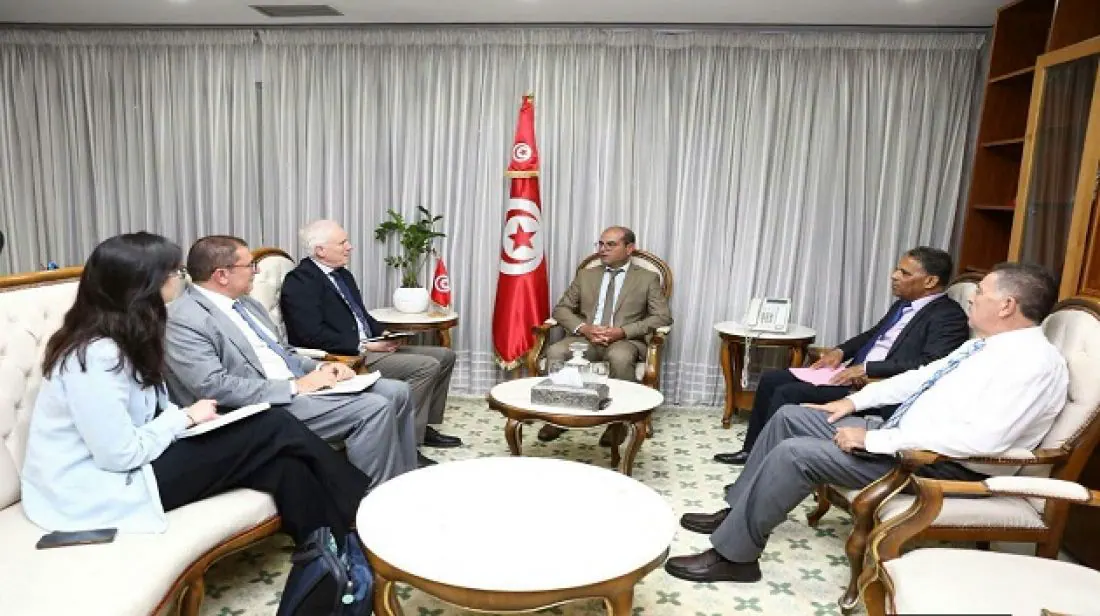
On Thursday, Tunisia's Minister of Equipment and Housing, Salah الزواري, met with Alex Kremer, director of the World Bank's Tunisia office. The meeting focused on the country's infrastructure development, particularly the project to double National Road 13. This road connects the governorates of Kasserine and Sfax, passing through the governorates of Kairouan and Sidi Bouzid. The project aims to improve transportation links and stimulate economic growth in the region.
The meeting was part of ongoing cooperation between Tunisia and the World Bank. The two parties discussed ways to enhance their partnership in the field of road infrastructure. They reviewed the project's preparation and implementation, with a focus on completing the necessary procedures. The goal is to announce a call for tenders by the end of this year. A World Bank delegation attended the meeting, along with Khaled Alatrash, Director General of Bridges and Roads, and Moez Qarma, project monitoring unit manager.
The National Road 13 doubling project is a key component of Tunisia's economic development strategy. The road is expected to play a crucial role in facilitating trade and commerce between the country's interior regions and its coastal areas. By improving transportation links, the project aims to boost economic activity, create jobs, and increase competitiveness. The World Bank is providing financial and technical support to help Tunisia achieve these goals.
During the meeting, the parties discussed the project's technical and financial aspects. They reviewed the project's design, implementation timeline, and budget. The World Bank is committed to supporting Tunisia's infrastructure development, and the meeting provided an opportunity to assess progress and address any challenges. The project's success is critical to Tunisia's economic growth and development.
The National Road 13 project is part of a broader effort to upgrade Tunisia's road network. The country's transportation infrastructure has faced significant challenges in recent years, including congestion, accidents, and maintenance issues. By investing in road infrastructure, Tunisia aims to improve road safety, reduce travel times, and increase economic efficiency. The World Bank is a key partner in this effort, providing financing and technical expertise.
The meeting between Minister الزواري and Director Kremer highlights the importance of international cooperation in supporting Tunisia's development goals. The World Bank has a long history of working with Tunisia, providing financing and technical assistance for a range of projects. The National Road 13 doubling project is just one example of the bank's commitment to supporting the country's economic growth and development.
The project's progress will be closely monitored by the Tunisian government and the World Bank. The two parties are committed to ensuring the project's successful implementation and maximizing its impact on the country's economy. By working together, they aim to create a more efficient, safe, and sustainable transportation network that supports Tunisia's economic growth and development.
Key points
- The World Bank is providing financial and technical support for Tunisia's National Road 13 doubling project.
- The project aims to improve transportation links and stimulate economic growth in the region.
- The project's success is critical to Tunisia's economic growth and development.