Ghana's bid to join the BRICS bloc has taken a significant step forward after the Cabinet approved a formal application, positioning Accra as a new entrant in the expanding South-South network. The development was announced by Ghana's Foreign Affairs Minister, Samuel Okudzeto Ablakwa, in Accra on 6 October 2026. This move is part of Ghana's strategy to broaden its partnerships with emerging economies across the Global South.
The decision to seek BRICS membership is driven by a clear commercial logic, with research analyst Caleb Ziblim noting that South Africa, China, and India are among Ghana's key trading partners. China, in particular, supplies a large share of Ghana's imports. Several of these economies are already full BRICS members, which gives Ghana's application a practical commercial rationale and a tangible reason for existing BRICS members to assess its proposal favourably.
Ghana's approach signals a multi-alignment strategy, with Accra not abandoning its traditional partners. The country maintains active relationships with the International Monetary Fund and the World Bank. Officials view BRICS as an additional diplomatic and financing channel, not a replacement. India has offered an early indication of support, with External Affairs Minister Subrahmanyam Jaishankar expressing sympathy for Ghana's aspirations.
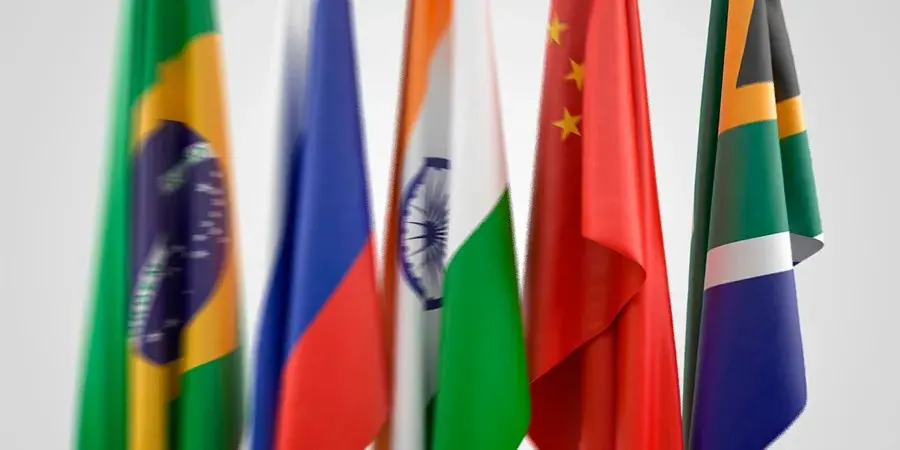
However, admission to BRICS requires consensus among all full members, and no single endorsement is sufficient. As of October 2026, BRICS comprises 11 full members, including Indonesia, which joined in January 2025. A separate tier of partner countries, including Nigeria, Malaysia, Vietnam, and Uganda, participates in the bloc without full membership rights.
The distinction between full membership and partner status matters for investors, with partner countries engaging with the bloc but not holding the same standing in decision-making. It remains unclear whether Ghana's application targets full membership or the partner-country tier. Ghana also faces a regional competitive test, with Nigeria already representing West Africa as a BRICS partner.
To succeed, Accra must make a credible case for what it adds beyond existing regional representation. Bright Simons of the Imani Centre for Policy and Education noted that Ghana could present itself as a stable and respected partner. However, the timeline for any decision remains open. The New Development Bank, the BRICS-created multilateral lender, offers a separate route for infrastructure finance that could benefit Ghana regardless of membership tier.
For now, Ghana's application signals strategic intent rather than immediate market access, and it does not yet create new financing rights or preferential trade terms. Investors and executives should watch Ghana's formal submission, the collective BRICS response, and India's evolving position, as these will determine whether Accra secures a symbolic foothold or a stronger platform for capital and trade.
Key points
- Ghana's Cabinet has approved a formal application to join BRICS.
- The country's bid is driven by a desire to strengthen trade ties with emerging economies.
- Admission to BRICS requires consensus among all full members.