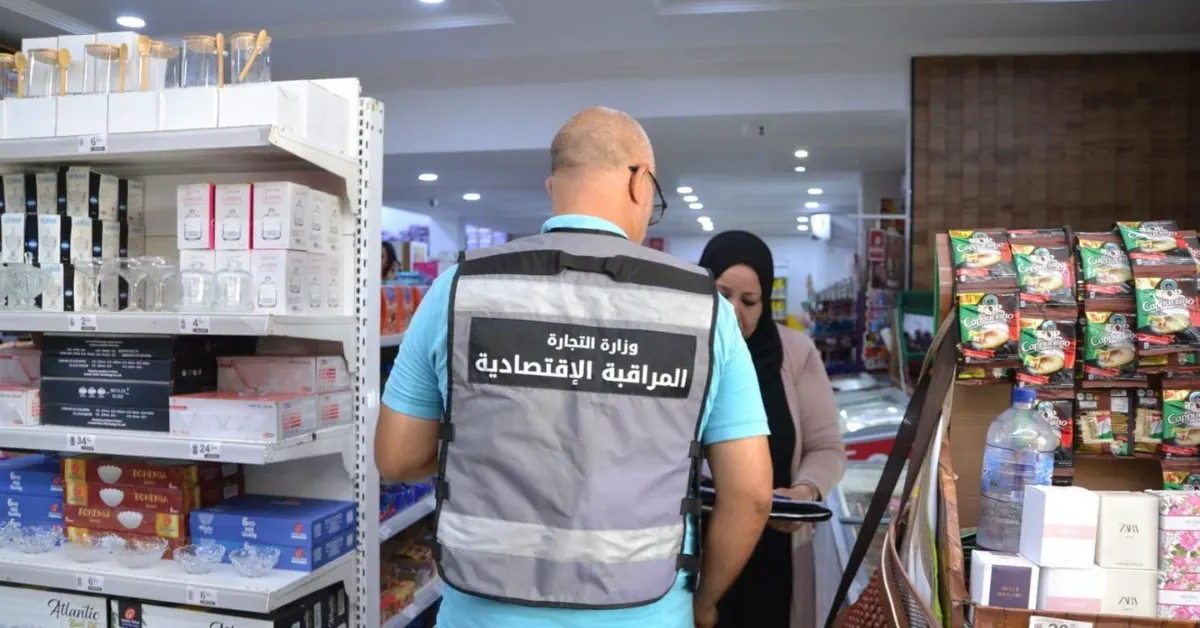
Tunisia's Ministry of Trade and Export Development conducted 50,758 monitoring visits in September 2026, resulting in 7,953 economic infractions. These infractions primarily concerned transaction transparency (3,715 cases), pricing and monopolies (2,688 cases), and quality and metrology (1,526 cases). The ministry's monitoring efforts covered various sectors, including fresh agricultural and marine products, food, bakeries, restaurants, cafes, and industrial materials.
The ministry's monitoring teams confiscated significant quantities of products and materials during September. These confiscations included 53 tons of subsidized grain derivatives, 209 tons of vegetables and fruits, 4,939 kilograms of poultry meat, 21,450 eggs, 3.5 tons of sugar, 200,000 liters of mineral water, 73 tons of animal feed, 83,091 subsidized notebooks, and 28,327 packs of tobacco.
The ministry has been closely monitoring sectors that experienced supply and pricing pressures. Since the beginning of August 2026, authorities have recorded 1,135 infractions in the mineral water sector, including 573 cases related to pricing and monopolies. In the school supplies sector, 817 infractions were reported, with 214 cases involving price hikes and monopolistic practices.
In addition to its field monitoring efforts, the Ministry of Trade has continued to use the toll-free number 80100191 to receive citizen complaints and report irregularities. Between January 1 and September 30, 2026, the ministry received 1,609 complaints, primarily related to pricing and supply practices. These complaints led to the referral of cases to relevant authorities for necessary action.
The majority of complaints received through the toll-free number concerned mineral water (816 cases), followed by food products, poultry, and eggs (136 cases), and other food items (102 cases). Vegetables and fruits accounted for 85 complaints. Most complaints (983 cases, or 61%) involved price hikes or illegal sales, while 308 cases (18.8%) concerned refusal to sell, hoarding, or monopolistic practices.
The complaints were distributed across various regional trade administrations. The Tunis regional administration received 368 complaints (22.9%), followed by Ben Arous (160 complaints, or 9.9%), and Ariana (144 complaints, or 10.8%). The ministry's efforts aim to address economic infractions and ensure fair trade practices in Tunisia.
The Ministry of Trade and Export Development continues to work to improve the business environment and protect consumer rights in Tunisia. Through its monitoring efforts and complaint-handling mechanisms, the ministry seeks to promote transparency and fairness in the country's economic activities.
Key points
- The Ministry of Trade and Export Development recorded 7,953 economic infractions in September 2026.
- The majority of complaints received through the toll-free number concerned mineral water and food products.
- The ministry's efforts aim to address economic infractions and ensure fair trade practices in Tunisia.