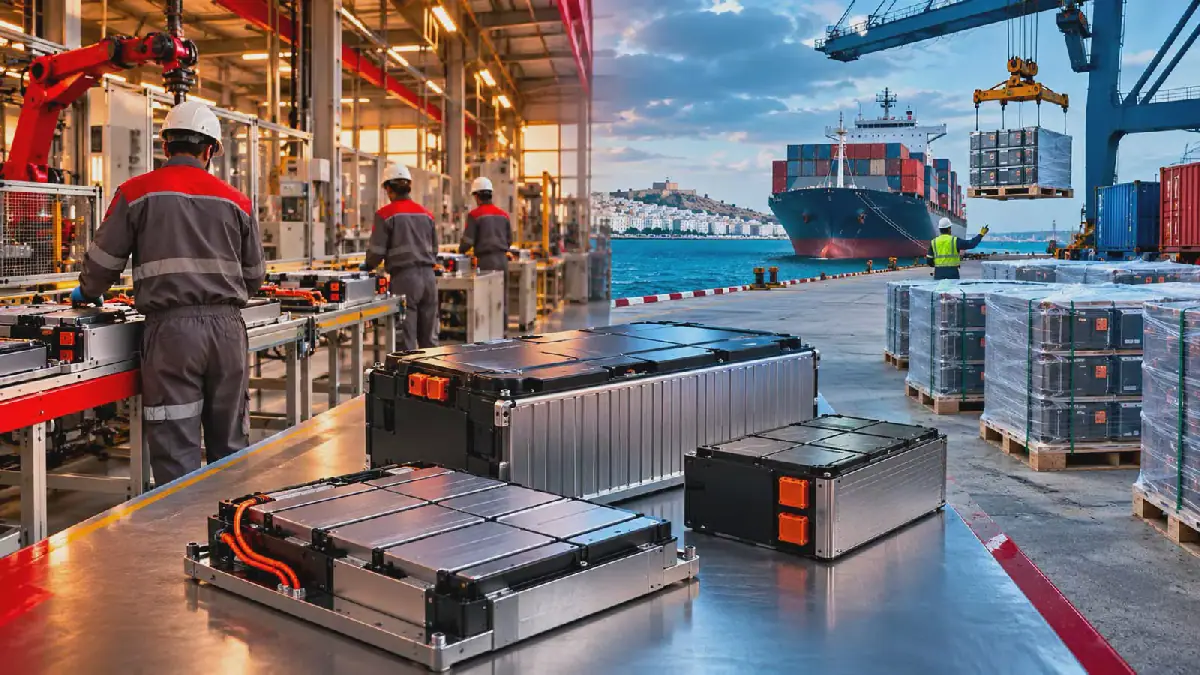
The Tunisian government's proposed exemption on imported lithium batteries has sparked concerns among local industry stakeholders. The exemption, outlined in Article 49 of the 2027 finance bill, would eliminate customs duties, value-added tax (VAT), and a levy for the Development and Competitiveness Fund (Fodec) on imported batteries for electricity storage. This move may seem beneficial to consumers and businesses looking to invest in storage equipment, but it could have negative consequences for domestic production.
The proposed exemption contradicts a previous law that introduced fiscal benefits to encourage the local production of lithium batteries. Article 46 of the 2026 finance law established customs and tax benefits for certain raw materials needed to manufacture lithium batteries in Tunisia. These materials and components are exempt from customs duties and have a reduced VAT rate of 7%. The goal was to promote local assembly and production by reducing input costs while maintaining protection for finished products.
The new exemption could disrupt the balance and discourage investments in the industry. Local manufacturers would still have to pay certain charges, including a 7% VAT on cells and duties on some components not covered by the 2026 benefits. This unequal treatment could lead to a decline in industrial investments, which are crucial for the development of a competitive and sustainable industry. Ahmed Hichri, a member of the Tunisian Clean Energy Organization, has raised concerns about the potential consequences of this exemption.
The stakes are not only industrial but also commercial and financial. Tunisia's trade deficit has been deteriorating, reaching 20.997 million dinars at the end of September 2026, a 25.5% increase from the previous year. The country's dependence on imports, particularly from China, is a pressing concern. Favoring the importation of finished batteries could lead to a significant transfer of economic value abroad, undermining the development of a local industry that could generate more value-added activities and jobs.
The global market for lithium batteries is highly competitive, with China dominating the production of cells. According to data cited by Ahmed Hichri, China's cell production capacity could reach 5.862 to 6.720 GWh by 2030, while global demand is estimated to be between 4.000 and 5.100 GWh. This potential overcapacity could put pressure on external markets, especially as major economies strengthen their support for domestic production and protectionist trade policies.
Furthermore, importing finished batteries does not guarantee stable and low prices. The price of LFP storage cells has fluctuated, rising from around $38.8 to $54.4 per kWh between 2025 and August 2026. This uncertainty highlights the importance of developing a local industry that can provide a stable and competitive supply of lithium batteries.
The Tunisian government must weigh the benefits of the proposed exemption against its potential impact on the local industry. Stakeholders are calling for a coherent industrial policy that supports the development of a competitive lithium battery sector. The outcome will have significant implications for Tunisia's ability to participate in the global transition to renewable energy and reduce its dependence on imports.
Key points
- The proposed exemption on imported lithium batteries could undermine Tunisia's efforts to develop a local industry and create jobs in the sector.