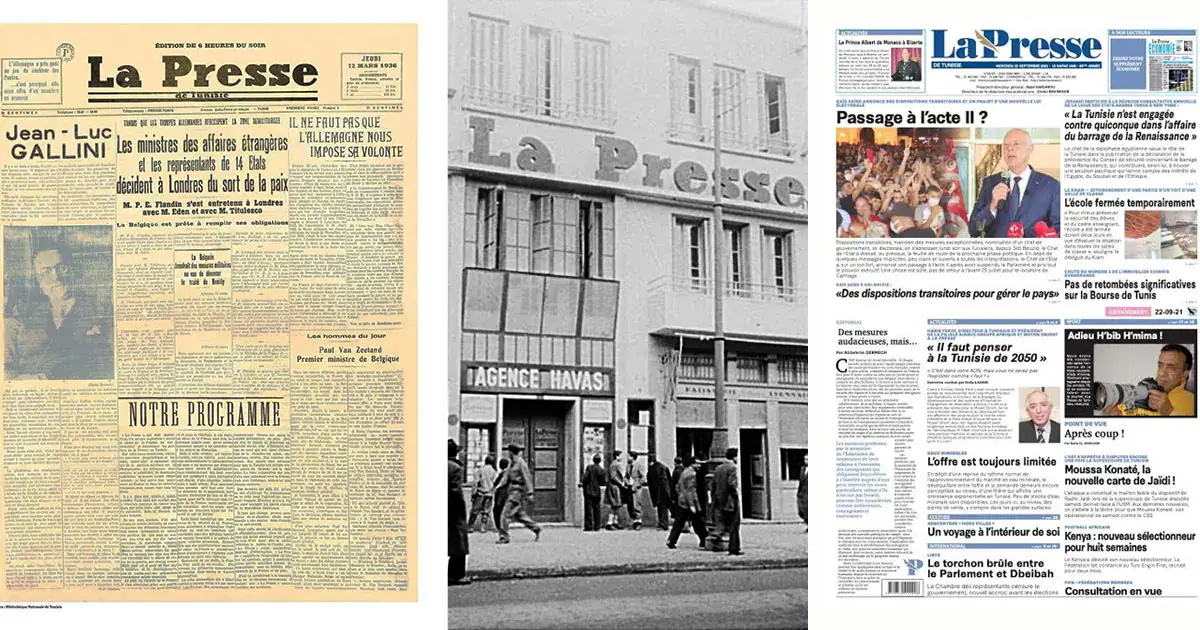
La Presse, Tunisia's oldest French-language newspaper, is celebrating its 90th anniversary. Founded in March 1936 by Henri Smadja, the newspaper has a rich history, but a recent commemorative spot has been criticized for glossing over the newspaper's past and its founders. The spot has been described as a "monument of pseudo-artistic vacuity" that fails to mention Smadja and his team, who built the newspaper from scratch.
The author of the criticism, Mohamed Sadok Lejri, has expressed his disappointment with the spot, stating that it does not accurately represent the newspaper's history. Lejri spent several years researching the newspaper's archives and discovered that the early years of La Presse were marked by a high level of editorial excellence, despite limited resources. The newspaper's founders, including Smadja, Félix Allouche, and Henri Sidelio, worked tirelessly to produce a high-quality publication.
Lejri's research revealed that La Presse was more than just a newspaper - it was a reflection of Tunisia's history and culture. The newspaper covered major events, including World War II, the nationalist movement, and the country's struggle for independence. The newspaper also featured articles on social issues, such as education, healthcare, and food security. Lejri believes that the commemorative spot failed to capture the essence of La Presse's history and significance.
Henri Smadja, the founder of La Presse, was a prominent figure in Tunisian society. Born in Oran in 1897, Smadja studied medicine before pursuing a career in business. He took over La Presse in 1934 and transformed it into a leading publication. Smadja was also a politician and served on the Grand Council of Tunisia from 1934 to 1945. His legacy is still celebrated today, but the commemorative spot has been criticized for not adequately acknowledging his contributions.
La Presse has undergone significant changes over the years. Nationalized in 1973, the newspaper is now owned by the SNIPE. Despite its rich history, the newspaper has struggled to maintain its editorial standards and has been criticized for becoming too focused on flattery and less on in-depth reporting. Lejri believes that the commemorative spot is a reflection of this shift in focus.
The controversy surrounding the commemorative spot highlights the challenges faced by La Presse in balancing its rich history with its current reality. While the newspaper has a proud legacy, it must also acknowledge its current limitations and strive to regain its former editorial excellence. The criticism of the spot has sparked a renewed interest in La Presse's history and the importance of preserving its legacy.
As La Presse celebrates its 90th anniversary, it faces the challenge of reconciling its past and present. The newspaper's history is a testament to the power of journalism and the importance of a free press. Despite its current struggles, La Presse remains an important part of Tunisia's media landscape, and its legacy continues to inspire a new generation of journalists and readers.
Key points
- La Presse was founded by Henri Smadja in March 1936 and has a rich history as Tunisia's oldest French-language newspaper.
- A recent commemorative spot celebrating the newspaper's 90th anniversary has been criticized for glossing over the newspaper's past and its founders.
- The newspaper has struggled to maintain its editorial standards and has been criticized for becoming too focused on flattery and less on in-depth reporting.