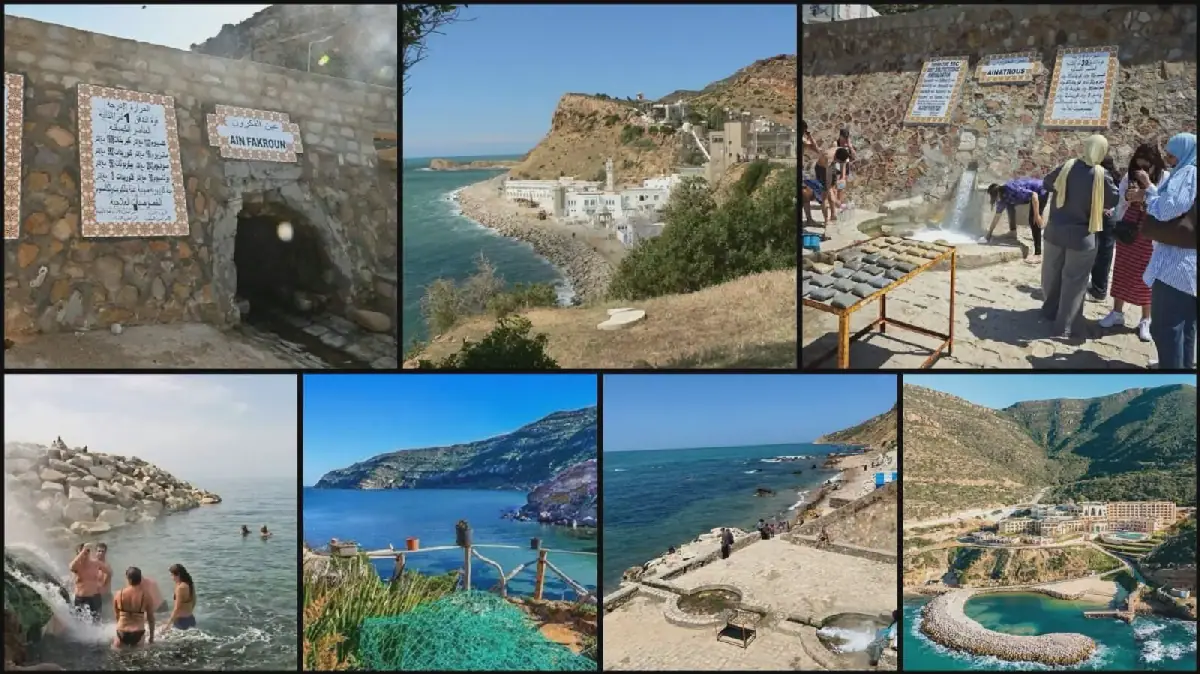
Located 60 km from Tunisia's capital, Korbous is a popular destination for those seeking health and wellness, particularly during winter vacations. The town's thermal springs, surrounded by a natural and healthy environment, offer a range of therapeutic benefits. According to specialists, the cures at Korbous combine the thermal virtues of its springs with a pleasant microclimate and natural setting. The region's therapeutic springs have been attracting visitors for over 2,000 years.
The primary thermal spring in Korbous is Aïn Echfa, also known as Aïn El-Kbira or La Grande Source. This spring has two subsidiary sources: Aïn Sbia, or La Vierge, and Aïn Arraka, or La Suante. Aïn Echfa's water is rich in chlorinated sodium and has a temperature of 57.5°C and a pH of 7.5. The spring has been exploited since 1902, making it the first source to be developed in Tunisia and Africa. Its waters are renowned for their therapeutic properties, particularly in treating rheumatism, arthritis, respiratory problems, and skin conditions.
Aïn Echfa's therapeutic benefits extend to treating various health conditions, including osteoarthritis, degenerative rheumatism, inflammatory rheumatism, and joint pain. The spring's waters are also used to alleviate symptoms of heavy legs, painful syndromes, osteoporosis, and muscle and surgical sequelae. In addition to its therapeutic uses, Aïn Echfa has been a popular destination for women seeking to give birth, with some clients, like Karima Inoubli, having been loyal customers for years.
The clientele at Korbous is predominantly Maghrebi, with 92% of visitors coming from the region, including 70% from Tunisia. European visitors, mainly from Germany and France, make up the remaining 8%. The thermal center at Korbous has partnerships with various organizations, including the Tunisian National Health Fund (Cnam) and the French Embassy, which recommends the center to French veterans. Other agreements are in place with national companies like the Compagnie des Phosphates de Gafsa (CPG) and several Tunisian banks.
Despite its natural setting and therapeutic benefits, Korbous faces some challenges, particularly with its infrastructure. The road connecting Korbous to Tunis is often problematic, and tourist buses have difficulty accessing the site. However, the center's technical staff, including a rheumatologist, physiotherapist, and certified masseuses and masseurs, ensure a high level of care for visitors. Regular hygiene checks are also conducted by the Office du Thermalisme and regional health authorities.
In addition to Aïn Echfa, Korbous is home to other notable springs, including Aïn Sbia and Aïn Arraka. Aïn Sbia, with its distinctive dome, has been known since ancient times and offers hyperthermal chlorinated sodium water at 50°C. Visitors like Saida Zine frequent the site, praising the therapeutic benefits of the water and the traditional ambiance. However, some visitors have noted that the site's privatization has led to reduced staff and compromised hygiene.
Korbous's third notable spring, Aïn Arraka, was recently rehabilitated and reopened to the public. Its water, with a temperature of 45°C, is said to offer similar therapeutic benefits to Aïn Echfa and Aïn Sbia. Visitors like Anouar Bir attest to the spring's effectiveness in treating rheumatism. With its seven therapeutic springs, Korbous offers a unique and natural wellness experience, attracting visitors from across the region and beyond.
Key points
- Korbous's thermal springs have been attracting visitors for over 2,000 years, offering a range of therapeutic benefits for various health conditions.
- The region's infrastructure faces challenges, including problematic roads and limited access for tourist buses.
- Korbous has partnerships with various organizations, including the Tunisian National Health Fund (Cnam) and the French Embassy.