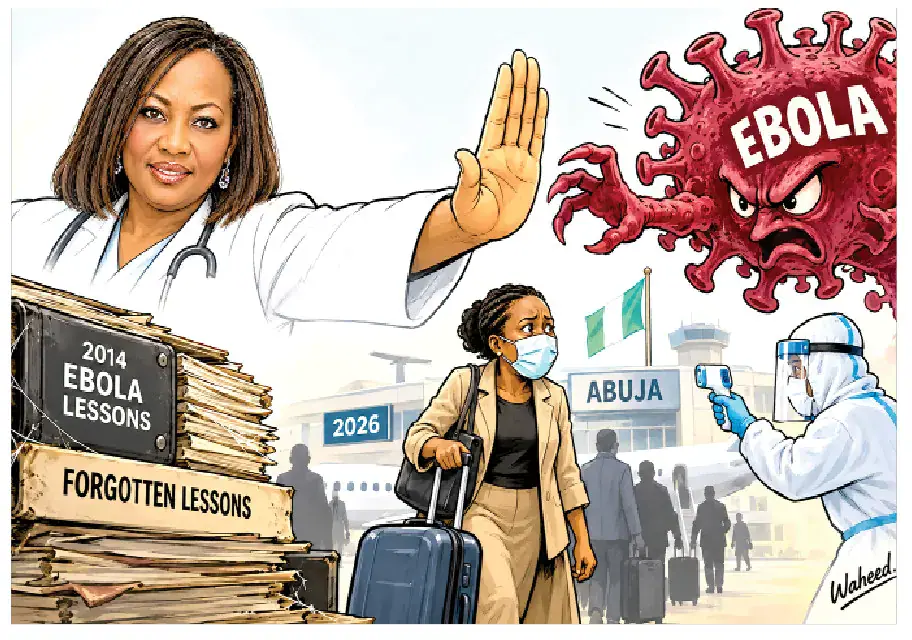
Nigeria has reported a new case of Ebola, 12 years after a deadly outbreak that claimed the life of Dr. Ameyo Stella Adadevoh, a physician who played a crucial role in containing the disease. The latest case involves a 42-year-old woman who returned to Abuja from Uganda on October 3 and developed symptoms four days later. She tested positive for the Bundibugyo strain of Ebola on October 20.
According to the Nigeria Centre for Disease Control (NCDC), the patient arrived in Abuja from Uganda through Addis Ababa on October 3. She developed symptoms on October 7, was admitted to a private health facility on October 11, and the NCDC was notified on October 19. Laboratory confirmation came on October 20. The timeline has raised concerns about the country's preparedness and response to infectious diseases.
The NCDC has identified 53 contacts who are being monitored, and the patient and her husband were medically evacuated to Switzerland on October 26, where she is receiving specialized care. The incident has sparked fears about the country's ability to respond to Ebola outbreaks, given the experience of 2014 when a Liberian-American man, Patrick Sawyer, brought the disease to Lagos.
Sawyer, a Liberian government official, flew from Monrovia to Lagos via Lomé on July 20, 2014, and was infected with the Zaire strain of Ebola, the deadliest of the species. He collapsed at the airport and was taken to First Consultants Medical Centre in Obalende, where Dr. Adadevoh and her colleagues took steps to contain the outbreak. Sawyer reportedly resisted isolation, but Adadevoh and her team kept him in the hospital, preventing a wider outbreak.
Dr. Adadevoh's actions in 2014 are credited with saving countless lives and preventing a national catastrophe. Her experience and that of her colleagues led to increased awareness and preparedness in Nigeria. However, concerns have been raised about the country's ability to respond to future outbreaks, given the gaps in the timeline of the latest case.
The current case has highlighted the need for improved preparedness and response to infectious diseases in Nigeria. The NCDC has emphasized the importance of early detection, notification, and response to contain outbreaks. The incident has also raised questions about the country's ability to manage and treat infectious diseases, particularly in the context of a growing population and limited healthcare resources.
The Nigerian government has been urged to take proactive measures to prevent and respond to future outbreaks, including investing in healthcare infrastructure, training healthcare workers, and improving public awareness. The country must also prioritize preparedness and response to infectious diseases, rather than reacting to outbreaks as they occur.
Key points
- The patient has been evacuated and is receiving care in Switzerland.
- The NCDC has identified 53 contacts who are being monitored.
- The incident has raised concerns about Nigeria's preparedness and response to infectious diseases.